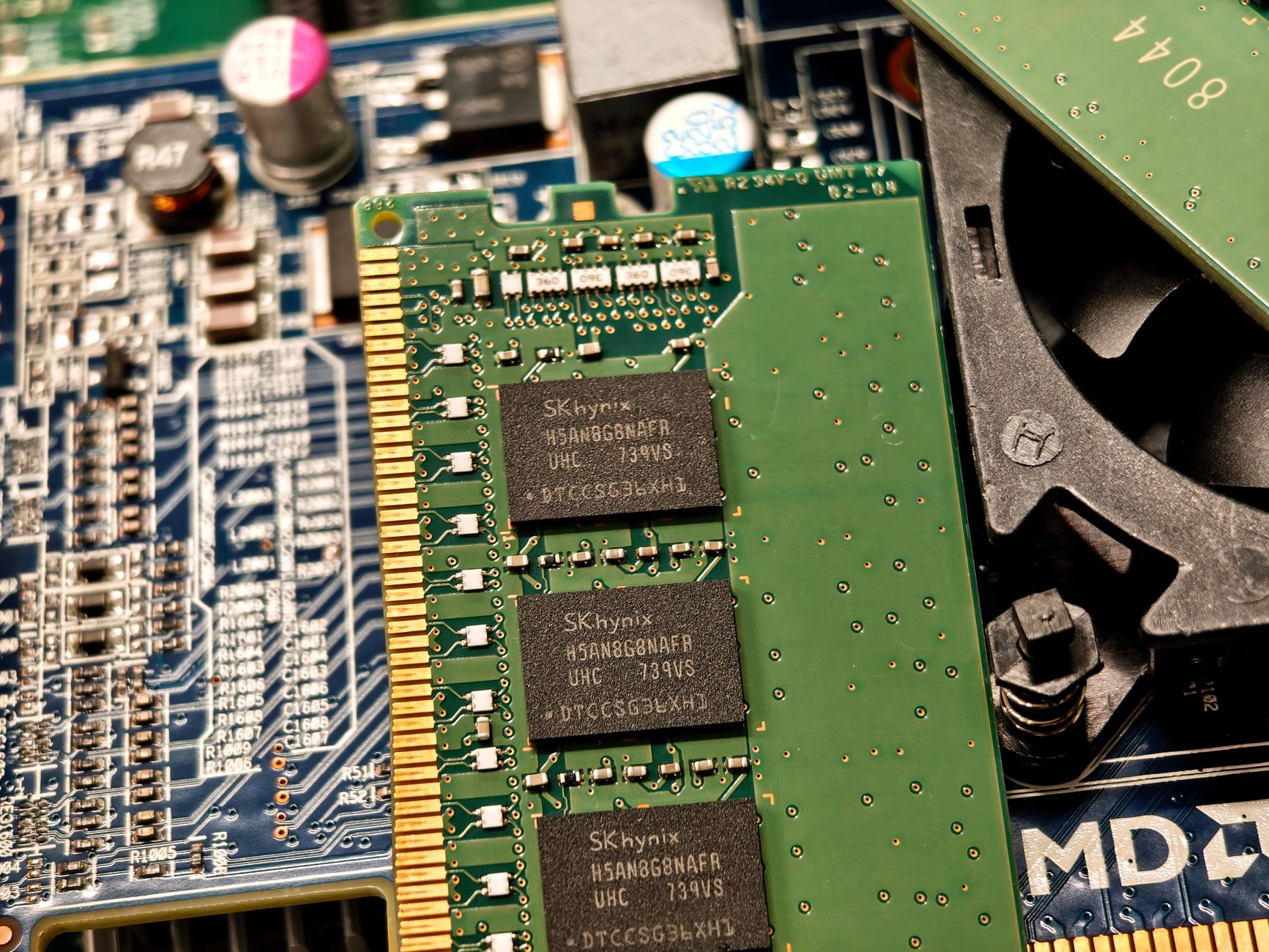
Market Context: DRAM Demand vs. Supply
As memory makers ride a wave of AI-related spending, DRAM stocks have captured attention in early July 2026. Investors have bid up prices for Micron Technology (MU), SK Hynix, and Samsung Electronics on the view that data-center upgrades and edge deployments will sustain memory demand for the next several quarters. Yet the rally sits atop a fragile footing: supply and demand remain in a delicate balance, and any shift in hyperscale capex could ripple through the DRAM market.
The semiconductor complex has shifted from a period of price pain to profitability for DRAM producers, with trading activity showing higher volatility as traders weigh the timing of new capacity against current orders. In practical terms, a seller’s market could tighten again if AI deployments accelerate beyond consensus, while a slower CapEx cycle could push pricing pressure back up the ladder for memory makers. The market is watching closely how much of the demand surge is sustainable versus a temporary push from a few megaclusters migrating workloads to higher-bandwidth DRAM.
AI Growth and the Demand Pulse
Industry observers point to AI compute and data-center refresh cycles as the primary engine behind the recent DRAM strength. New AI-enabled services require faster memory, larger bandwidth, and longer memory lifecycles, all of which support higher DRAM volumes. “AI accelerates more DRAM usage per server, and that isn’t a one-off trend,” said an analyst at a leading research firm. The result for DRAM stocks is clearer earnings visibility, even as pricing moves remain volatile and spot markets swing with macro headlines.
Executives at major memory producers have signaled that the demand backdrop remains intact heading into the second half of 2026, with several projects reaching final procurement stages and customers lining up multi-quarter orders. The AI buildout also means a broader mix of customers—cloud providers, hyperscalers, and device makers—can contribute to steadier long-term demand, even if short-cycle fluctuations persist.
Can dram stocks handle this? The Market’s Take
The fundamental math appears supportive for profits, but skeptics warn that supply additions are coming and could compress margins if demand growth slows. The DRAM price index has risen in the mid-single digits so far in 2026, while contract pricing for server-grade modules has shown resilience amid tighter OEM allocations. Still, analysts caution that the ramp of new capacity—both in legacy DRAM lines and newer high-bandwidth memory—will take time to fully balance the market.
Investors are also weighing external pressures, including potential changes in CapEx plans from hyperscalers and geopolitical dynamics that could influence global semiconductor supply chains. In that context, the question remains: can dram stocks handle this current phase of strength, or will earnings visibility fade if demand proves less durable than anticipated? The answer hinges on the pace of AI adoption, data-center refresh cycles, and the rate at which producers can monetize the incremental supply without triggering price wars.
Supply Pathways and Risks
On the supply side, new fabrication capacity and memory upgrades are progressing, but the ramp is gradual. Analysts estimate that 2026-2027 will bring a modest 3-5% increase in global DRAM capacity, a figure that could be insufficient to completely close the current demand gap if AI workloads surge again. The risk is not only about volume but also about product mix—higher-value high-bandwidth memory commands better gross margins, which could cushion DRAM stocks if general memory prices softens in the back half of 2026.

Company commentary points to continued capex discipline in a sector still sensitive to macro cycles. Management teams emphasize that timing matters: investments that align with sustained demand can bolster earnings visibility for 12-24 months, whereas mis-timed builds risk oversupply and margin compression. The net takeaway is cautious optimism: demand may be here to stay, but the supply curve remains a key swing factor for 2026 into 2027.
What It Means For Investors
- Price trends: DRAM-related shares have outpaced broader tech indices over the past quarter, fueled by AI-driven demand and improving pricing discipline.
- Valuation: Forward earnings visibility has improved, but multiple compression remains a risk if demand forecasts shift or if memory pricing weakens unexpectedly.
- Quantitative signals: Momentum has persisted, but traders watch for any deceleration in hyperscale capex or a back-end loading of orders that could alter near-term earnings.
- Risk factors: A sharper-than-expected slowdown in AI deployments, a broader macro pullback, or a faster-than-anticipated ramp of DRAM capacity could alter the trajectory for dram stocks handle this scenario.
The heated discussion among market observers underscores how dramatically the memory market can swing when AI demand shifts. Analysts reiterate that the current leg hinges on continued demand durability and the pace at which suppliers can translate capacity expansions into profitable production. In other words, the path forward for dram stocks handle this remains highly dependent on the next couple of quarters of hardware refresh cycles and AI deployment milestones.
Bottom Line: A Bigger Move or a Short-Term Rip?
For now, the data point to a high-conviction view that DRAM producers can sustain earnings visibility in the near term, supported by AI-driven spending and enterprise storage refresh cycles. Yet the sector’s history teaches patience: the arc from demand acceleration to steady-state profitability can be bumpy, and any misstep in CapEx timing or a demand scare could unsettle prices swiftly. Investors should brace for continued volatility as the market tests how much of the current strength is structural versus cyclical.
If AI demand remains robust, dram stocks handle this scenario could extend into 2027, supported by ongoing improvements in memory performance and a gradual but persistent shift toward higher-value DRAM products. On the other hand, a softer-than-expected second-half 2026 could reignite concerns about oversupply and profit margins. The market will likely respond in real time to earnings releases, capex announcements, and any shifts in AI deployment plans from major cloud players.
Key Data Points to Watch
- Stock performance: MU, SK Hynix, and Samsung Electronics have exhibited persistent momentum through Q2 2026 with higher-than-average volatility.
- Price trends: DRAM contract pricing and spot indices showed resilience in Q2, signaling improving pricing power as capacity additions lag demand growth.
- CapEx expectations: Hyperscalers and memory makers have signaled a cautious approach to capex, with timing and scale of new lines closely watched by investors.
- Demand indicators: AI compute deployments, data-center refresh cycles, and new memory-intensive applications are primary drivers to monitor in the second half of 2026.
- Macro backdrop: U.S. and global macro conditions, inflation trends, and currency moves will influence memory pricing and end-market demand.
In the near term, the market will require a steady stream of earnings visibility and evidence that demand can withstand macro shocks. For traders and long-only investors alike, the central question remains whether dram stocks handle this phase of growth without tipping back into a painful cyclic downturn. The answer will come from quarterly results, capacity ramp timing, and the AI adoption curve that determines the pace of memory consumption in the years ahead.
Discussion