
Introduction: A Volatile Market, A Common Question
The recent rout in semiconductor stocks has been hard to swallow for any investor who trusted the continued rise of AI-related chips. A single forecast miss can trigger a broad sell-off that wipes away trillions in value across the space. In the eye of the storm are two giants that often lead the conversation about AI chips: Nvidia and AMD. As of now, Nvidia trades around the low $200s, roughly 15-20% off its 52-week high, while AMD sits in the $500s to $520 range, a smaller pullback but still meaningful for long-term plans. If you are considering a strike price on a dip, the question becomes simple but crucial: which stock is better after chip sell-off? This article delivers a clear framework to answer that question, backed by fundamentals, valuation fundamentals, and real-world scenarios you can apply today.
First, a quick note on the framing. A stock can look compelling after a sell-off for many reasons: improving demand signals, better-than-feared earnings, or simply multiple compression that makes a high-growth story seem more affordable. For Nvidia and AMD, the dynamic is especially nuanced because both companies sit on the AI wave but with different business mixes and growth drivers. The goal here is not to pick a winner in a vacuum but to equip you with a disciplined way to assess which name adds the most value to a diversified portfolio during a better after chip sell-off environment.
What’s Behind the Sell-Off—and Why It Impacts Nvidia and AMD
Chip stocks tend to be highly sensitive to supply-demand news, capacity expansions, and broader technology cycles. When Broadcom or other AI chip forecasts disappoint, investors may fear slower data-center growth, reduced pricing power, or tighter capital expenditure from hyperscalers. Nvidia and AMD—while both champions of AI processing—derive revenue from slightly different levers: Nvidia from AI accelerators, data-center demand, and software ecosystems; AMD from a broader mix including CPUs, GPUs, discrete GPUs for gaming, and enterprise data centers, plus semiconductors used in hyperscale environments. A sell-off often reflects a composite of these concerns rather than a single issue.
- Demand signals: AI workloads, cloud adoption, and edge computing expectations impact both names, but Nvidia’s data-center cycle is often more directly tied to AI training and inference capacity expansions.
- Pricing environment: Chip pricing, supply allocations, and contract terms can compress gross margins temporarily, even as longer-term contracts with cloud providers support steady revenue streams.
- Competitive dynamics: AMD’s breadth can be a strength in diversified product cycles, yet Nvidia’s specialization in AI accelerators is a powerful magnet for hyperscalers when AI budgets expand.
The Case for Nvidia After the Sell-Off
Nvidia’s leadership role in AI accelerators gives it a durable growth narrative, even after a broad market pullback. Several factors support the case for Nvidia in a better after chip sell-off scenario:
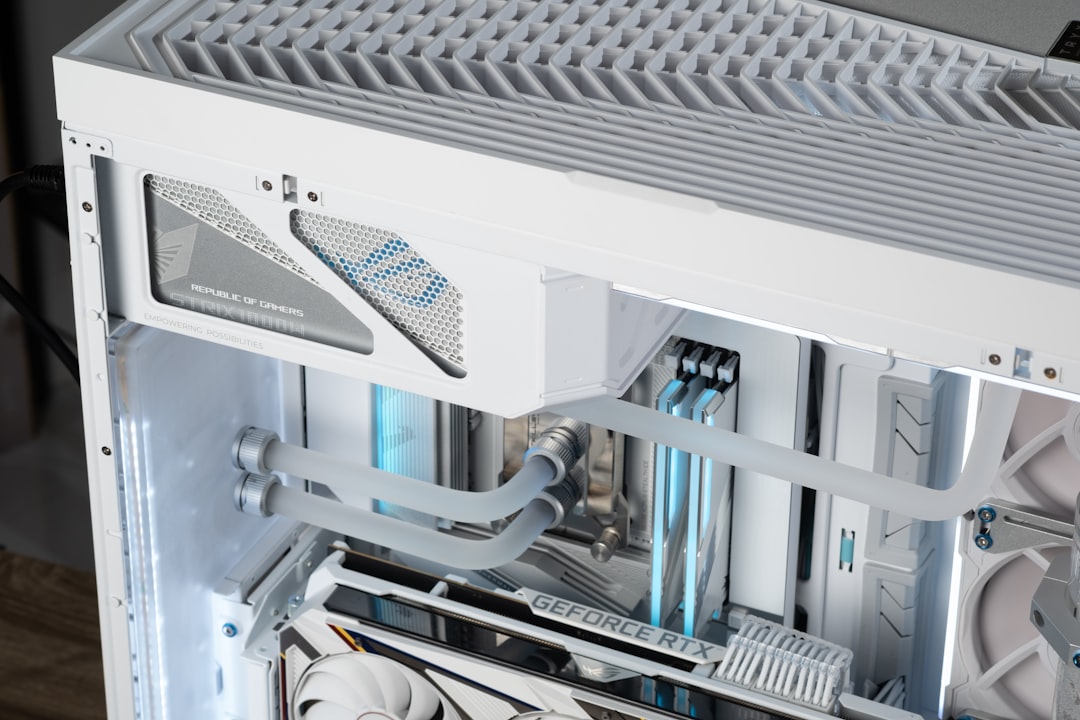
- AI data-center demand: Nvidia’s GPUs remain the benchmark for training large AI models and running inference workloads. Hyperscalers commit multiyear capex cycles that favor Nvidia’s ecosystem and software stack, including CUDA and related AI frameworks.
- Market positioning: Nvidia’s brand, customer lock-in, and breadth of AI software tooling create a high switching cost for customers, which often translates into more stable revenue visibility.
- Product cadence: New architectures and GPU generations can refresh the moat, bringing additional per-share earnings support even in volatile times.
- Valuation dynamics: After sharp declines, the stock sometimes trades at a more reasonable premium to growth, especially when AI demand proves more resilient than feared.
From a practical investment lens, Nvidia’s premium comes with a risk: a high-growth multiple can compress quickly if growth decelerates or if AI budgets pull back. However, the upside in a sustained AI adoption cycle—combined with leverage to data-center expansion—remains meaningful for investors with a medium-to-long horizon.
The Case for AMD After the Sell-Off
AMD presents a different flavor of the growth story. Its business combines CPUs for data centers and PCs with a competitive GPU lineup, offering a more diversified exposure to both consumer and enterprise demand. Here are the reasons some investors prefer AMD in a better after chip sell-off environment:
- Diversified revenue mix: Unlike Nvidia, AMD relies not only on AI accelerators but also on CPUs (EPYC) for servers and Ryzen for consumer machines. A broad product portfolio can cushion the impact of AI-specific demand swings.
- Valuation upside from simplification: If Nvidia trades at a premium that feels stretched, AMD can offer a more palatable entry point for growth-focused investors while still playing the AI wave via RDNA GPUs and AI acceleration features integrated into its chips.
- Execution track record: AMD’s ability to compete on performance-per-watt, price, and feature sets across servers and client devices has historically driven market share gains, which can translate into steady top-line growth even as macro conditions wobble.
- Strategic partnerships: Ongoing collaboration with major cloud providers and data-center customers can anchor AMD’s medium-term growth trajectory, providing visibility beyond the next quarterly print.
Nevertheless, AMD’s path after a sell-off hinges on its capacity to sustain pricing power and win enterprise deployments amid competition from Nvidia and other players. The smaller absolute scale of AMD can be a double-edged sword: faster growth on a percentage basis is plausible, but the base is smaller, which means a few missteps can have outsized effects on earnings momentum.
Valuation, Multiples, and What to Watch Now
After a sell-off, investors typically examine valuation metrics to gauge relative value. While neither company is a bargain in historical terms, there are meaningful differences between them that can inform a decision about which is “better after chip sell-off” for your portfolio.
- Pricing power vs growth rate: Nvidia’s growth rate historically outpaces AMD, but its valuation premium has often reflected that higher growth. The question for investors is whether the premium can be sustained in a scenario where AI budgets widen or narrow.
- Profitability trajectory: Nvidia’s margins are historically robust in data-center segments, but the mix shift toward higher-margin software tooling is a potential tailwind. AMD’s margins have benefited from efficiency gains in IP and manufacturing, yet competitive pressures can compress profitability in the near term.
- Balance sheet and buybacks: Both companies have used buybacks to support equity value, but the ability to deploy capital efficiently depends on free cash flow generation and reinvestment opportunities in AI and compute ecosystems.
- Risks to monitor: global chip supply constraints, geopolitical tensions affecting semiconductor supply chains, and fluctuations in enterprise IT budgets can all influence which stock looks better after chip sell-off at any given moment.
In practical terms, Nvidia may carry a higher growth premium tied to AI adoption speed, while AMD offers a more diversified engine with a potentially steadier earnings cadence. The choice depends on your risk tolerance, time horizon, and how you expect AI capex cycles to unfold in the next 12-24 months.
Scenarios: What “Better After Chip Sell-Off” Could Look Like
Running through plausible scenarios helps translate abstract numbers into actionable plans. Here are three common paths and what they could mean for Nvidia and AMD investors.
Base Case: AI Adoption Accelerates, But At a Manageable Pace
In the base case, enterprise and cloud spend on AI accelerators remains robust, but price competition and supply constraints gradually ease. Nvidia continues to lead AI training and inference, while AMD improves its position in data center GPUs and accelerators through ongoing architectural improvements and competitive pricing. The result: Nvidia maintains a premium but offers clear growth visibility; AMD grows at a solid pace with improving operating margins.
Bull Case: AI Capex Surges Above Expectations
In a bullish scenario, AI budgets explode, hyperscalers accelerate GPU refresh cycles, and software ecosystems deepen. Nvidia captures most of the incremental AI demand due to its market-dominant platform, while AMD gains share but from a smaller base. The result could be outsized upside for Nvidia, with AMD catching up on data-center GPU adoption but not matching Nvidia’s AI software moat.
Bear Case: AI Demand Softens or Becomes Price-Competitive
If AI demand softens or price competition intensifies, valuations can compress rapidly. Nvidia’s data-center dominance might shield it somewhat, but the stock could face multiple compression. AMD could be hurt by slower data-center growth, even as its diversified product mix offers some resilience. In this scenario, risk controls and quality of earnings become critical factors in deciding which name still warrants a stake.
How to Decide: A Practical, Actionable Checklist
Trying to pick the “better after chip sell-off” pick is easier when you follow a clear decision framework. Here’s a practical checklist you can use in the weeks after a dip:
- Define your time horizon: Is this a 6-12 month swing or a multi-year hold? Longer horizons justify more patience with potential volatility.
- Set your risk cap: Decide the maximum percentage of your portfolio you’re willing to risk in high-volatility tech names.
- Assess the growth engine: Is your preference for a dominant AI accelerator story (Nvidia) or a diversified compute portfolio (AMD)?
- Evaluate earnings visibility: Look at next two quarters of guidance, not just the last report. Clear, credible guidance reduces uncertainty.
- Check balance sheet health: Do free cash flow and debt levels support potential buybacks, dividends, or accelerated capex in a downturn?
- Consider diversification: How would Nvidia or AMD complement your other holdings? Does adding one name improve sector exposure or create concentration risk?
With this checklist, you can translate the idea of better after chip sell-off into a concrete plan. Remember, the goal isn’t to chase a single winner but to build a resilient exposure to tech leadership in AI while controlling risk.
Real-World Examples: How Investors Are Thinking Right Now
To bring this to life, consider two hypothetical yet representative investor profiles who are navigating the better after chip sell-off decision.
- Profile A: The Growth Seeker. An investor with a 5- to 7-year horizon who can tolerate higher volatility. This investor leans toward Nvidia for its AI leadership and potential data-center expansion, while also buying AMD for diversification within a smaller risk budget. The goal is to capture AI upside while keeping a floor of reasonable diversification through AMD’s server CPUs and GPUs.
- Profile B: The Risk-Averse Builder. Someone who prioritizes steady cash flow and capital preservation. This investor might favor AMD for its diversified revenue streams and relatively lower valuation multiple, while keeping a modest Nvidia exposure as a speculative but controlled tilt toward AI’s long-run growth.
In both cases, the core principle remains: investing after chip sell-off should be anchored in a plan, not in a single story. The best path is often a balanced approach with clear risk controls and a view of how AI demand evolves over the next 1-2 years.
Conclusion: The Right Move After the Dip Is About Your Goals
When the chips tumble, the natural impulse is to try to pick the winner. The question of which stock is better after chip sell-off—Nvidia or AMD—depends on your investment goals, risk tolerance, and time horizon. Nvidia offers a compelling AI-driven growth narrative with a strong data-center footprint and a software ecosystem moat. AMD provides a diversified compute portfolio, potential for steady expansion, and a lower entry price relative to its growth upside. The smarter path, in practice, is to use the sell-off as a signal to reassess your portfolio structure, not as a green light to pile into a single name. Apply the decision framework, test scenarios, and the actionable tips above, and you’ll be better positioned to capture the upside while protecting yourself from downside risk.
Ultimately, the better after chip sell-off choice is the one that aligns with your plan. Whether you tilt toward Nvidia, AMD, or a balanced mix, the key is disciplined execution, clear risk controls, and a long-run view of how AI-driven demand is reshaping the technology landscape.
Frequently Asked Questions
Q1: What does it mean to be better after chip sell-off in practice?
A1: It means identifying which stock offers the best risk-adjusted return given a meaningful price decline, considering growth prospects, earnings visibility, balance sheet strength, and the potential for multiple expansion when market sentiment improves.
Q2: Should I buy Nvidia now if I already own AMD?
A2: A thoughtful approach is to assess how each position fits your risk profile and diversification needs. If you have heavy exposure to AI and data-center tech, adding AMD can provide balance, but ensure your overall allocation remains aligned with your long-term goals and risk tolerance.
Q3: How do I manage risk when investing after a dip in chip stocks?
A3: Use dose-based exposure, set stop-loss levels, and diversify across sectors. Consider a dollar-cost averaging strategy into either name, and keep an eye on earnings guidance to avoid overexposure if near-term results disappoint.
Q4: What macro factors should I monitor for Nvidia and AMD?
A4: Watch AI budget trends, hyperscaler capex plans, data-center demand, supply-chain constraints, and any policy changes affecting semiconductor markets. These factors can shift which name looks better after chip sell-off at different times.

Discussion