
Introduction: A New AI Growth Landscape
The artificial intelligence boom has become a real-time test for investors. Two names keep surfacing in the AI supply chain: Nvidia and Micron. They operate at opposite ends of the tech stack, yet both are essential to how AI workloads run—from the raw compute horsepower that powers training and inference to the fast memory and storage that keeps data accessible at machine speed. If you want better growth right now, understanding how these two leaders fit into the AI story can help you decide where to place bets, how to size positions, and what risks to monitor.
History offers a blunt reminder: when a transformative technology accelerates, demand for the underlying hardware tends to rise in tandem. Nvidia is often described as the compute engine behind AI, designing GPUs that handle the heavy lifting for training giant models and running dense inference. Micron provides the memory and storage infrastructure—DRAM, NAND, and storage solutions—that keep those AI workloads flowing smoothly. In the last five years, both stocks have taken a remarkable ride, climbing well beyond the broader market, with growth narratives tied to the AI cycle. That pattern invites a clear question for today’s investors: which name offers better growth right now?
Key Players in AI Hardware: Nvidia and Micron
To assess which stock offers better growth right now, you need to map how each company earns revenue, how the AI cycle affects that revenue, and how current valuations align with future opportunities.
- Nvidia, the compute leader: Nvidia’s GPUs are not just graphics processors; they are the standard accelerators used to train and run AI models. The company has expanded beyond gaming into data centers, autonomous machines, and AI software ecosystems. Its ramp in data center demand has been a dominant driver of revenue and profit growth in recent years.
- Micron, the memory and storage backbone: Micron supplies the memory and storage components that AI systems rely on to store weights, datasets, and model parameters. Demand from hyperscalers, cloud providers, and edge devices has surged in parallel with AI adoption, but cycles in memory pricing and supply/demand balance can introduce volatility.
Both players have benefited from the AI rush, and both have shown resilience through market cycles. The key to “better growth right now” is not just the size of the AI opportunity but how each company translates that opportunity into accelerating earnings, cash flow, and shareholder value in the near term.
What Drives Better Growth Right Now?
Several forces shape which stock can deliver better growth right now in AI-related markets:
- Product cadence and customer conversion: How quickly can the company monetize AI-driven demand?
- Exposure to hyperscalers and cloud providers: Are the revenue streams diversified and long-term?
- Pricing power and margins: Is the company able to protect or grow margins amid supply dynamics?
- Capital discipline: How efficiently does management allocate capital toward high-return opportunities?
For many investors, better growth right now hinges on the ability to translate AI demand into durable earnings growth rather than episodic spikes tied to a single cycle. Nvidia has historically shown strong top-line momentum in data center GPU sales alongside margin improvements. Micron’s growth, while robust in periods of AI-driven memory tightness, tends to reflect more pronounced cyclicality tied to memory pricing and inventory dynamics.
Nvidia: The Compute Engine of AI
Nvidia is often described as the heartbeat of modern AI, thanks to its leadership in high-performance GPUs and a growing software ecosystem that unlocks AI workloads for enterprise customers. Here’s why Nvidia frequently sits at the top of the list for better growth right now:
- Dominant data center presence: Nvidia’s accelerators power training clusters for large language models and real-time inference for AI services.
- Strong product cadence: Regularly introducing new GPU generations and software optimizations that improve performance per watt and per dollar of hardware.
- Expanding ecosystems: Software platforms, libraries, and partner networks create stickiness, increasing the likelihood of continued AI adoption by customers.
- Robust capital returns: The company’s ability to convert revenue growth into cash flow and buybacks supports long-term total returns.
Investors looking for better growth right now often tilt toward Nvidia because its AI revenue cycle tends to be more resilient and easier to forecast than other components of the stack. However, valuations and risk must be weighed. The stock has traded at premium multiples, reflecting confidence in sustained AI demand and margin expansion. That premium implies high sensitivity to shifts in AI sentiment, supply chain constraints, or competition.
Micron: The Memory Backbone of AI Systems
Micron may not lead the pack on raw compute, but its memory and storage solutions are indispensable to AI systems. The company’s products are the operating memory for training datasets, model weights, and fast-access caches. Here are the reasons some investors see Micron as a compelling bet in the AI growth narrative:
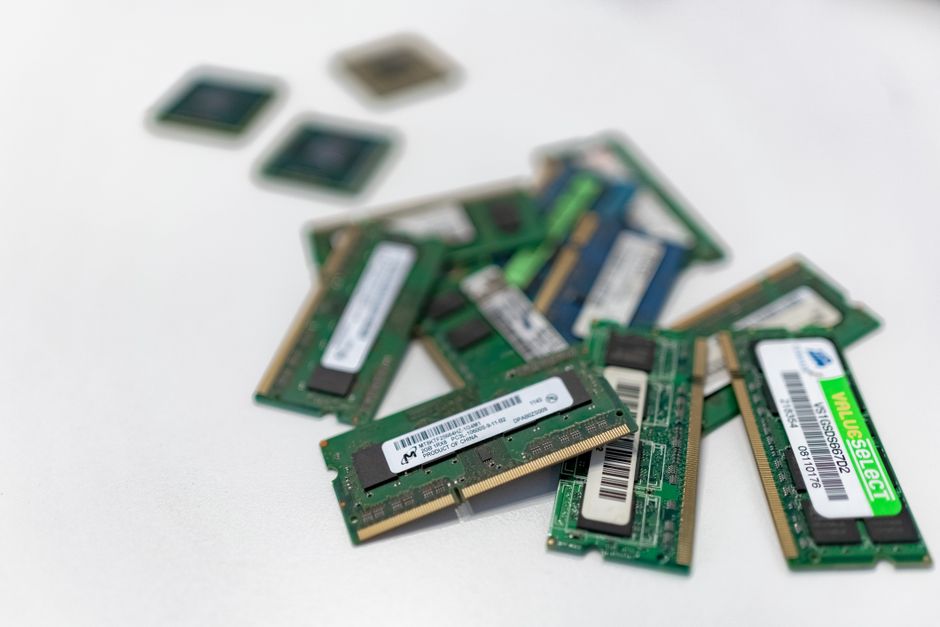
- Memory demand tied to AI datasets: As AI models scale, the need for DRAM and NAND memory grows, supporting Micron’s revenue trajectory.
- Valuation optionality: When memory demand tightens, Micron's stock can outperform on fundamentals even if the broader AI rally slows.
- Diversified end markets: Beyond data centers, Micron serves mobile, PC, and industrial segments that can cushion cyclicality.
- Cash generation potential: With disciplined capital allocation, Micron can foster cash returns that bolster shareholder value during favorable cycles.
Micron’s path to better growth right now may involve more exposure to cyclical memory pricing, which can be a double-edged sword. The upside is that when memory markets tighten or AI workloads demand more memory bandwidth, Micron can see meaningful margin and volume gains. The challenge is maintaining that momentum when pricing pressures ease or supply catches up.
Growth Scenarios: Timing the AI Cycle
Forecasting the AI cycle is more art than science, but several indicators help shape a realistic view of better growth right now:
- AI model deployment pace: Faster adoption by enterprises generally translates into steadier demand for compute and memory.
- Cloud and hyperscaler Capex: If capex remains robust, Nvidia and Micron stand to benefit through more hardware purchases.
- Pricing and supply dynamics: Semiconductor supply chains have improved in the past few years, but periodic tightness can boost pricing power for both players.
- Macroeconomic backdrop: Inflation, rates, and currency fluctuations can influence enterprise AI budgets and procurement cycles.
In a scenario where AI adoption accelerates more quickly, Nvidia tends to outperform on a growth basis due to its dominant position in compute. In a more balanced or memory-tight environment, Micron can deliver attractive growth through price realignment and strong data center demand. The bottom line is that better growth right now is not a one-size-fits-all label; it hinges on the stage of the AI cycle and how each company leverages its core strengths.
How to Evaluate These Stocks Today
Investors looking for better growth right now should consider a structured framework that blends qualitative and quantitative signals. Here is a practical checklist you can apply before making a decision:
- Revenue growth consistency: Look for sustained year-over-year growth rather than one-off spikes.
- Margin trajectory: Is operating margin expanding, stable, or contracting as AI demand evolves?
- Cash generation: Free cash flow growth supports dividends, buybacks, and potential accretive acquisitions.
- Capital allocation: Management’s track record on R&D intensity, share repurchases, and strategic investments matters for long-term growth.
- Valuation context: Compare price-to-earnings and price-to-free-cash-flow against peers and the AI sector as a whole to gauge the optimism baked into prices.
Applying this framework can help you quantify what you mean by better growth right now and whether Nvidia or Micron aligns with your portfolio's risk tolerance and time horizon. A pragmatic approach is to stress-test your thesis with small, incremental positions and clear exit rules if data points deteriorate.
Investor Considerations and Risks
Every investment carries risk, and AI-driven growth is no exception. Here are the main factors that can influence whether Nvidia or Micron delivers better growth right now:
- Industry cycles: The AI hardware cycle can be volatile, with periods of rapid demand followed by normalization. This can affect quarterly results and stock volatility.
- Competitive pressures: Competing accelerators and memory suppliers can erode margins if pricing becomes aggressive or if new technologies emerge.
- Supply chain and geopolitics: Global semiconductor supply chains are sensitive to trade tensions and export controls, which can impact availability and costs.
- Valuation risk: Premium multiples for Nvidia reflect strong growth expectations. If growth slows or sentiment shifts, valuation multiples can compress quickly.
- Balance sheet and capital returns: The pace of buybacks and the use of cash for acquisitions can influence long-term returns for shareholders.
Understanding these risks helps you calibrate the expectation that better growth right now is not guaranteed. It depends on execution, market conditions, and how well each company adapts to evolving AI demands.
Conclusion: Which Is the Clearer Path to Better Growth Right Now?
In the AI expansion narrative, Nvidia and Micron play complementary roles. Nvidia’s edge in compute gives it a robust, growth-oriented trajectory that tends to be more resilient in the near term. Micron offers exposure to memory and storage demand tied to AI workloads, which can deliver compelling upside when pricing dynamics tighten. For investors focused on better growth right now, the case often tilts toward Nvidia due to its dominant position in AI compute and the relative visibility of its revenue and gross margin trajectory. That doesn’t mean Micron is a poor choice; it can provide value through valuation upside and a different risk profile, especially when memory markets heat up. The best approach may be a blended strategy that aligns with your risk tolerance, time horizon, and conviction about the AI cycle’s timing.
FAQ
Q1: Which stock offers better growth right now, Nvidia or Micron?
A1: In most scenarios, Nvidia has a clearer path to better growth right now due to its leadership in AI compute and strong data center demand. Micron can still offer meaningful upside, particularly when memory demand tightens and pricing improves, but its growth is more cyclical and sensitive to memory market dynamics.
Q2: What should I watch in the next quarterly reports?
A2: Focus on data center GPU revenue trends for Nvidia, gross margin expansion, and guidance on AI product cycles. For Micron, watch memory pricing momentum, inventory levels, and evidence of demand stabilization across cloud and enterprise customers.
Q3: Is it risky to overweight Nvidia given its premium valuation?
A3: Yes, premium valuations imply higher sensitivity to AI sentiment shifts. If you’re risk-averse, consider a balanced approach with smaller Nvidia exposure and a complementary allocation to Micron or other AI-related stocks.
Q4: How can I build a practical, lower-risk AI-growth plan?
A4: Start with a core position in a broad AI-focused ETF to gain diversified exposure, then add selective bets on Nvidia for growth potential and Micron for valuation and memory-cycle exposure. Set clear entry/exit rules and rebalance periodically based on fundamentals and cycle timing.
Closing Thought
Choosing the right way to pursue better growth right now requires clarity about what drives AI expansion and how Nvidia and Micron fit into that expansion. With a disciplined approach, you can position yourself to participate in the AI infrastructure upgrade while managing risk. The AI revolution isn’t a straight line, but for patient investors, Nvidia and Micron offer distinct paths to participate in the next phase of tech growth.
Discussion