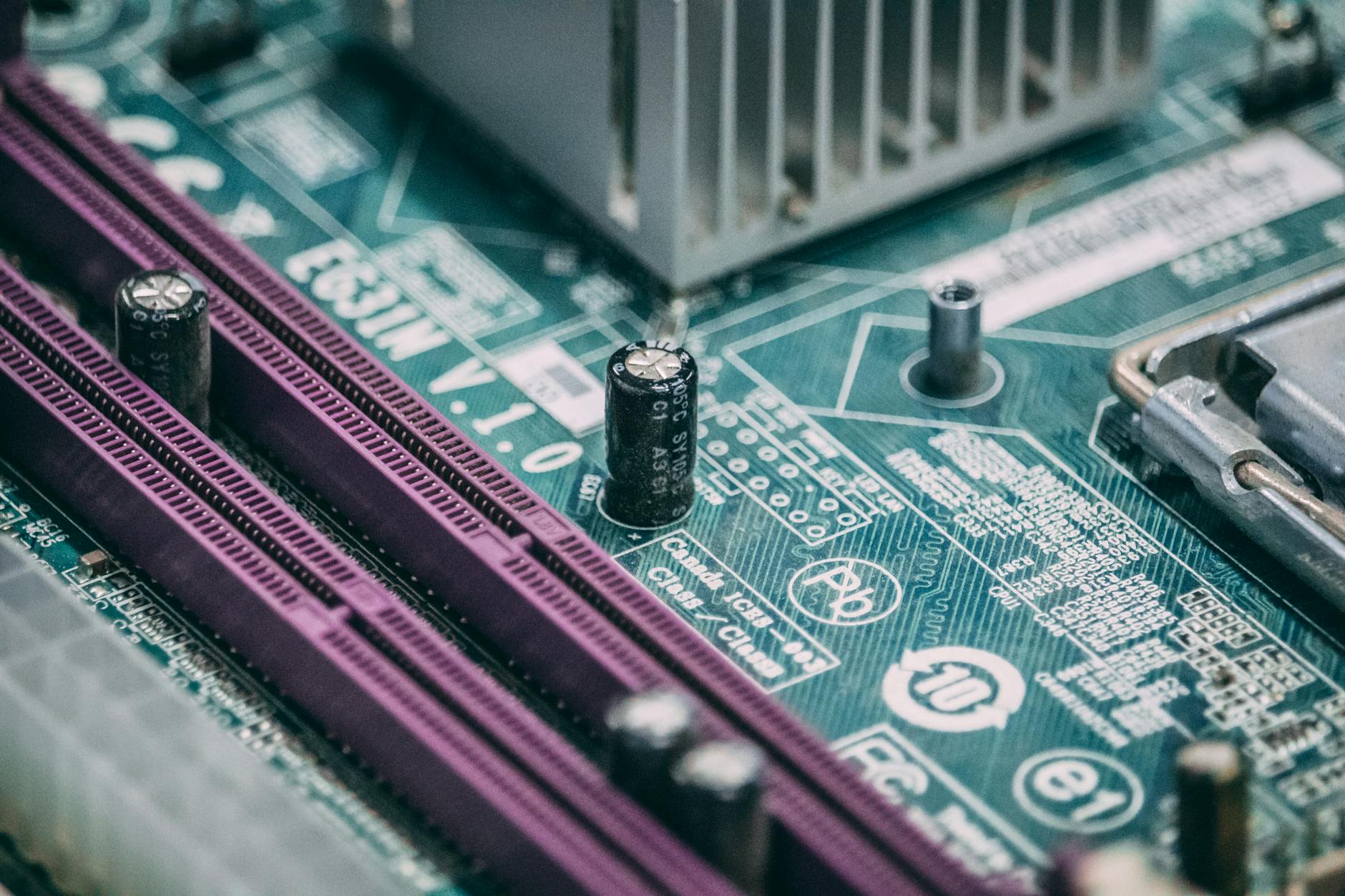
Hook: The AI Chip Wave Is Redrawing the Stock Landscape
Artificial intelligence is reshaping the demand for semiconductors. Data centers, cloud services, and AI startups are racing to deploy faster, more efficient chips. Along this path, two well-known players stand out for very different reasons: Broadcom and Marvell Technology. If you’ve been asking which is the better semiconductor stock: broadcom, you’re not alone. Investors want a clear picture of who benefits from the AI push, who can scale, and who might still be a strong idea for a diversified tech portfolio.
Think of it this way: hyperscalers—owners of massive data centers—need specialized chips called ASICs (application-specific integrated circuits) to run AI workloads more cheaply. Building an ASIC from scratch is complex and expensive, even for big tech companies. That’s where Broadcom and Marvell come into play. They are leaders in the field, but they approach the ASIC market with distinct strategies. Below, we’ll unpack those strategies, the risks, and practical steps for investors who want exposure to the AI-driven semiconductor renaissance.
Why Broadcom Often Appears as the Better Semiconductor Stock: broadcom
Broadcom is not just a chip designer; it’s a diversified tech hardware and software powerhouse. Its strength isn’t tied to a single product cycle. Instead, Broadcom generates revenue from a mix of wireless infrastructure, data center networking, storage, and software solutions. This mix can provide ballast when demand for one segment softens, which is valuable in an industry known for cycles.
Two core factors make Broadcom appealing in the context of AI and ASICs:
- Scale and manufacturing discipline: Broadcom’s scale benefits its margins. The company has historically operated with high gross margins and strong operating leverage, which can help cushion years when chip pricing or demand fluctuates.
- Software and services tailwinds: Beyond hardware, Broadcom increasingly bundles software offerings and support services that create recurring revenue streams. This can improve visibility and profitability over time, supporting the stock as an income-friendly pick for investors who want growth without runaway risk.
In the AI era, Broadcom’s broad portfolio includes networking chips, storage controllers, and components used in hyperscale data centers. Its ability to cross-sell across its software, semiconductors, and firmware offerings helps it monetize AI-driven infrastructure spending beyond a single product cycle. For investors evaluating the better semiconductor stock: broadcom, this diversified model is a meaningful advantage.
Broadcom’s Growth Vectors in AI and 5G
Broadcom has quietly built a multi-year growth plan that aligns with AI hardware demand. Data center upgrades, 5G networking, and AI accelerators require faster, more efficient components. Broadcom’s product lines—covering networking chips, PCIe adapters, and enterprise storage controllers—are positioned to capture a slice of this expanding pie. While AI-specific ASICs can be a strong subset of the market, Broadcom’s breadth reduces the risk that a single product line falters.
Marvell Technology: A Focused Play on AI-Driven Chips
Marvell Technology sits on the other end of the spectrum. It is known for memory, storage, and networking solutions, including advanced PHYs and switches for data centers. In the AI era, Marvell is often considered for its strength in handling data movement, memory interfaces, and processing accelerators that support AI workloads. Investors evaluating the better semiconductor stock: broadcom may also compare Marvell’s potential for high growth in AI-centered segments.
Marvell’s strategy emphasizes a leaner, more specialized portfolio. This can translate into faster growth when AI projects surge, but it can also bring higher cyclicality if demand in its core markets slows. In practical terms, Marvell offers compelling upside if AI capex remains robust and if its newer product families gain share in the data center and cloud ecosystems.
Product Strategy and Market Position
Marvell’s strengths lie in its advanced data-path components and its ability to scale designs for AI and storage workloads. The company has pursued partnerships and manufacturing agreements to expand its footprint in data centers. The result can be faster time-to-market for certain AI-enabled hardware and a path to higher-margin products if it captures design wins with hyperscalers.
How the ASIC and AI Chip Demand Impacts Stock Valuation
ASICS and AI accelerators are a hot topic, but they don’t define stock value in a vacuum. Valuation for Broadcom and Marvell hinges on several factors beyond product capability:
- Revenue mix and gross margins: Broadcom’s ability to sustain high margins across a diversified mix often translates into more reliable earnings. Marvell’s margins can swing with product mix and semiconductor cycle strength.
- Cash flow and capital allocation: Investors look for steady cash flow, company buyback activity, and scalable software revenue. Broadcom’s cash flows have historically supported generous dividends and buybacks, which can appeal to income-focused investors.
- Exposure to AI capex cycles: AI hardware spend tends to ride cycles. Companies with broad exposure across data centers, networking, and software can better weather downturns and capture growth when capex accelerates.
- Geopolitics and supply chains: Semiconductors are sensitive to export rules, supplier ecosystems, and manufacturing constraints. Stability in supply chains matters for uptime and cost.
From a valuation standpoint, Broadcom’s broader portfolio and recurring software revenues often result in a more predictable earnings path, which can support a premium multiple during tech upswings. Marvell, with its focused portfolio, may fetch a higher multiple when AI-driven demand proves sticky, but it can also experience sharper pullbacks when cycles soften. For the investor measuring the better semiconductor stock: broadcom, the balance of resilience and diversification often tilts the decision toward Broadcom in uncertain markets.
Risks and Considerations for Both Stocks
No stock lives in a risk-free zone, especially in semiconductors. Here are key concerns for investors considering the better semiconductor stock: broadcom versus Marvell:
- Cyclicality of chip demand: When data center capex slows, both revenue and profitability can take a hit, with smaller firms sometimes feeling the impact first.
- Supply chain and chip pricing: Price erosion for commodity components can pressure margins. Aggressive price competition can erode earnings growth over time.
- Competition and technological shifts: The pace of AI hardware innovation means today’s leaders can be displaced if a rival introduces a significant efficiency or capability leap.
- Regulatory and geopolitical risk: Tariffs, export controls, and supply constraints can disrupt revenue streams and complicate global manufacturing plans.
These risks underscore why a holistic view matters. The better semiconductor stock: broadcom may offer steadier cash flow and a more diversified exposure, while Marvell could deliver outsized gains if AI infrastructure investments stay hot and its product cycles hit critical designs.
Practical Ways to Invest in This Space
Want exposure to the AI-driven semiconductor trend without overexposing yourself to a single stock? Here are practical ideas:
- Direct equities: If you’re comfortable with individual stocks, consider a core position in a diversified company like Broadcom for stability, plus a smaller, growth-oriented allocation to Marvell to capture upside in AI cycles.
- Exchange-traded funds (ETFs): Use AI, chip, and technology ETFs to gain broad exposure to semiconductors and data-center hardware. This helps dampen company-specific risk while still riding AI-driven demand.
- Dividend and income focus: Broadcom’s historically solid dividend can offer a yield cushion, which can be appealing in choppy markets. Coupled with growth potential, this can improve risk-adjusted returns over time.
- Dollar-cost averaging (DCA): In a volatile sector, DCA helps you avoid trying to time the bottom. Invest a fixed amount on a regular schedule, regardless of price swings.
- Rebalance with discipline: Schedule quarterly checks to adjust allocations toward your target exposure, especially after AI-driven rallies or sector rotations.
Five-Step Checklist to Evaluate a Semiconductor Stock
- Assess the revenue mix: How much comes from hardware vs. software and services?
- Analyze gross and free cash flow margins: Are they stable and growing?
- Look at capital allocation: Are buybacks, dividends, and R&D well balanced?
- Evaluate AI exposure: Which products specifically target AI workloads and data center infrastructure?
- Check supply chain resilience: Any dependence on a single foundry or region?
Real-World Scenarios: How AI Demand Plays Out
Scenario A — Hyperscaler Buildout Continues: If hyperscalers accelerate AI deployments, Broadcom’s diversified mix could translate into steadier revenue growth and more predictable margins. The company benefits from being a supplier across multiple layers of data-center infrastructure, from networking to storage to software support. In this scenario, the better semiconductor stock: broadcom would likely deliver both earnings growth and resilient cash flow, while Marvell gets a chance to shine in its specific AI-adjacent niches, albeit with higher risk if its core segments slow down.
Scenario B — AI Capex Softens: A slowdown in data-center expansion could compress pricing and margins in hardware components. In this setting, Broadcom’s broad exposure and software tie-ins help, but even they could feel pressure. Marvell’s narrower focus might suffer more pronounced lulls, yet it could also prove nimble enough to pivot toward new customers or product categories. The practical takeaway for the investor is to value diversification and income potential as buffers against volatility.
Investor Psychology: Staying Rational in a Fad-Driven Moment
The semiconductor space often feels like a hype cycle. News about a breakthrough in AI chips can lift stocks in a hurry, even if fundamentals don’t align perfectly. The key is to anchor decisions in cash flow, margins, and sustainable demand. The better semiconductor stock: broadcom, with its durable business model and cash-generating engines, offers a steadier anchor for most portfolios. Marvell, meanwhile, can offer meaningful upside for investors who can tolerate higher volatility and a longer wait for a few product cycles to mature.
Conclusion: A Clear Take on the Better Semiconductor Stock
In the AI-infused era of data centers and hyperscalers, the question of which stock is the better semiconductor stock: broadcom comes down to your appetite for stability versus growth potential. Broadcom’s diversified hardware and software ecosystem, strong margins, and reliable cash flow make it a compelling core holding for many investors seeking steady, long-term returns. Marvell offers appealing upside if its AI-focused products gain rapid market traction and if the AI infrastructure spend remains robust, but its path carries more cyclicality and execution risk.
For most investors, a blended approach makes sense: a core position in Broadcom to anchor risk and deliver income, plus a smaller allocation to Marvell for potential outsized gains if AI demand stays hot and its newer products convert to revenue. The AI chip wave is real, but your strategy should balance resilience with opportunity, not chase the latest headline.
FAQ
A: Broadcom’s diversified product lines, recurring software revenue, and higher-margin profile tend to deliver steadier cash flow and a lower risk of big swings, which many long-term investors value for a core holding.
A: Yes, especially if its newer AI-oriented products gain market share. However, investors should expect more volatility and a stronger sensitivity to AI capex cycles compared with a broader, more diversified player like Broadcom.
A: Start with a core Broadcom position for stability, then consider a smaller Marvell allocation if you have a higher risk tolerance and want upside from AI-driven growth. Use dollar-cost averaging and set clear price targets to manage volatility.
A: Watch AI capex cycles, supply chain constraints, regulatory changes, and the competitive landscape. A sudden drop in data-center demand can affect both companies, but Broadcom’s diversification may cushion the impact.
A: Software revenue often provides more predictable cash flow and resilience in downturns. If Broadcom continues to grow its software and services, it strengthens its long-term investment case beyond hardware swings.
Discussion