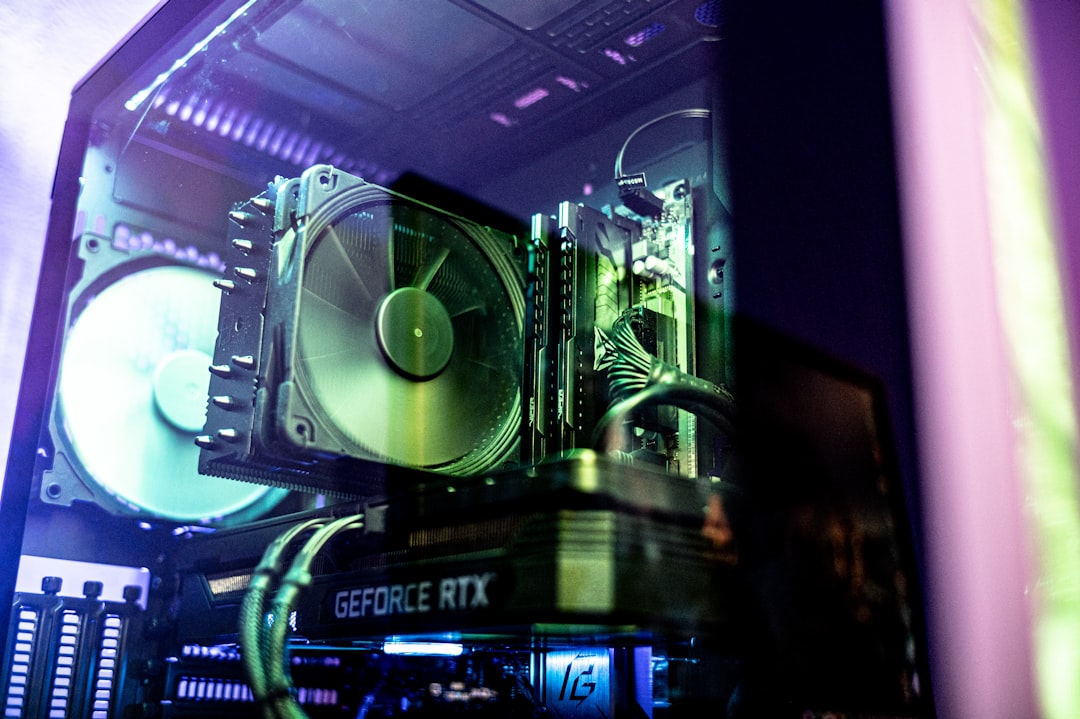
The AI Boom Is Entering A New Phase — And NVIDIA Isn’t The Only Winner
The AI boom has propelled chipmakers, cloud builders, and software platforms into a high-growth orbit. For years, NVIDIA led the charge as the go-to supplier for data-center GPUs that power training and inference for the world’s most advanced AI systems. But as the industry matures, the landscape tilts toward a broader ecosystem: more players, different business models, and a renewed emphasis on software, energy efficiency, and cloud-scale infrastructure. In other words, the boom entering phase nvidia is just one chapter in a broader story where multiple winners may emerge—and investors should prepare for it.
To understand where the next leg of AI growth could come from, it helps to map the value chain: hardware (chips and accelerators), software (model training, optimization, and deployment platforms), and services (data processing, infrastructure, and management). Each layer offers opportunities and risks, and a shift in any one layer can alter which companies capture the most value. While NVIDIA remains a dominant force, the next phase rewards those who can optimize total cost of ownership, speed time-to-value, and integrate across the stack.
The Shifting Playbook: From Pure Compute To Compute-Plus-Platform
Historically, the AI market rewarded those who could deliver raw compute quickly and at scale. GPUs became the language of AI because they offered parallelism and performance that fit the needs of model training. NVIDIA rode that wave to dominance in data-center acceleration. But the next phase is less about a single piece of hardware and more about a system that combines accelerators, memory bandwidth, interconnects, software toolchains, and reliable power efficiency.
Several forces are shaping this shift:
- Specialized accelerators beyond GPUs: While GPUs remain central, alternative chips designed for AI workloads — such as tensor processing units, domain-specific accelerators, and even some ASICs — are gaining traction for specific tasks like inference or large-model deployment.
- Software ecosystems and tooling: The bottleneck for AI adoption often isn’t raw compute but the ease of building, fine-tuning, and deploying models. Platforms that offer end-to-end pipelines, model optimization, and managed services stand to capture recurring revenue through subscriptions and usage fees.
- Cloud-scale infrastructure: Hyperscalers are investing in custom accelerators, high-bandwidth networking, and energy-efficient designs to drive lower per-transaction costs. This shift benefits providers who can seamlessly integrate hardware with software and services.
Who May Lead The Next Phase?
NVIDIA’s established position in the data-center GPU market is notable, but a broader set of participants could wield influence as the AI market evolves. Here are several archetypes investors should watch:
- Cloud providers expanding their own AI stacks: Major cloud players are pairing hardware with software platforms, offering integrated AI services, model hosting, and optimization. This combination can create sticky revenue streams that aren’t as exposed to raw hardware pricing cycles.
- Alternative accelerators gaining scale: Companies focused on domain-specific accelerators or optimized inference engines can deliver better performance-per-dollar for particular tasks, potentially reducing the reliance on GPUs alone.
- Software-first AI platforms with hardware leverage: Platforms that make it easier to train, fine-tune, and deploy models can capture a growing share of value by selling services and subscriptions alongside hardware.
- Chipmakers with strategic partnerships: Firms like AMD, Intel, and others are pushing their own AI-grade accelerators and collaborating with software ecosystems to compete for total cost of ownership advantages.
In this evolving landscape, NVIDIA remains a cornerstone, but the next winners are likely to be those who can deliver a compelling blend of performance, efficiency, and user-ready software ecosystems at scale. The phrase boom entering phase nvidia captures the sense that while NVIDIA is a dominant force, the opportunity set for investors is expanding beyond a single stock.
Real-World Signals: How The Market Is Responding
Public markets have started to reflect a more nuanced view of AI growth. Here are tangible indicators that the AI landscape is broadening beyond a one-company story:
- Diversified supplier ecosystems: Customers increasingly source compute from multiple accelerators to optimize cost and performance for different tasks, reducing the risk of over-reliance on a single vendor.
- Hybrid models and on-prem options: Enterprises seek on-prem resistance to data gravity and regulatory concerns, which boosts demand for both traditional GPUs and alternative accelerators in private data centers.
- Software-first revenue lines: A growing share of AI revenue is tied to software platforms, subscriptions, and managed services rather than pure hardware sales.
- Energy and cooling considerations: Efficiency improvements translate into sizable TCO savings, influencing customer preferences and procurement decisions.
A Practical Look At The Competitive Landscape
To help frame potential winners, here’s a practical snapshot of the kinds of players that could benefit in the new phase of AI growth, with a few considerations for investors:
| Category | Why It Matters | What To Watch |
|---|---|---|
| NVIDIA | Still a leader in raw compute and ecosystem support; massive installed base and software tooling. | Next moves around inferencing efficiency, software services, and multi-accelerator deployments. |
| AMD | Expanding AI accelerators and competitive pricing; solid partnerships with cloud providers. | Adoption of its latest Instinct line and software cohesion for deployment. |
| Google/Cloud TPU Ecosystem | In-house AI hardware integrated with scalable software platforms and cloud services. | Key metrics include deployment velocity, model hosting margins, and energy efficiency. |
| Habana/Intel & Other Startups | Focused accelerators for inference and specialized workloads. | Market share growth and integration with broader AI stacks. |
These dynamics highlight a market where success is about more than a single chip. The ability to combine hardware with a robust software platform and reliable services can create durable competitive advantages that last through cycles of demand volatility.
What This Means For Investors
For investors, the new phase of the AI boom suggests a more nuanced approach to picking winners. Here are concrete strategies you can apply today:
- Balance a core AI hardware bet with ecosystem plays: Maintain exposure to leading GPU suppliers while adding software platforms, cloud-service providers, and diversified accelerator developers.
- Prioritize total cost of ownership and deployment speed: Companies that demonstrate lower client TCO through efficiency and streamlined integration tend to secure longer-term commitments.
- Watch for customer concentration risk: High reliance on a single large customer or a narrow product line can be a red flag in a volatile cycle.
- Consider capital allocation and margins: Firms that monetize via recurring services and long-term contracts may weather cyclical AI demand better than hardware-only peers.
As the boom entering phase nvidia continues to unfold, the smarter bets are those that can offer a complete AI solution — hardware, software, and services — that scales across industries, from healthcare and finance to manufacturing and consumer tech. The winners will be the teams that show a tight alignment between technology capability, customer value, and sustainable economics.
Conclusion: The Next Phase Is About More Than One Name
The AI market is shifting from a period of rapid GPU-driven growth to a more complex ecosystem where multiple players can thrive. NVIDIA remains a foundational force, but the next winners are likely to come from combinations of hardware innovation, software platforms, and cloud-scale services that together reduce cost, accelerate deployment, and simplify management for customers. For investors, this means broadening the lens beyond a single stock and focusing on how well a company integrates the full AI stack, supports scalable adoption, and preserves margins through repeated revenue streams. The era of the AI boom is entering phase nvidia, and the path forward may reward a diversified set of leaders who can execute across the stack.

Discussion