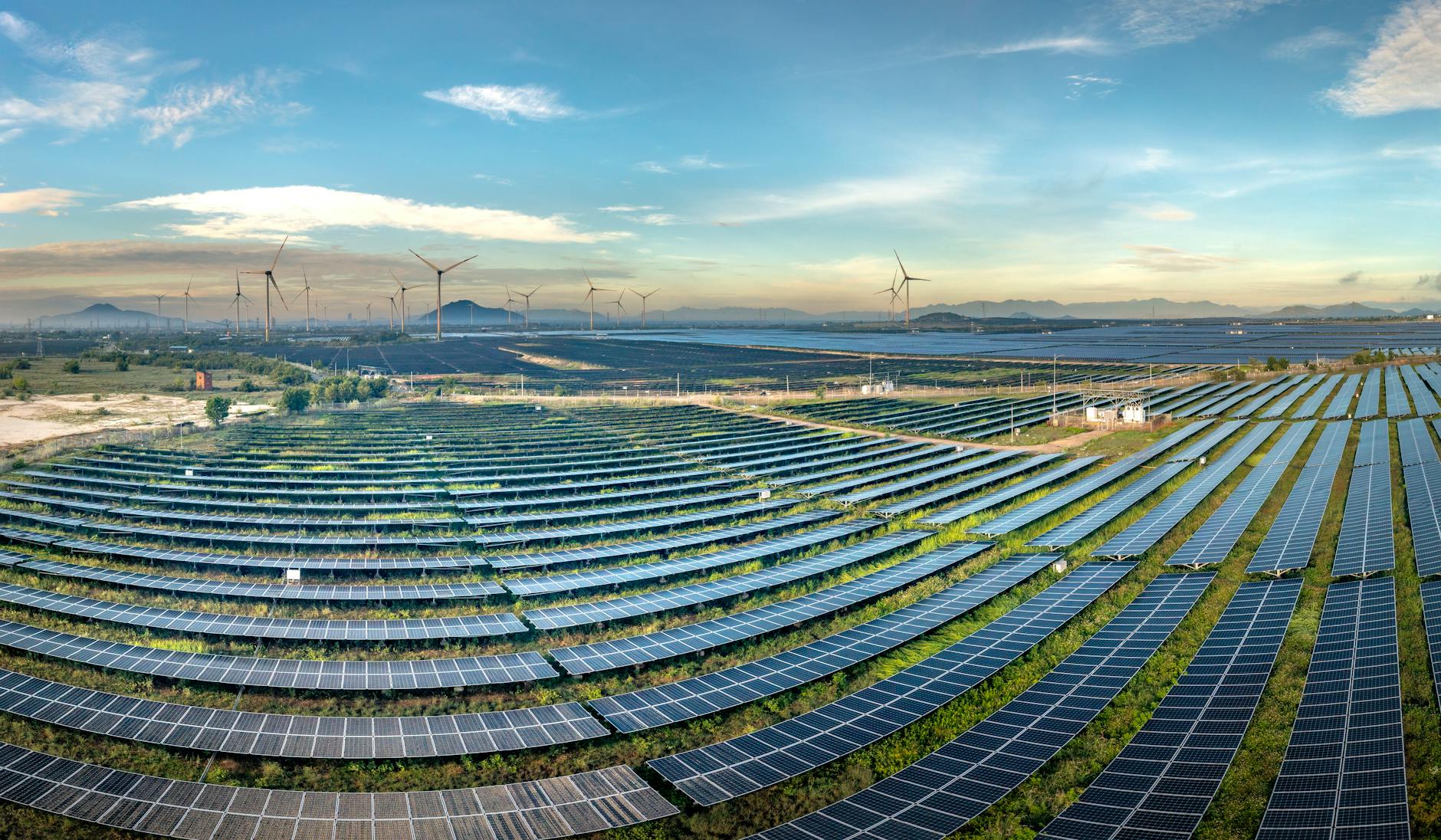
Why a Clean Energy Stock Face-Off Matters Now
There’s no single magic bullet in the energy transition, but the market increasingly rewards companies that can turn long-term clean power demand into steady cash flow. In this clean energy stock face-off, we compare two very different approaches to the same broad goal: clean, reliable energy for the world’s growing needs. One company sits closer to hardware innovation and on-site energy solutions; the other owns a diversified mix of large-scale renewable assets that generate predictable cash returns for investors.
Understanding how Bloom Energy and Brookfield Renewable operate, how they make money, and how their risk profiles stack up helps you decide whether you want growth potential, income, or a blend of both. The takeaway from this clean energy stock face-off is simple: gauge the business model, the quality of cash flow, and the resilience of balance sheets before chasing the latest headline about clean power transitions.
Meet the Contenders: Bloom Energy vs Brookfield Renewable
Below is a concise snapshot of each company’s core business and where the opportunity or risk lies in a clean energy stock face-off.
Bloom Energy: Fuel-Cell Technology at the Enterprise Edge
Bloom Energy builds solid-oxide fuel cell systems that convert natural gas or biogas into electricity on customer sites or in modular deployments. Their energy servers are designed for reliability, quick deployment, and lower emissions at scale for enterprises, data centers, and utilities. The appeal centers on on-site generation for critical facilities, with potential expansion into hydrogen and winterized grids as demand shifts toward resilient, low-carbon power sources. Revenue in the ballpark of $1.0–$1.2 billion, with ongoing investment in manufacturing scale and cost reduction. The company has historically run on a rising but occasionally volatile top line and a tight profitability profile as it scales production and expands commercial deals. Higher operational and execution risk tied to project cycles, customer concentration, and capital intensity. Balance sheet strength matters for funding future deployments.
Bloom Energy’s model centers on selling energy servers and related services to customers who want more control over their power supply, especially in sectors sensitive to downtime. The strategy hinges on reducing total electricity costs for large accounts while cutting emissions, which can be appealing to corporations pushing ESG initiatives.
Brookfield Renewable: Scale, Diversification, and Durable Cash Flows
Brookfield Renewable Partners owns and operates a broad portfolio of renewable assets—hydro, wind, and solar—across multiple regions. The model leans on long-term contracted revenue streams and strong grid-scale operating performance. The key is asset deployment efficiency, acquisitions of new projects, and maintaining a robust development pipeline to replenish aging assets, all while benefiting from diversified geography and generation types. A large, diversified asset base with sizable, stable cash flows and a history of steady distributions to investors. The portfolio supports a more predictable income profile, even as commodity and interest-rate environments shift. Lower short-term earnings volatility than a single-technology manufacturer, but sensitive to capital markets, project financing, and regulatory environments that affect large-scale asset deployment.
Brookfield Renewable’s advantage is scale. With thousands of megawatts under management and a global footprint, the company can weather regional headwinds better than a single-technology provider. Shareholders often value the potential for steady dividend growth alongside long-term capital appreciation from a diversified asset base.
How to Compare These Two on a Head-to-Head Basis
In a clean energy stock face-off, it’s helpful to structure your comparison around four pillars: business model, growth catalysts, financial health, and valuation. Here’s how Bloom Energy and Brookfield Renewable stack up in each area.
1) Business Model and Revenue Quality
Asset-light on a product-per-unit basis but capital-intensive in manufacturing and deployment. Revenue comes from selling energy servers, parts, and ongoing services. Cash flow depends on project cadence, service contracts, and customer adoption rates. Short-term catalysts include more enterprise deals and utility pilot programs, with longer-term upside from hydrogen and clean-energy retrofits. Asset-heavy, with a diversified, regulated-like cash flow. Revenue is driven by power purchase agreements (PPAs) and long-term off-take contracts. The advantage is resilience: even if one region softens, another might compensate with a strong wind, hydro, or solar year.
2) Growth Catalysts and Timing
Growth hinges on enterprise adoption, data-center demand, and cost reductions from manufacturing scaling. The company could also benefit from broader energy-transition policies and partnerships that push customers to replace diesel backup with cleaner alternatives. Growth is more tied to project development pipelines, M&A activity, and favorable financing conditions. The company can deploy capital across a broad set of projects, unlocking compounding returns through diversified cash flows.
3) Financial Health and Risk
Higher operational risk tied to product deployment cycles and project execution. Leverage and liquidity management are important as the company scales. A focus on gross margins per unit and free cash flow generation helps gauge health during downturns. Strong balance sheet discipline with focus on cash flow coverage for distributions. Leverage remains a key consideration, especially as it funds sizable development programs and acquisitions. A resilient coverage ratio supports dividend sustainability.
4) Valuation and Relative Attractiveness
Valuation tends to reflect near-term growth potential and profitability improvements. Look at price-to-sales (P/S) and gross margin trends, along with any wins in large deployments that could shift the multiple higher if margins expand. Valuation often centers on cash-flow visibility and distribution quality. The stock may command a premium for a diversified, scalable asset base and steady dividend growth, but investors should watch interest-rate sensitivity and capex needs.
What to Watch This Year: Practical Signals for Investors
Markets move quickly on policy shifts, project announcements, and macro surprises. Here are concrete signals that can help you navigate this clean energy stock face-off:
Any new clean-energy financing incentives or carbon policy clarity can accelerate deployment for both companies but may hit different parts of their business models. Look for Bloom Energy’s software-enabled services and enterprise deals, plus Brookfield Renewable’s large-scale PPAs and cross-border projects. For Brookfield Renewable, track distributions, payout ratio, and coverage. For Bloom Energy, monitor free cash flow and the path to sustained profitability. Both companies borrow to grow, but a higher debt burden can magnify risk during rising rates. Compare interest coverage and maturity profiles.
A Practical Framework: If You’re Building a Clean-Energy-Heavy Portfolio
Investor portfolios should reflect both growth potential and risk management. Here’s a practical, numbers-backed framework to consider when deciding how Bloom Energy and Brookfield Renewable fit into your plan.
1) Define your risk tolerance and time horizon
- High risk/High reward: Bloom Energy can deliver outsized upside if enterprise demand accelerates and margins improve. Be prepared for volatility around project cycles and quarterly earnings noise.
- Moderate risk/Steady income: Brookfield Renewable offers a steadier cash flow, diversification, and a clearer path to dividend growth. This suits investors seeking reliability along with modest growth.
2) Set realistic position sizes
- New to clean energy stocks: Start with 2–4% of your equity portfolio in a single name and consider a balanced tilt after three to six months of observation.
- Experienced investors: A staggered approach could be 2–3% in Bloom Energy for growth potential and 3–5% in Brookfield Renewable for income and stability, depending on your risk tolerance.
3) Use a simple valuation lens
- Bloom Energy: Keep an eye on gross margin expansion, order backlog, and per-unit profitability. If the company shows consistent margin gains and a growing service revenue mix, a higher multiple could be justified.
- Brookfield Renewable: Focus on cash-flow visibility, distribution coverage, and debt maturity management. A lower price-to-earnings ratio may be acceptable if cash generation is solid and the dividend is secure.
4) Build with a long-term horizon
Clean energy investments are sensitive to policy, technology shifts, and capital markets. Align your holdings with a multi-year timeline so you can ride through cycles and benefit from compounding returns.
Real-World Scenarios: What a Portfolio Might Look Like
Let’s imagine two practical scenarios that illustrate how the clean energy stock face-off could play out in real life, using reasonable ballpark figures for 2024–2025:
An investor allocates $6,000 to Bloom Energy and $4,000 to Brookfield Renewable, aiming for sizable upside if data centers and enterprise customers accelerate adoption of on-site energy systems. If Bloom Energy achieves margin improvements and a larger addressable market, it could push BE’s stock higher, potentially raising overall returns more than Brookfield Renewable in a strong growth cycle. An investor favors Brookfield Renewable for dividend stability and risk mitigation. A $7,000 allocation to Brookfield Renewable with a disciplined drip or dividend reinvestment strategy could yield a steadier, compounding income stream, while Bloom Energy remains a smaller, growth-oriented position.
Both paths illustrate the core idea of a clean energy stock face-off: you’re choosing between a high-growth, capital-intensive play and a diversified, cash-flow-driven powerhouse. The right mix depends on your goals, not just what’s hot in the news.
Bottom Line: Which Is the Better Buy Right Now?
There isn’t a single “better buy” in a clean energy stock face-off. Bloom Energy offers the potential for meaningful upside if enterprise demand accelerates and margins improve, but it comes with higher volatility and execution risk. Brookfield Renewable provides steadier cash flows, diversified asset exposure, and a more predictable income path, which can be attractive for risk-averse investors or those seeking income in a low-rate environment.
When deciding between Bloom Energy and Brookfield Renewable, anchor your choice to three questions: Do you want higher growth potential or steadier income? How comfortable are you with project execution risk and manufacturing cycles? What role should the clean energy stock face-off play in your broader asset mix?
FAQ: Quick Answers for Investors
Q1: What exactly is Bloom Energy’s core product and who buys it?
A1: Bloom Energy sells on-site energy generation systems that use solid-oxide fuel cells to convert fuel into electricity. Large enterprise customers, data centers, healthcare facilities, and manufacturing sites are typical buyers seeking reliable, lower-emission power and cost savings over time.
Q2: How does Brookfield Renewable make money and pay investors?
A2: Brookfield Renewable owns and operates a vast portfolio of hydro, wind, and solar projects. It earns revenue from selling electricity under long-term contracts and PPAs. This setup supports regular distributions to investors, with growth tied to project development and acquisitions.
Q3: Which stock is less risky for a cautious investor?
A3: Generally, Brookfield Renewable offers more predictable cash flow and a longer history of dividend payments, making it feel less risky for income-focused investors. Bloom Energy carries more growth potential but also more volatility due to project execution and technology adoption cycles.
Q4: How should I size a position in a clean energy stock face-off?
A4: Start with your overall risk tolerance and time horizon. A balanced approach could be to allocate a smaller portion (2–4%) to Bloom Energy for growth, and a larger portion (3–5%) to Brookfield Renewable for income and stability, adjusting as you learn how each position behaves in your portfolio.
Q5: What macro factors most affect these two stocks today?
A5: Key drivers include energy policy and subsidies, interest rates and financing costs for project development, and the pace of enterprise digitalization and data-center expansion for Bloom Energy. For Brookfield Renewable, factors include hydrology and wind resources, regional regulatory frameworks, and capital markets access for funding new projects.
Conclusion: Your Next Step in the Clean-Energy Stock Face-Off
In this clean energy stock face-off, Bloom Energy and Brookfield Renewable illustrate two ends of the spectrum in the clean energy investable universe. Bloom Energy represents the growth-forward, technology-enabled path that could deliver outsized gains if execution aligns with enterprise demand. Brookfield Renewable represents the broad, income-friendly path that emphasizes diversification, durability, and cash flow stability. The decision isn’t which is universally better, but which aligns with your goals, time horizon, and risk appetite. Use this framework to assess your needs, build a balanced exposure to clean energy, and monitor the key signals that could tilt the matchup in the months ahead.
Further Reading and How to Stay Prepared
To stay on top of this clean energy stock face-off, set up simple, repeatable checks: quarterly earnings, backlog and contract updates for Bloom Energy, and asset deployment progress plus dividend coverage for Brookfield Renewable. Pair these with broad market context, including energy policy developments and interest-rate trends, to keep your strategy aligned with the evolving energy landscape.
Discussion