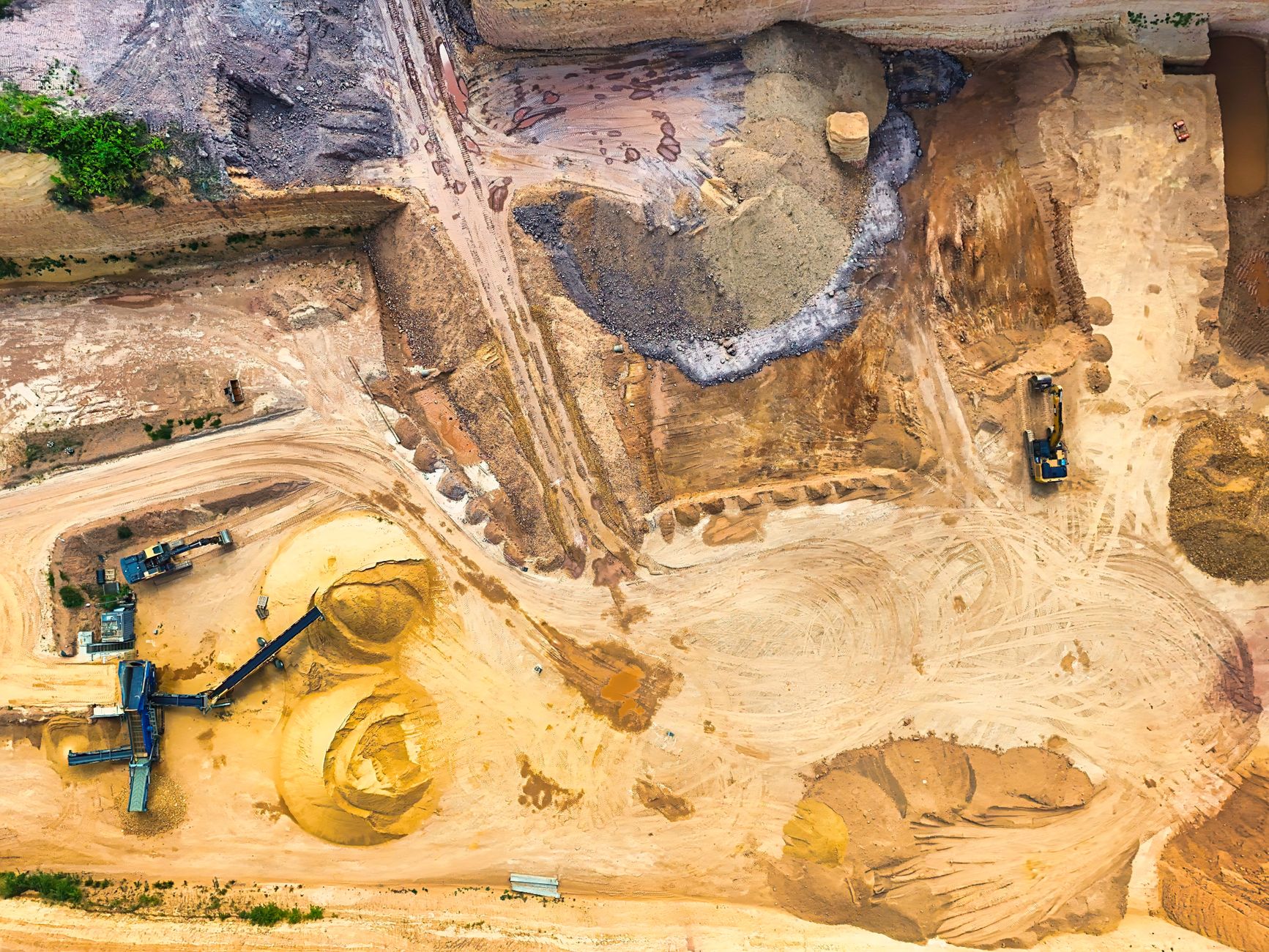
Market Backdrop: China’s Export Rules and the U.S. Reshoring Push
A new wave of investor interest is sweeping through the equity market as Beijing tightens export controls on rare earths and other strategic minerals. Policy moves in late 2025 expanded the list of restricted shipments, prompting manufacturers across the globe to rethink where pivotal inputs come from and how they reach production lines in energy, defense, and tech sectors. By mid-2026, this reshoring impulse has begun to show up in a compact group of exchange-traded funds that investors see as a practical way to ride the shift.
Analysts say the market is showing critical minerals etfs capturing reshoring momentum. ‘This isn’t a temporary distortion,’ said a senior research strategist. 'It’s a structural realignment of global supply chains that favors diversification across upstream miners and downstream users.’ The setup is driving inflows into funds that quietly crossed the attention threshold as supply risks sharpen the case for domestic and regional supply chains.
The reshoring storyline isn’t purely thematic. It is anchored in measurable market dynamics: rising mining costs in some traditional regions, new processing capacity in North America and Europe, and a broader push for battery metals and critical inputs used in clean energy and defense. In this moment, investors are weighing not just commodity prices but the resilience of entire value chains—from ore extraction to manufacturing final goods.
The ETFs At The Center Of The reshoring Move
Three dedicated funds have emerged as the most consequential in the reshoring narrative, each taking a distinct route to capture the same reshoring opportunity.
- REMX — VanEck Rare Earth and Strategic Metals ETF: This fund leans toward upstream miners of rare earths and strategic metals, aiming to reflect the core suppliers that underpin magnet materials, catalysts, and defense-grade inputs. It’s the closest proxy in this trio to a pure-play on mining activity for critical inputs.
- LIT — Global X Lithium & Battery Tech ETF: LIT spans the lithium-to-battery value chain, from mineral extraction to cell assembly and beyond. It is a broader bet on the energy-storage stack, with exposure to miners, chemical processors, and downstream manufacturers that participate in the EV and storage markets.
- SETM — Sprott Critical Materials ETF: SETM takes a broader tilt across copper, uranium, nickel, and rare earths, offering a diversified exposure intended to hedge against sector-specific shifts and to capture multiple momentum drivers in critical-materials markets.
Market observers note that critical minerals etfs capturing the reshoring theme benefits from multiple catalysts: policy clarity in supply chains, new mining projects, and regaining leverage over processing capacities previously concentrated in a few regions. The funds’ different constructions mean they respond to the same macro trend in varied ways, giving investors options depending on risk appetite and preferred exposure.
Performance Snapshot and Holdings
Through the first half of 2026, the trio has shown resilient performance as investors priced in longer-term supply disruptions and the potential for faster de-risking through domestic supply chains. While past results do not guarantee future outcomes, data compiled through June indicate:
- REMX has posted meaningful year-to-date gains, underpinned by rising demand for rare earth magnets and the strategic metals used in defense and technology applications.
- LIT’s exposure to lithium and the broader battery value chain has helped cushion headwinds from chip and chemistry cycles while offering upside tied to EV production and storage builds.
- SETM has offered a steadier ride, benefiting from diversification across several critical-materials sub-sectors that can offset volatility in any single metal.
Estimated asset sizes across the three funds sit in the multi-billion range collectively, with REMX attracting capital as a relatively targeted play, LIT drawing funds from broader clean-energy strategies, and SETM appealing to investors seeking a multi-metal hedge. These trends have amplified as investors look for ballast against geopolitical and supply-chain risks in traditional energy and tech names.
Expense ratios remain a practical consideration. REMX and SETM carry costs in the ballpark of about 0.55% to 0.60% per year, while LIT sits a touch higher on average around 0.65% to 0.75%. The higher fee for LIT reflects its broader coverage of the battery ecosystem and the complexity of maintaining a diversified exposure across the chain from mining to manufacturing.
What This Means For Investors
For a market contending with export controls, the emergence of critical minerals etfs capturing reshoring momentum offers a tangible way to participate in a structural shift without fully loading up on single-name stocks or opaque private assets. These funds provide a transparent, exchange-traded route to access to minerals critical for energy storage, electrification, and defense readiness.
Strategically, investors are weighing how to blend these ETFs with traditional equities, bond overlays, and inflation-hedge assets. A common theme is diversification: the belief that spreading risk across metals and stages of the supply chain can dampen volatility while preserving exposure to the long-run growth from electrification and green tech adoption.
From a portfolio-management perspective, the reshoring angle is a cyclical to secular call. Short-term price shocks may occur as policy expectations evolve or as new mining projects progress from permits to production. Yet the longer arc remains supportive, as countries pursue domestic capabilities to secure materials essential for modern technology and national security. The focus on critical minerals etfs capturing reshoring momentum is, in many cases, a framework for thinking about resilience in supply chains and the performance discipline of a diversified basket.
Risks and Outlook
Investors should be mindful that these funds are not immune to volatility. Geopolitical tensions, changes in export-control regimes, and shifts in pricing for solar, wind, and EV batteries can all affect performance. In addition, the pace of new mine development and the speed at which processing capacity is added in North America and Europe will shape the trajectory of these ETFs over the next 12 to 24 months.
Analysts caution that the reshoring story, while compelling, is contingent on policy stability and project execution. Currency movements, incentive programs, and supply chain partnerships will also influence outcomes. Still, for those seeking exposure to a critical-materals megatrend, the group of ETFs centered on REMX, LIT, and SETM offers a structured, liquid way to participate in critical minerals etfs capturing reshoring momentum without concentrating risk in any single metal or producer.
Bottom Line
As export controls reshape the geography of supply chains, REMX, LIT, and SETM sit at the heart of a broader investment thesis: critical minerals are not just commodities; they are a structural platform for modern industry. The reshoring trend is playing out in real time, and these funds provide a practical, transparent entry point for investors looking to align portfolios with a changing global landscape. While no ETF can eliminate risk, these products allow investors to express a thesis that the next decade will be defined by resilient, diversified access to critical inputs—from rare earths to copper and lithium—across the globe.
Discussion