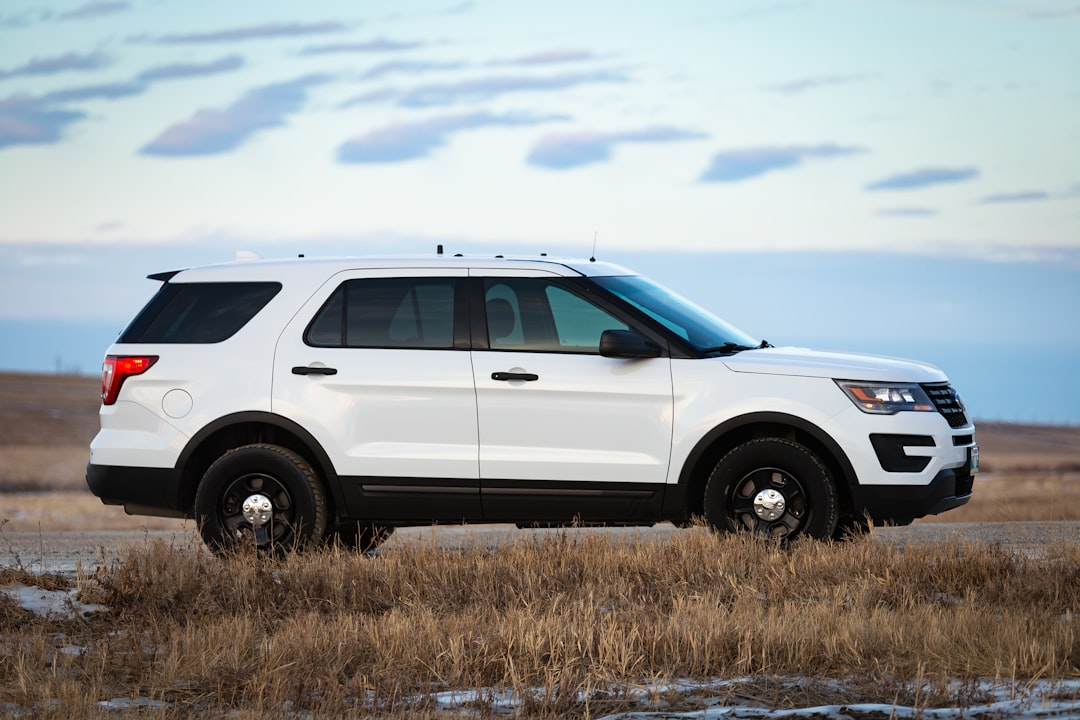
Market Pulse: A Tough Road for Legacy Makers in a shifting Auto World
Two American vehicle makers presented contrasting headlines this earnings season, reflecting broader market pressure from electrification, shifting consumer demand, and capital discipline. Ford Motor Co. faced a harsh quarterly backdrop tied to large EV-related charges, while Winnebago Industries Inc. benefited from a premium motorhome mix that lifted margins even as volumes softened. The juxtaposition underscores how the industry’s winners and losers are being decided not by a single metric, but by a complex mix of asset write-downs, product mix, and cash-flow discipline.
Investors are watching how these stories unfold in real time, because the lessons ripple beyond the specific brands. The broader market environment in early 2026 features higher interest rates, inflation cooling at a slower pace than hoped, and a consumer that remains selective about big-ticket purchases. Against that backdrop, forecasting profitability has become a more nuanced exercise for traditional automakers and RV builders alike.
Ford: Resetting EV Bets While Core Business Stabilizes
Ford’s latest quarter delivered a stark headline—an $11.1 billion GAAP net loss—driven by roughly $15.5 billion in special charges tied to its EV and software strategies. Yet beneath the surface, executives argued the company is executing a deliberate reset aimed at preserving cash flow and rebuilding a profitable core business platform.
Key takeaways from Ford’s results include a marked emphasis on commercial vehicles and a pivot away from unprofitable EV bets. The company still touts strength in its commercial fleet franchise, with Ford Pro revenue contributing meaningfully to the fourth quarter. Highlights cited by management include a robust ramp of software subscriptions across the fleet business, and continued strength in certain high-demand pickups.
Looking ahead, Ford guided 2026 EBIT to a range of $8.0 billion to $10.0 billion, signaling management’s intent to prioritize margin and capital efficiency even as it continues to invest for the longer term. Executives framed the quarter as a necessary tuition payment for a more resilient future, stressing that the EV transition will be iterative and value-driven rather than a straight-line ascent.
On the product side, Ford pointed to a record-breaking year for heavy-duty trucks and hybrid pickups, underscoring the appeal of its legacy strengths as the company trims and reallocates resources. Specific data points highlighted by the company include:
- Q4 Ford Pro revenue reached a material level, underscoring the profitability of the business-to-business segment.
- Software subscriptions climbed by roughly 30% in 2025, signaling progress in Ford’s software-centric value proposition for fleets.
- The F-150 family and Maverick remained strong partial contributors to the mix of hybrid offerings.
- The company reiterated the importance of the commercial vehicle franchise as a near-term stabilizer while it recalibrates its EV assets.
A spokesperson summarized the strategic posture: the company is “prioritizing profitable growth and a disciplined capital agenda” as it navigates a post-renaissance EV roadmap. Analysts note that the core business has not collapsed; rather, it is being fortified through cost discipline, selective investment, and a sharper focus on higher-margin opportunities.
Analysts noted that Ford’s quarterly results reveal a wider industry pattern: large asset write-downs can obscure underlying operating strength in non-EV segments. The question for investors is whether Ford’s commercial vehicle backbone, paired with a more disciplined EV plan, can deliver sustainable earnings once the write-downs settle and execution broadens.
Winnebago: Premium Mix Lifts Margins Amid Softer Volumes
Winnebago reported a dramatic swing in its fortunes with a first-quarter FY2026 earnings surprise that turned a prior-year loss into solid earnings per share. The company posted an adjusted EPS of $0.38, reversing a $0.03 loss in the year-ago period. Revenue guidance was raised to a range of $2.80 billion to $3.00 billion, reflecting a constructive walk forward even as demand for RVs remains uneven.
What’s driving Winnebago’s improvement is the company’s premium motorhome mix, particularly its Newmar luxury line, which has been the driver of margin resilience. Even with lower unit volumes, higher average selling prices and richer mix helped lift profitability. Management emphasized that the premium product cadence is aligning with a consumers’ willingness to invest in long-lead, high-feature experiences, even as overall macro demand fluctuates.
Winnebago executives framed the quarter as a proof point that premium positioning can offset volume headwinds and sustain margins in a market where customers remain highly selective. The company’s leadership pointed to ongoing product cadence enhancements and continued cost discipline as the primary levers for the current year.
On the demand side, Winnebago’s strategy appears to be anchored in repeat buyers and a clientele that values craftsmanship and amenities. The premium RV market has shown endurance in pockets where travelers trade down to value or push up for luxury, influencing Winnebago’s product cycles and pricing power.
ford winnebago: american vehicle — A Narrative of Two Paths
The juxtaposition of Ford and Winnebago in early 2026 has become a case study in how legacy brands pursue growth in a rapidly changing automotive landscape. The phrase ford winnebago: american vehicle captures a broader narrative: American brands with long-standing reputations for durability must navigate not only new technology but also consumer spending patterns and capital allocation decisions that prioritize profitability now and resilience later.
Ford’s path emphasizes the challenge of balancing an ambitious EV slate with the need to protect cash flow from a cyclical downturn. Winnebago’s route demonstrates how premiumization, a capital-light cost structure, and brand equity in a leisure-focused segment can yield margin strength even as volumes wobble. Both stories reflect a broader market trend: profitability in the near term hinges on how well companies adapt their IO (investments, operations) to a landscape where demand is less forgiving and the cost of capital remains a key constraint.
In practical terms, investors will be watching a handful of indicators in coming quarters: the durability of Ford’s commercial vehicle momentum, progress in the Model e and software asset strategy, and the sustainability of Winnebago’s premium mix gains as it scales products and explores broader distribution channels.
Investor Reactions and Key Risks
Stock reactions to both companies reflect the mixed sentiment toward traditional automakers amid an EV transition. Ford’s sizable charges weighed on shares in the short term, but investors remain focused on whether the 2026 EBIT guidance can translate into sustainable cash flow once the EV restructuring progresses. For Winnebago, the surprise earnings beat and raised revenue guidance have buoyed sentiment that premium branding can translate into reliable profitability, even when trade volumes are uneven.
Risks to watch include:
- Further swings in consumer demand for big-ticket purchases, particularly in the RV market where discretionary spending can be volatile.
- Continued volatility in commodity costs, supply chain pressures, and interest rates that affect financing for both consumers and fleet operators.
- The pace and profitability of Ford’s EV backlog and asset write-downs, which could influence investor confidence if the path to margin recovery slows.
- Product innovation cycles and competitive dynamics in both the commercial vehicle space and the luxury RV segment.
Analysts caution that the ford winnebago: american vehicle narrative remains a work in progress. The two companies illustrate how different strategies—one focused on rebuilding a profitable core while pruning EV bets, the other leaning into premiumization with disciplined cost management—can coexist in an industry undergoing upheaval.
Data Snapshot: What to Watch Next
Here are the most relevant numbers that investors will use to calibrate expectations for the next quarter:
- Ford Q4 2025: GAAP net loss of $11.1 billion; $15.5 billion in special charges; 2026 EBIT guidance of $8.0–$10.0 billion.
- Ford Q4 2025: Ford Pro revenue at the quarter’s core, with software subscriptions rising ~30% in 2025.
- Ford Q4 2025: Super Duty truck line up to its strongest year since 2004; F-150 and Maverick hybrid trucks remain top sellers.
- Winnebago Q1 FY2026: Adjusted EPS of $0.38 vs prior year’s $0.03 loss; revenue guidance raised to $2.80–$3.00 billion.
- Winnebago: Premium Newmar motorhome mix supports margins despite lower volumes.
The numbers point to a broader theme for investors: success in the auto space increasingly depends on a balanced portfolio—segment leadership in high-margin commercial and premium consumer products coupled with a disciplined EV strategy that protects cash flows in the near term.
Conclusion: A Tale of Two Recalibrations
As Ford and Winnebago move through 2026, the market is learning what it means for traditional vehicle makers to retool for a future where profitability hinges on mix, pricing power, and capital discipline as much as on scale. Ford’s path is a careful reset aimed at preserving a durable business model while it distances itself from expensive EV bets that underperformed. Winnebago’s route demonstrates that a premium, experience-focused product line can sustain margins even when volumes are less certain.
For investors watching the ford winnebago: american vehicle arc, the takeaway is clear: resilience in this industry now requires a dual lens—how well management executes the current portfolio and how convincingly it funds the pivot to a more electric, software-enabled, and consumer-driven landscape. The road is still bumpy, but the destinations for both companies are increasingly defined by disciplined choices and a sharper focus on cash-generation opportunities.

Discussion