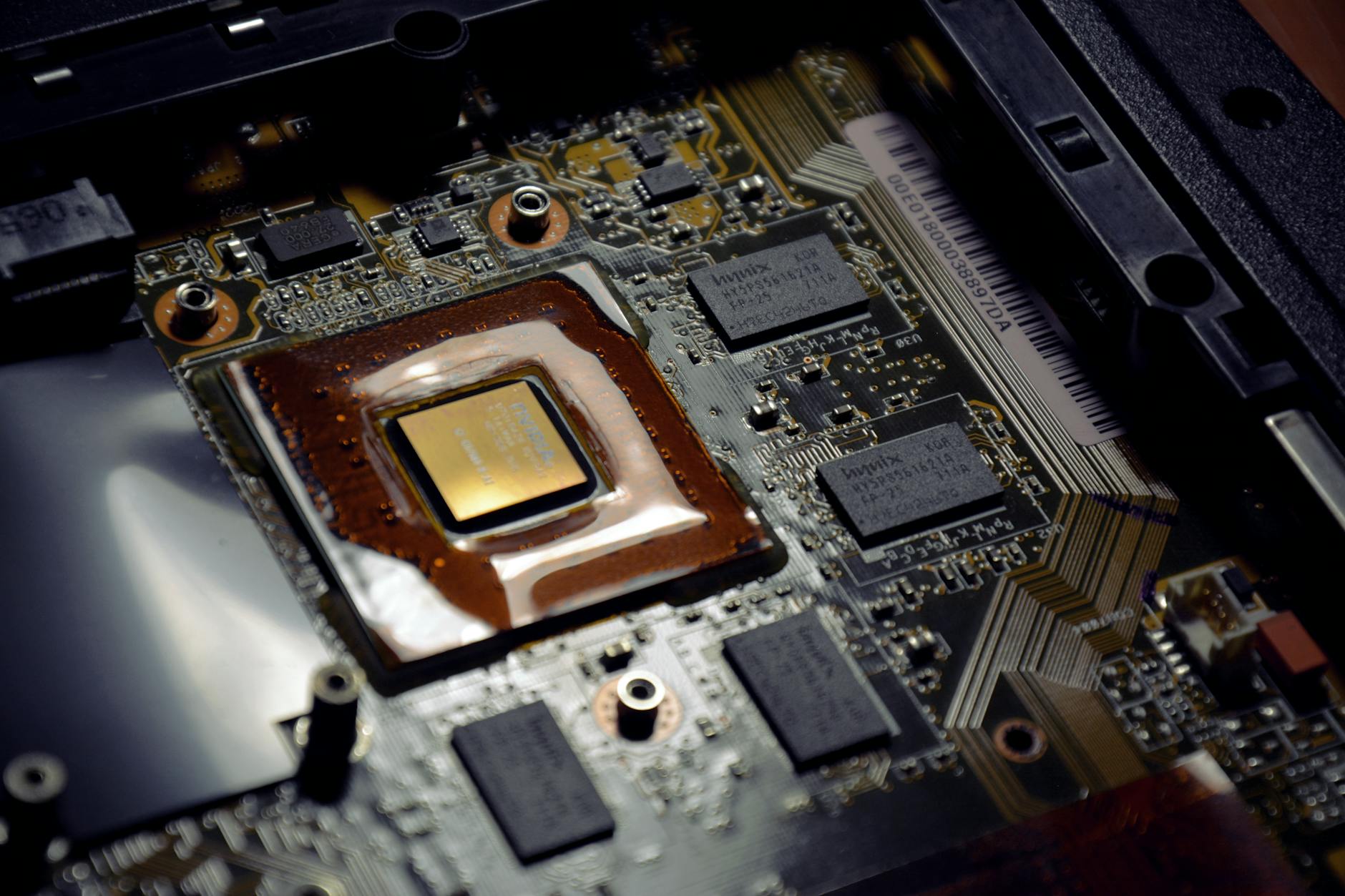
Market Backdrop: AI Fight Deepens as Cloud Spending Surges
As AI accelerates across industries, Alphabet is stepping into the breach with a strategy that mirrors Nvidia’s high-growth playbook—yet the path is far from simple. Investors are weighing whether Google can translate AI leadership into durable profits, even as the company commits to a cloud and platform-heavy expansion that could redefine its cash flow profile in the near term.
In early May 2026 trading, Alphabet’s trajectory sits at a crossroad: it has the strongest search-and-video combination on the planet, a rapidly expanding cloud business, and a vast, underutilized back catalog of AI infrastructure. But the arithmetic is shifting. The stock narrative now centers on whether google next nvidia along is feasible, and if so, on what timetable investors should expect meaningful earnings acceleration.
Analysts are split on the timing and magnitude of a potential transition. One market strategist summarized the debate: “The AI arms race will reward platforms that turn AI capabilities into real, repeatable cash flow. Alphabet has all the pieces, but the clock on profitability is what matters most.”
Alphabet’s Core Engines: What Fueled the Quarter
Alphabet reported a heady mix of top-line strength and heavy investment, with cloud taking center stage as the main driver of growth. The cloud unit is expanding at a blistering pace, while the broader business remains anchored by core properties such as Search and YouTube. The crosscurrents are clear: rapid revenue growth paired with capex that increasingly resembles a utility bill for AI-era expansion.
Key data points that shape the conversation include a quarterly revenue near $110 billion, robust cloud growth, and a backstory of elevated capital outlays that could pressure near-term margins. The numbers underscore the dual challenge investors face: how to value a company that is effectively building out a nearly unlimited AI platform while the cash burn in the near term remains elevated.
- Quarterly revenue: about $109.9 billion; GAAP and non-GAAP earnings per share were notably positive, signaling ongoing operating leverage.
- Cloud growth: approximately 63% year over year, a sign of outsized demand for scalable AI-enabled services.
- Cloud backlog: roughly $462 billion, highlighting a long horizon of revenue visibility.
- Operating margin: expanded to about 36%, illustrating that at the overall level Alphabet is managing throughput well even as cloud costs rise.
- Cloud operating income: about $6.6 billion, reflecting a mix of scale and ongoing investments in platform capabilities.
- Gemini-related products: revenue growth approaching 800% year over year for offerings built on the Gemini stack.
- Capex guidance: 2026 capital expenditure expected in a range of $180 billion to $190 billion, signaling a commitment to aggressive AI infrastructure.
- Free cash flow: down roughly 46.6% year over year, a reminder that spending is outpacing cash generation in the near term.
- Debt load: long-term debt rose from about $22.6 billion in 2024 to roughly $90.5 billion by March 2026.
A Google spokesperson said the company remains focused on long-term AI platforms and user experience, but did not offer new commentary on near-term financial targets. The numbers themselves tell a story: Alphabet has the scale to push through a multi-year AI buildout, yet the near-term cash dynamics are evolving in ways that may test investor patience.
The Google Next Nvidia Along Thesis: Why Some See a Blueprint, Others See Risk
The phrase google next nvidia along has become a shorthand for a bold hypothesis: that Alphabet could replicate Nvidia’s growth trajectory by turning AI GPUs, software stacks, and cloud services into a single, high-margin engine. The argument rests on three pillars: platform scale, AI productization, and a predictable revenue cadence from enterprise users who sign long-term cloud and Gemini-enabled solutions.
On the surface, Alphabet looks well positioned. It combines a robust search and video ecosystem with a fast-growing cloud unit and an API-and-services strategy that can embed Gemini capabilities into consumer and developer workflows. The market has historically punished players who chase Nvidia’s moat, fearing that scale alone cannot guarantee profitability. Yet a handful of investors argue Alphabet’s model is different enough to unlock durable cash generation: the company has control of the stack, from data parsing to application delivery, reducing reliance on third-party platforms.
To test the thesis, investors are focusing on how quickly Alphabet can convert cloud momentum into operating cash flow and, crucially, how capex translates into revenue growth and margin expansion over multiple quarters. A trader at a midsize fund described the dynamic this way: “If cloud can keep delivering mid- to high-teens revenue growth while capex gradually normalizes, the google next nvidia along narrative could become a longer-term reality.”
Risks Beckon: Debt, Margins, and Capital Allocation Questions
While the cloud surge is a bullish catalyst, the balance sheet signals growing caution. The surge in capital expenditure to fund AI infrastructure coincides with a notable drift in free cash flow, which has pulled back from the pace seen in earlier years. The debt trajectory is also a focal point for risk management teams and rating agencies evaluating Alphabet’s ability to sustain ambitious investments without straining liquidity or shareholder value.
Three risk areas stand out for investors evaluating the google next nvidia along hypothesis:
- Capital intensity: With 2026 capex guidance at $180-190 billion, the company is spending like a utility. The payoff requires a steady ascent in cloud and Gemini-driven revenue to offset the investment curve.
- Cash flow durability: Free cash flow declined dramatically in the latest period, raising questions about how soon Alphabet can re-accelerate cash generation without sacrificing AI progress.
- Debt burden: The rise in long-term debt underscores the need for a clear plan to monetize investments through higher-margin services and enterprise contracts.
Analysts have noted that the risk-reward is highly sensitivity to the pace of cloud adoption and the mix of revenue between consumer-driven services and enterprise AI solutions. “The next few quarters will be telling,” said a senior equities analyst at Northline Capital. “If gross margins compress and capex remains stubbornly high, the market may reassess the odds of achieving Nvidia-like returns.”
Investor Sentiment and What Comes Next
Wall Street’s reaction to Alphabet’s AI push has been a blend of enthusiasm for the cloud ramp and caution over the cost of scale. A substantial majority of analysts still rate Alphabet as a buy or strong buy, reflecting confidence in its long-term AI platform potential. Yet the near-term hurdle remains clear: investors want to see sustained cash-flow growth, not just top-line expansion.
Momentum in AI-specific products, including Gemini-powered tools and enterprise-ready APIs, will be a critical lever. The company’s ability to monetize these offerings without eroding margins will determine whether google next nvidia along remains a speculative hypothesis or a practical blueprint for value in 2026 and beyond.
What to Watch in the Next Quarters
Looking ahead, several milestones will shape the narrative and the market’s assessment of Alphabet’s AI strategy:
- Cloud revenue and operating income growth pace, quarter by quarter.
- Progress in Gemini-powered product adoption across consumer and enterprise segments.
- Incremental efficiency gains in data centers and software optimization that could cushion margins.
- Debt management and financing terms as the company continues to invest in AI infrastructure.
In an environment where AI bets are increasingly priced into stock multiples, the decision on whether google next nvidia along becomes a reality hinges on tangible cash-flow improvements and a clearer path to sustainable profitability. For Alphabet, the road map is clear: scale the AI platform responsibly, bend the cost curve, and convert cloud momentum into a durable earnings engine.
As always, investors should balance optimism about AI leadership with discipline on capital allocation and risk controls. The coming quarters will reveal whether Alphabet can keep delivering the kind of growth that justifies its current multiple or if the debt-and-capex dynamic creates a ceiling on near-term gains.
Discussion