
Why AI Stocks Jumped Today: A Realistic Look at the Rally
On most Fridays, market chatter slows a bit, but this week the conversation centered on one big theme: artificial intelligence infrastructure. Investors piled into large chip makers and their peers as Wall Street analysts underscored the immense growth potential of AI workloads—from cloud training to edge inference. The result: a broad spike in shares for intel, amd, arm, and a wide group of other AI stocks. Below is a practical, story-driven explanation of what happened, why it matters, and how to think about these moves as a long-term investor.
What Spurred the AI Stock Pop Today?
Several interconnected forces came together to light a spark in the market. First, hyperscalers and enterprise customers accelerated capital expenditure to expand AI capacity. Second, chipmakers released or highlighted AI-optimized processors and accelerators designed to speed up training and inference. Third, the broader market began to price in sustained AI adoption, rather than a one-off hype cycle. In plain terms: investors are betting thatAI infrastructure spending will stay robust for years, not quarters.
From a portfolio perspective, the rally wasn’t driven by a single headline. Analysts emphasized that the AI data-center cycle—driven by GPUs, CPUs with AI features, and dedicated accelerators—has a multi-year runway. That means today’s pop could reflect both an upward reassessment of long-term growth and relief that the industry’s supply chain bottlenecks are easing, at least gradually. For intel, amd, and arm investors, the question isn’t just about a single product launch; it’s about whether each company can capture AI revenue across servers, edge devices, and licensing pipelines in ways that compound over time.
The Big Three: How Intel, AMD, and Arm Are Positioned in AI
Intel: Building a Broad AI Stack for Data Centers and Edge
Intel has long emphasized a full-stack approach to AI, from server CPUs to dedicated accelerators and software tooling. In today’s environment, the market is looking at three pillars: scalable CPUs designed for AI workloads, AI-specific accelerators, and strong partnerships with cloud providers and large enterprises. Investors are listening for progress on Intel’s roadmap for next-generation AI chips, memory bandwidth improvements, and software ecosystems that can help customers deploy models faster and at lower total costs.
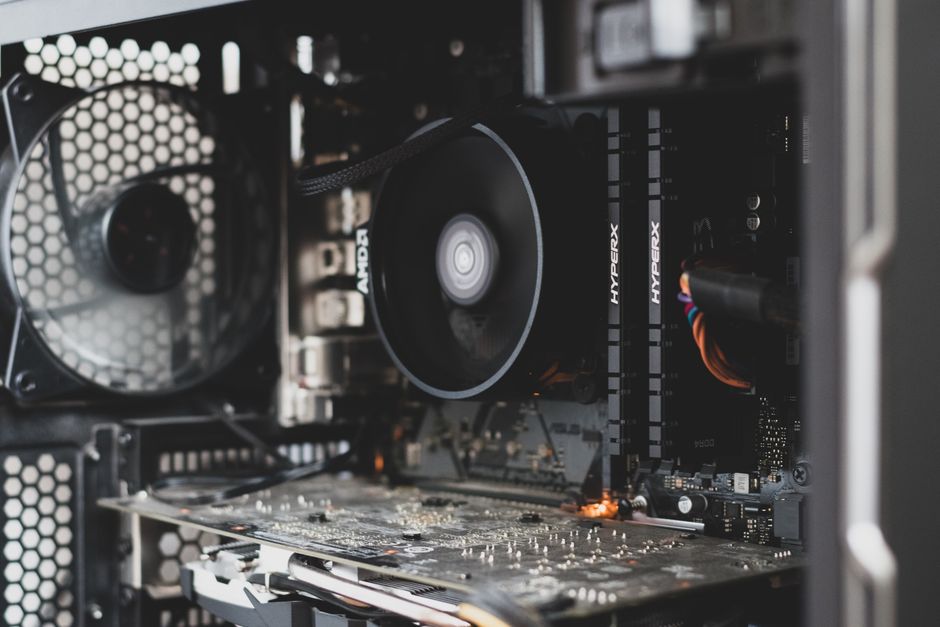
Real-world signals to watch include: new accelerator line announcements, performance-per-watt strides in AI workloads, and commitments from hyperscalers to adopt Intel hardware for critical AI tasks. While past cycles taught investors to be mindful of execution risk, today’s mood suggests there is a growing belief that Intel can play a meaningful role in both training and inference across data centers and edge environments.
AMD: Strength in GPUs, AI Accelerators, and Software
AMD’s AI strategy leans on its high-performance GPU lineup and architecture that can handle large-scale training as well as efficient inference. The company’s AI accelerators, built on its CDNA architecture, aim to strike a balance between raw compute and energy efficiency. The market is watching for updates on the Instinct family, integration with major cloud platforms, and software ecosystems that unlock easier model deployment for developers.
What makes AMD intriguing is the potential for better pricing leverage in a crowded AI market. If AMD can demonstrate improved performance-per-dollar versus rivals and strengthen its software stack (libraries, compilers, and tooling that accelerate AI workloads), it could attract more data-center contracts and long-term licenses from customers who want scalable AI without prohibitive power costs.
Arm: AI at the Edge and Beyond
Arm’s role in AI is increasingly focused on efficiency and edge AI—the kind of workloads that live in devices, telecoms gear, and private networks. Arm licenses its architectures to chipmakers who build AI inferencing chips that sip power rather than gulp it. The advantage here is a potentially large TAM (total addressable market) in edge AI, where energy efficiency and real-time responsiveness matter more than raw GPU horsepower.
Analysts are watching Arm’s licensing pipeline for AI accelerators and its ability to scale across data centers, consumer devices, and the growing field of AI-enabled sensors. If Arm can secure more designs with major OEMs and maintain competitive licensing terms, it could become a cornerstone for AI at the edge in 2025 and beyond.
Other AI Stocks: A Broader Look Beyond the Leaders
Beyond intel, amd, and arm, a constellation of other AI stocks can move on the same narrative. This group includes companies supplying memory, networking, and specialized accelerators; software firms enabling AI deployment; and smaller chipmakers focused on niche AI workloads. The rally today reflected a broader belief that the AI infrastructure cycle is expanding, not just isolating to a single vendor. Some of these stocks could deliver outsized gains if they capture early customer traction or win pivotal cloud contracts. But they also carry higher execution risk and sensitivity to capex plans by large buyers.
A useful way to frame exposure is as a blend: pick a core of reliable AI-enabled platforms (such as intel, amd, arm) for steady growth, and couple them with selective bets in other AI stocks that demonstrate real customer wins, scalable margins, and credible AI roadmaps. The key: don’t chase momentum alone—look for durable competitive advantages and transparent capital allocation.
How to Think About Valuation and Risk in AI Stocks
Rally days can create excitement, but long-term investors should tether decisions to fundamentals. AI infrastructure spending is real and tends to be persistent, but the market often prices in the best possible outcomes. Here are practical lenses to assess whether today’s moves merit new purchases or simply a ride to be watched from the sidelines.
- Revenue visibility: Are AI products tied to multi-year contracts or repeatable licensing? Companies with durable ARR in AI software and predictable data-center sales tend to weather cycles better.
- Gross margins: AI hardware often carries tighter margins than software. A path to margin expansion via product mix and process improvements matters for long-term stock health.
- Cash flow and capital needs: High R&D spend can be costly; investors should see a credible plan to convert investments into higher, recurring revenue streams.
- Valuation discipline: Compare EV/Revenue and forward P/E against peers and the broader AI hardware ecosystem. If a stock’s price implies perfection, consider waiting for a pullback or an entry point with a clearer roadmap.
Practical Ways to Invest in AI Today
If you want to participate in the AI infrastructure wave, here are concrete steps to construct a balanced, informed plan. These ideas assume a typical self-directed investor with a medium risk tolerance and a 5- to 7-year horizon.
- Define your exposure target: Aim for 5% to 15% of your equity portfolio in AI-focused stocks or funds, depending on your risk tolerance and time horizon.
- Diversify within the theme: Don’t put all your eggs in one basket. Include a core in intel, amd, and arm, plus a satellite position in other AI stocks that show real revenue traction and scalable opportunities.
- Use sensible position sizing: Start with smaller allocations (e.g., 2%–3% per stock) and scale up only as you observe consistent results in the business and stock performance.
- Set entry and exit rules: Decide on price targets or time-based criteria, and have stop-loss levels to protect against sharp reversals in a high-volatility sector.
- Balance with risk-off assets: Keep a portion in cash or low-volatility ETFs to blunt the effect of AI stock swings on your overall portfolio.
Sample Portfolio Scenarios
Below are two illustrative approaches to adding intel, amd, arm, and other AI stocks to a diversified portfolio. These are not recommendations, but models to show how allocations might look in practice.

Core 60% intel, 25% arm, 15% other AI stocks. Rationale: steady AI demand in data centers and edge devices, with some diversification into niche players. Target allocation evolves as you see durable contracts and growing margins. Core 40% intel, 40% amd, 20% other AI stocks. Rationale: tilt toward AI accelerators and GPUs with meaningful market share. Build in regular reviews as cloud spending and AI licensing evolve over 12–24 months.
Conclusion: A Measured, Informed Path Forward
The recent rally in intel, amd, arm, and other AI stocks reflects a broader conviction: AI infrastructure spending is not a fleeting trend but a long-term investment theme. While the pace of gains can be exciting, sustainable success will come to those who focus on fundamentals—visible revenue streams, durable competitive advantages, and disciplined capital allocation. For now, trend-following investors might ride the wave with a balanced, diversified approach, while value-conscious investors may wait for clearer entry points tied to earnings progress and practical AI adoption milestones.
Frequently Asked Questions
Q1: Why did Intel, AMD, Arm and Other AI stocks pop today?
A1: The rally was driven by a mix of optimistic AI demand projections, upbeat commentary from analysts about AI infrastructure spending, and the perception that leading chipmakers can monetize AI across data centers and edge devices. Investors also watched for updates on product roadmaps and partnerships with large cloud providers.
Q2: Is now a good time to buy Intel, AMD, or Arm stock?
A2: It depends on your time horizon and risk tolerance. AI stocks can be volatile, and near-term prices may reflect enthusiasm as much as fundamentals. If you’re considering a position, set a defined entry point, assess the company’s AI roadmap against its current margins, and balance it with a broader, diversified portfolio.
Q3: What should I watch for in the AI infrastructure cycle?
A3: Key signals include enterprise and hyperscaler capex plans, data-center revenue growth, server memory bandwidth, AI accelerator deployment, and software ecosystem adoption. Watch for progress in AI model training throughput and the effectiveness of AI software stacks in accelerating time-to-value for customers.
Q4: How can I build a practical AI-focused allocation?
A4: Start with a core set of established players like intel, amd, and arm to gain exposure to AI acceleration and efficiency. Add other AI stocks with credible revenue visibility and margins, then rebalance every 6–12 months as business fundamentals evolve and new data becomes available.
Discussion