Market Pulse: A Breakout With Unfinished Business
The latest price action around Intel Corp. has traders reassessing the odds for a sustained rally in AI-related hardware. After a rapid surge that drew attention from large funds and momentum players, the stock pulled back, signaling that the breakout may be violent but still in its early innings. Investors are weighing whether Intel can translate its AI ambitions into durable earnings power as demand for advanced semiconductors accelerates.
In the current market, chips have traded with uneven momentum as investors digest capital allocation, supply chain dynamics, and the pace of hyperscale compute expansion. The intraday swings in Intel shares illustrate the broader risk-reward in the sector: big upside if the company can deliver on foundry capacity and process leadership, but steep downside if the market doubts execution or if rivals seize the AI compute opportunity first.
The Breakout Narrative: What We Saw
The breakout story around Intel rests on a convergence of several narratives: a renewed push into the foundry business, a multi-year product cycle aimed at competitive nodes, and political and investor support for domestic semiconductor production. The initial move showed an appetite for exposure to the AI supply chain, even as the stock has faced its share of volatility in recent weeks.
Observers describe the action as a classic risk-on signal that coincided with improving sentiment around chipmakers' ability to win share from traditional manufacturing peers. Yet the move was not a straight-line ascent. Traders cited a series of pullbacks, late-session reversals, and questions about margin expansion as evidence that the gains could be volatile in the near term.
Intel’s Foundry Push: A Long-Term Catalyst
The core thesis for Intel remains its foundry strategy, which aims to diversify global supply away from single-country dependencies and to capture a larger slice of AI compute demand. Intel Foundry Services (IFS) has become a focal point for investors hoping to see meaningful top-line growth as contract manufacturing takes on a bigger role in the company’s mix.
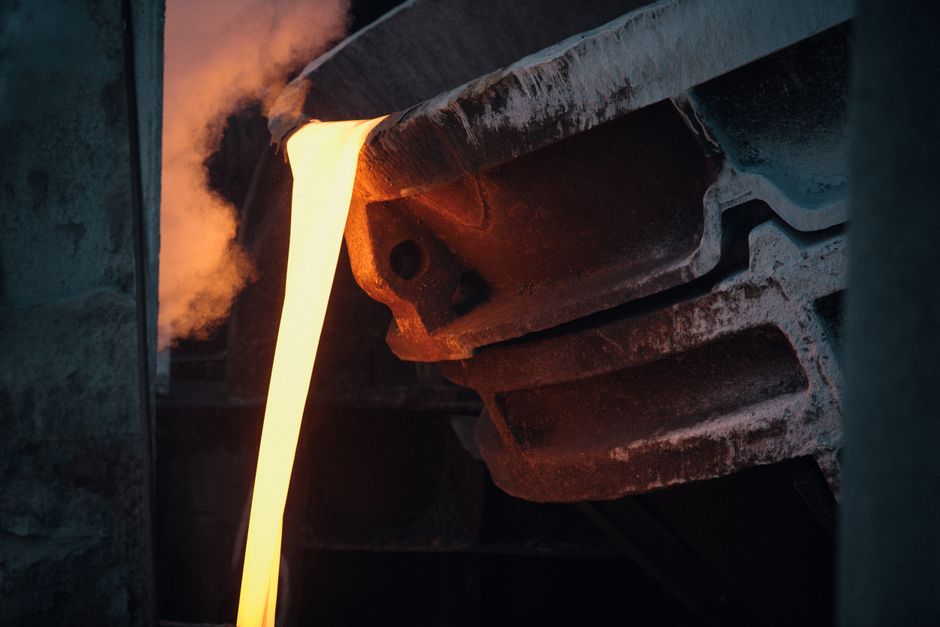
Executives have stressed a pathway to competitive yields and improved process efficiency, with customers ranging from large cloud players to specialized AI startups. The market is watching for the pace of new node introductions, yield improvements, and the ability to scale at a pace that meets hyperscaler capex cycles.
AI Demand, Policy Backing, and Global Supply Chains
Policy makers in Washington have reaffirmed their interest in a robust domestic chip ecosystem, which broadens the investment case for players like Intel. The government’s stance on semiconductor security, supply chain resilience, and domestic manufacturing incentives has been a tailwind for investors who expect continued capital flow into AI-ready infrastructure.
Beyond policy, the AI race remains a key driver of semiconductor demand. Data centers, autonomous systems, and next-generation inference workloads require more compute capacity, and Intel’s progress on packaging, advanced logic, and specialty process nodes could determine whether the company can compete with established foundries and new entrants alike.
Risks and Rewards: What Could Move the Stock Next
- Execution risk: The pace of process improvements, yield gains, and the ability to scale IFS remains a focal point for investors.
- Competition: TSMC and Samsung continue to push advanced nodes, while Nvidia dominates AI accelerator leadership. Intel must close gaps in performance and cost to gain share.
- Policy tailwinds: Ongoing U.S. support for domestic manufacturing could provide a steady backdrop, but policy shifts could alter capital allocation plans.
- Valuation dynamics: As valuations rise in the broader Nasdaq-driven rally, any signs of margin compression or weaker-than-expected demand could trigger repricing.
Analysts note that the current move could be the opening chapter of a longer narrative if Intel can deliver competitive yields from its foundry arm and demonstrate reliable progress in its process technology. The market is watching for concrete milestones, such as contract wins, capacity expansions, and faster ramp cycles, which could sustain the rally beyond the early innings of a breakout that some traders describe as violent yet persistent.
What to Watch This Quarter
- Q3-earnings cadence: Any updates on IFS revenue, mix shifts toward foundry services, and gross margin expansion will be scrutinized.
- Capex cadence: The pace of capital investments in new fabs and equipment will indicate how quickly Intel plans to scale its manufacturing footprint.
- Product cadence: Progress on the 20A, and subsequent nodes, plus improvements in yields and power efficiency, could catalyze further upside.
- Market perception: Investor sentiment toward domestic chip policy and channel inventory levels will influence near-term swings in the stock.
For investors, the takeaway remains that intel’s breakout violent still may reflect a changing set of fundamentals rather than a short-lived mood swing. If the company can translate pipeline promises into consistent profitability and market share gains, the stock could move higher even as the broader chip cycle faces bouts of volatility.
Bottom Line: Early Innings or a Crossover Moment?
In the world of high-tech hardware, a breakthrough with AI ambitions can spark a rapid price re-rating, but sustaining the gain requires execution across multiple levers. Intel’s current trajectory hints at a potential turning point, especially if the foundry business can deliver on volume and margin targets while the AI compute market expands. Still, the path forward is not guaranteed, and traders should brace for continued volatility as the company navigates technology shifts, competitive pressure, and the evolving policy backdrop.
As investors weigh the potential, the idea of intel’s breakout violent still lingers in market chatter. If the company can convert recognition into durable earnings and expanded share of AI-related compute, the breakout could mature well beyond the initial surge. For now, the market remains skeptical enough to require consistent evidence—yet confident enough to place bets on a reshaped semiconductor landscape in the years ahead.
Discussion