Hooked on AI: Why the Data Center Beat Won't Slow Soon
Artificial intelligence is not just a buzzword; it’s a demand surge that’s reshaping how data centers are built, funded, and upgraded. As AI models grow more capable, the hardware that feeds them—high‑speed interconnects, accelerators, and sophisticated switching—must scale up to keep latency low and throughput high. For investors, that translates into a cross‑section of suppliers that sit at the intersection of software demand and silicon supply.
In plain terms: AI acceleration requires faster networks, better energy efficiency, and chips that can handle massive parallelism. The result is a sustained wave of capital expenditure (capex) into data centers. Industry trackers estimate hyperscale operators spent roughly $410 billion on infrastructure last year, and analysts expect that pace to continue or accelerate into 2026. Against this backdrop, Marvell Technology (MRVL) stands out as a company with a tangible link to the core AI data‑center stack: high‑speed interconnects, switches, and purpose‑built chips that keep data moving at speed and scale.
What Marvell Brings to the Data Center Ecosystem
Marvell operates in a space where silicon, silicon‑photonics, and software meet the needs of modern data centers. Its offerings span several critical layers of the AI‑ready data center stack, including high‑speed interconnects, network switching solutions, and custom silicon designed for demanding workloads. Here’s how these pieces fit together in practice:
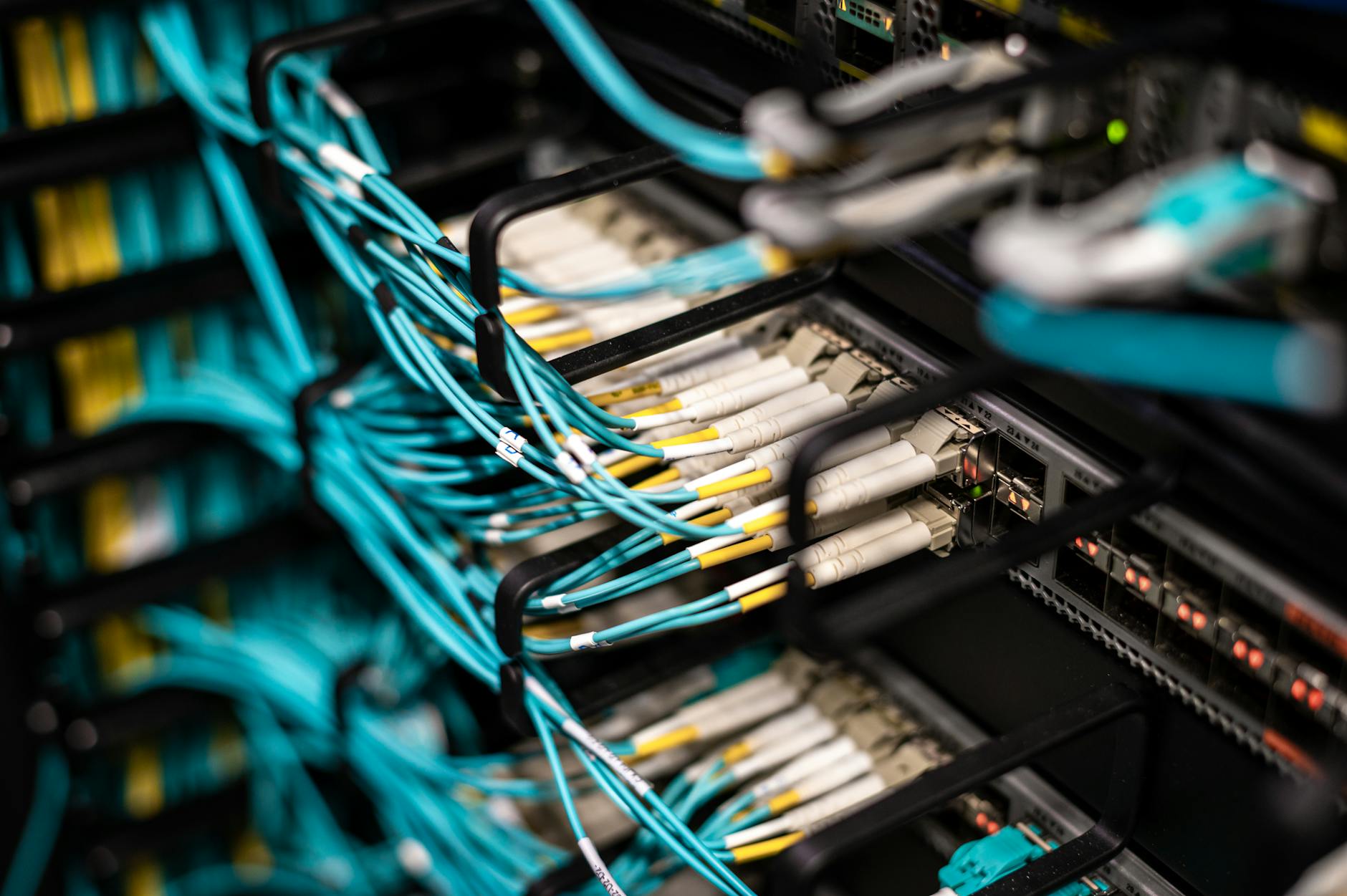
- Networking accelerators and interconnects: Data centers rely on rapid, reliable data movement. Marvell supplies next‑generation PHYs and high‑bandwidth interconnects that can handle the data throughput AI workloads demand, reducing bottlenecks between servers, storage, and accelerators.
- Switching hardware: The backbone of any cloud or hyperscale network is a dense, power‑efficient switching fabric. Marvell’s switches are designed to scale with thousands of ports while maintaining low latency—an essential feature for AI training and inference at scale.
- Custom chips and accelerators: In some AI‑heavy workloads, specialized silicon can offer advantages in performance per watt and cost per operation. Marvell’s custom chip initiatives position it to capture a portion of this growing segment, especially in workloads requiring tight integration with networking hardware.
For investors, the takeaway is straightforward: marvell's data center revenue is tied to the same structural demand that pushes AI workloads into larger, faster, and more energy‑efficient data centers. This is not a one‑year cycle; it’s a multi‑year trend that benefits suppliers who can deliver both the core silicon and the interconnected infrastructure that AI models ride on.
Marvell’s Data Center Revenue Trajectory: Current Momentum and Forward Lean
Recent quarterly results highlighted an encouraging pattern: marvell's data center revenue has shown resilience and growth in an environment where AI adoption is accelerating. In the latest reporting period, the company disclosed that its data center revenue rose year over year, driven by demand for high‑speed interconnects, networking products, and specialized silicon for data‑center workloads. While macro volatility remains a factor, the industry’s demand backbone appears intact: AI workloads, cloud scale, and the need for efficiency are likely to sustain growth in the core segments Marvell serves.
Investors should note a few key points about the trajectory:
- Growth velocity: The company has signaled that the pace of data center revenue expansion could intensify as AI workloads become more prevalent in cloud environments and enterprise AI deployments ramp up.
- Mix shift potential: As datacenters migrate to higher‑speed fabrics, Marvell’s share of revenue from interconnects and switches could outpace broader product categories, supporting stronger margins over time.
- Customer dynamics: A diversified base of hyperscale customers reduces concentration risk and helps stabilize revenue as multiple AI adoption cycles unfold.
For readers focused on numbers, it’s useful to anchor expectations around the company’s own commentary on growth rates. If management’s guidance holds, the data center segment could accelerate from mid‑single‑digit per quarter gains toward higher‑single to low‑double digits over a multi‑quarter horizon. In plain language: investors could see more pronounced upside as AI deployments scale across cloud providers and large enterprises alike.
Decoding the Growth Engine: Drivers Behind marvell's data center Revenue
To understand why marvell's data center revenue could surprise to the upside, it helps to map the demand drivers to the company’s product portfolio and market position. Here are the major levers:
- AI model scale and training demands: Large language models and multimodal models demand faster data movement and more compute per watt. Data center fabrics must handle petabytes of data with minimal latency, boosting demand for high‑speed interconnects and advanced switches.
- Photonics and high‑speed links: As data centers densify, the need for efficient long‑haul and intra‑data‑center links grows. This is a core area where Marvell’s interconnect and PHY solutions are positioned to capture share.
- Energy efficiency and TCO considerations: Operators are under pressure to trim energy use. Chips and switches that offer higher throughput per watt become a priority, a trend that benefits suppliers with optimized silicon and firmware stacks.
- Multi‑cloud and edge integration: AI workflows aren’t confined to a single campus. The edge and multi‑cloud architectures demand flexible, scalable networking – areas where Marvell’s products can play a pivotal role.
Put together, these drivers suggest a durable, multi‑year demand cycle rather than a one‑off boost tied to a single product cycle. marvell's data center revenue, anchored in interconnects, switches, and custom silicon, stands to benefit as AI workloads become a bigger share of data center activity.
Valuation, Scenarios, and the Upside Path for 2026
Investors often ask: what kind of return profile should be priced into Marvell given its AI exposure? The answer hinges on a few variables: growth rate, margin expansion, and the sector’s overall multiple. Here’s a way to frame it without getting lost in the noise:
- Base case: Growth in marvell's data center revenue settles into a steady mid‑teens annual growth rate over the next 12–18 months as AI demand remains solid and the product mix gradually shifts toward higher‑margin offerings. Margins gradually improve as operating leverage from scale takes hold and incremental revenue comes from higher‑value products.
- Upside case: If AI adoption accelerates with cloud providers expanding their data center footprints faster than expected, the data center revenue line could push into the high‑teens to low‑20s growth range for a couple of quarters. A favorable mix shift toward interconnects and switches could lift gross margins, driving a more pronounced earnings expansion.
- Bearish case: A softer AI capex cycle or supply chain disruptions could slow revenue growth and capex intensity, compressing margins temporarily. In this scenario, the stock could trade on a more modest growth multiple unless margins stabilize quickly.
From a numerical perspective, a scenario where marvell's data center revenue grows in the high‑teens to 20% range and margins improve modestly could justify a multi‑year forward multiple around the mid‑teens. If the market assigns MRVL a larger AI exposure premium—due to faster AI deployment, broader customer wins, or an expanding product mix—the stock could reach a higher upside, potentially approaching a 50% or greater distance from today’s price within 12–24 months.
Risks to Consider: What Could Impede marvell's data center Revenue Growth?
Every investment carries risk, and MRVL is no exception. A careful investor should weigh the following factors that could temper the AI‑driven upside:
- Competition and pricing pressure: The data center fabric market is highly competitive. New entrants or aggressive pricing from established players could compress margins or steal share in key segments.
- Macro volatility: A downturn in IT spending or a prolonged macro‑economic slowdown could dampen capex cycles across hyperscalers, weighing on Marvell’s data center revenue trajectory.
- Supply chain risk: Semiconductor supply constraints or component shortages can delay product shipments, impacting revenue and customer satisfaction.
- Customer concentration risk: While a diversified customer base helps, any reliance on a few major hyperscalers could introduce volatility if those customers shift their supplier mix.
- Technological disruption: A breakthrough in a competing architecture or alternative interconnect approach could alter the long‑term demand pattern for traditional networking hardware.
Recognizing these risks doesn’t negate the upside; it simply emphasizes the importance of a disciplined investment approach. Investors should monitor quarterly comments from management about the data center order book, gross margin trajectory, and any changes in product mix. A steady improvement in the cost structure paired with sustained AI demand can help MRVL weather near‑term headwinds and stay positioned for the longer‑term growth path.
Practical Steps for Investors to Play marvell's Data Center Revenue Theme
If you’re considering how to position your portfolio around marvell's data center revenue growth, here are actionable steps that align with a thoughtful, long‑term approach:
- Benchmark against AI exposure: Compare MRVL with other data center players that have similar AI exposure, such as networking and interconnects providers. Look for a similar growth cadence but with different risk profiles to gauge diversification benefits.
- Assess capital returns and buybacks: A company that generates strong cash flow from growing data center revenue might return capital to shareholders through buybacks or modest dividend growth. Check the cash flow conversion rate and capital allocation priorities.
- Monitor guidance and trajectory: Management commentary about data center revenue growth, product mix, and margin progress offers an early read on the path to the upside scenario. Track revisions and consistency across quarters.
- Set a risk‑adjusted target: Determine your acceptable downside and set price targets that reflect your risk tolerance. For example, if you require a 15% margin of safety, base your target price on a conservative revenue growth assumption and a modest multiple.
- Use options for selective exposure: If you’re cautious, consider using covered calls or collars to define risk while still participating in upside if marvell's data center revenue grows as expected.
Conclusion: Why marvell's data center revenue Could Matter More in 2026
Marvell sits at a coveted crossroads in the AI‑driven data center era. Its product suite touches the very components that AI workloads demand: fast, scalable, and energy‑efficient interconnects; resilient switching fabrics; and the potential for custom silicon that optimizes workloads. If AI adoption sustains its current pace, marvell's data center revenue could expand meaningfully over the next few quarters and into 2026, supported by a demand environment that rewards high‑quality hardware and efficient architectures. That does not guarantee a straight line higher, but it does create a credible framework for upside given a few favorable conditions: steady AI demand, a favorable mix shift toward higher‑margin products, and disciplined capital allocation that translates revenue growth into better profitability.
As an investor, you can approach MRVL with a bias toward the long run, while staying mindful of the risks. The AI tailwinds are real, but the stock price will reflect a blend of growth, profitability, and how well the company executes on its data center opportunity. If management continues to deliver on data center momentum and the mix shift toward interconnects and switches gains traction, marvell's data center revenue could be a meaningful upside story to own in 2026.
FAQ
Q1: What drives marvell's data center revenue the most?
A1: The key drivers are high‑speed interconnects and PHYs, data center switches, and any custom silicon that improves performance and efficiency for AI workloads. Demand for fast, scalable networking architectures underpins the growth story.
Q2: How should investors think about the upside potential in 2026?
A2: Use scenario analysis—base, bull, and bear—focused on revenue growth, gross margin trajectory, and operating leverage. A plausible bull case rests on AI adoption accelerating faster than expected and a favorable product mix lifting margins.
Q3: What risks could derail the upside?
A3: Competition, macro weakness in IT spending, supply disruptions, and a potential shift in hyperscale capex timing are the main risks. Staying diversified and watching quarterly guidance helps manage these risks.
Q4: How can an investor implement this view in a portfolio?
A4: Consider a core position in MRVL with a defined upside target, complemented by exposure to peers in the semiconductor and data center equipment space for diversification. Use dollar‑cost averaging to manage entry prices and consider risk‑safe strategies like covered calls to participate in upside while limiting downside.
Discussion