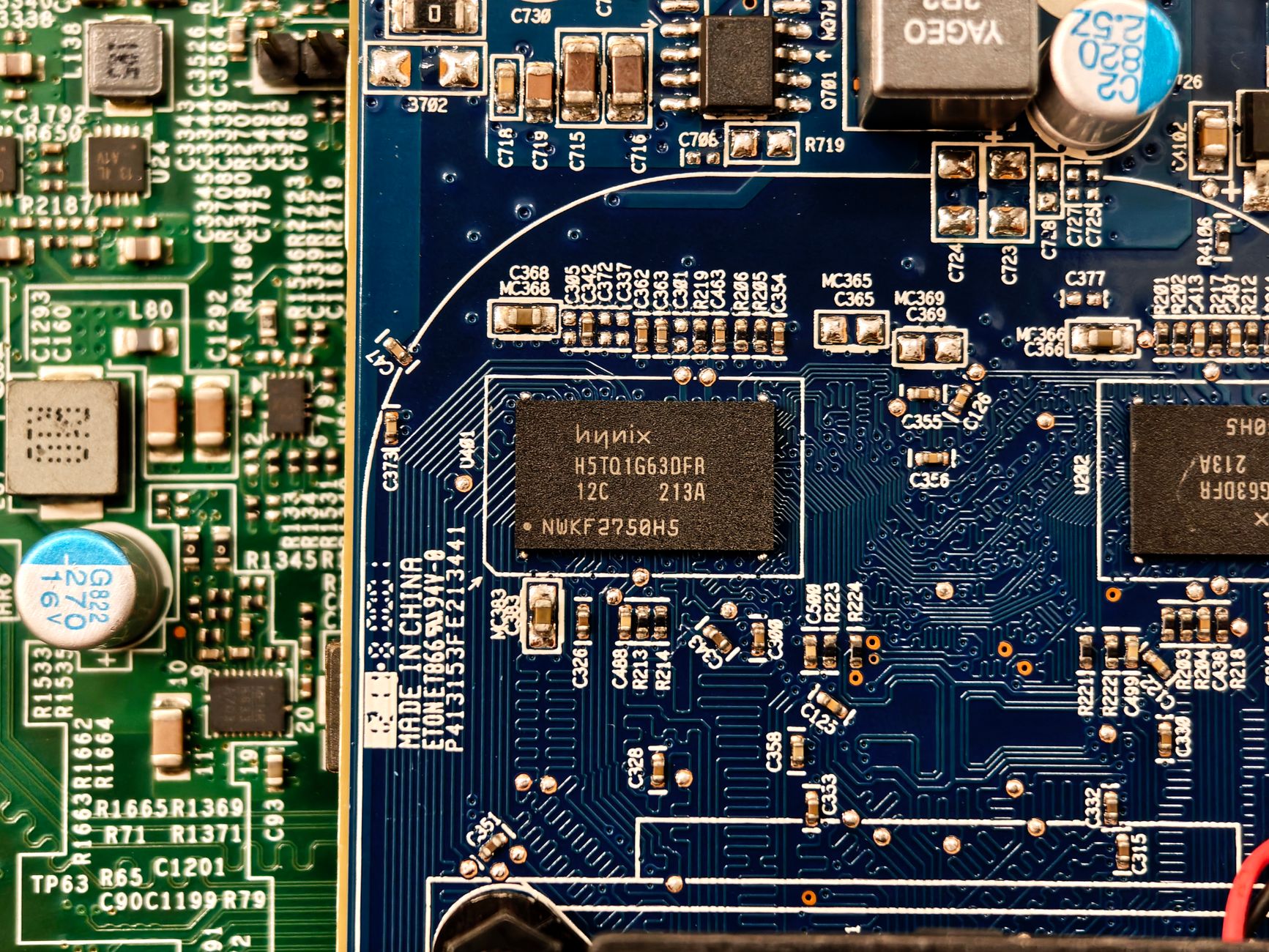
Market Context: AI Demand Reshapes the Memory Landscape
As AI workloads accelerate in 2026, investors are watching two semiconductor veterans chart very different paths. The question of micron intel: which volatile memory stock to buy now has entered mainstream portfolios as demand for high-bandwidth memory and flexible foundry capacity takes center stage. The market is split between a company riding an AI memory cycle and another trying to rebuild its manufacturing and product rails to compete for the same AI dollars.
Across the sector, cloud giants, AI startups, and edge devices are pushing for more memory bandwidth, lower latency, and greater integration. That trend has become a direct driver of stock moves for both Micron Technology and Intel, even as each company grapples with distinct earnings trajectories and strategic bets. For Micron, the focus is on HBM4 and long-term demand locks. For Intel, the emphasis is on a multiyear restructuring plan paired with a bet on a refreshed foundry and CPU lineup.
Earnings Snapshots: Micron And Intel In Focus
Micron reported a quarter shaped by resilient memory pricing and a surge in high-performance memory sales. Executives highlighted HBM4 shipments as a key growth engine, with data-center customers expanding deployment of AI accelerators that depend on high-bandwidth memory. CEO Sanjay Mehrotra framed the results as evidence that memory remains a strategic driver in the AI era, even as the market navigates a volatile pricing cycle.
Intel, by contrast, delivered a revenue beat for the quarter but a GAAP loss once restructuring charges are accounted for. The company continues to push a multi-year turnaround that includes expanding its 18A foundry process, strengthening Xeon processor lines, and rebuilding its product stack around AI workloads. CEO Lip-Bu Tan described the quarter as a deliberate reset aimed at creating a foundation capable of sustaining future growth, even as the near-term financials show the cost of the transformation.
Two charts tell the tale: Micron’s exposure to high-margin memory and HBM4-driven demand versus Intel’s push to reset cost structure, refurbish fabs, and redeploy capacity toward AI-focused compute. The divergence underscores a broader question for investors: is the near-term growth profile of Micron a better hedge against AI capex, or does Intel’s long runway for foundry expansion and data-center accelerators present a superior risk-adjusted allocation over time?
Strategic Theses: Which Side Is Best For The volatile Memory Play?
At the heart of the debate around micron intel: which volatile memory stock to buy now are two distinct plays on AI memory and compute. Micron’s edge lies in its established role as a supplier of high-end memory and the ability to lock in demand through strategic customer agreements. The company has positioned HBM4 memory as a durable, multi-year growth driver, backed by steady pricing and a diversified base of AI-focused customers. The commentary from leadership signals confidence that memory architecture remains central to AI acceleration, not just an add-on to compute.
Intel’s strategy centers on rebuilding its core capabilities: expanding a modern foundry footprint, sharpening Xeon performance, and aligning with cloud and hyperscale customers on multi-year engagements. The restructuring is costly, but executives argue that the redesigned roadmap—spanning APUs, Xeon processors, and a more capable manufacturing stack—will yield sustained market share gains when AI demand normalizes and supply chains stabilize.
Analysts are weighing two timelines. Some see Micron as a near-term beta on AI memory pricing and HBM4 volume growth, with a defensible margin structure given its long-term agreements. Others view Intel as a longer-duration bet on a reset that could unlock higher margin, AI-centric foundry business and a refreshed CPU platform, once the current restructuring charge winds down. The reality is that both paths are tightly linked to the cadence of AI investment cycles, memory pricing, and the pace at which foundry capacity comes online.
For investors, the question of microng intel: which volatile becomes a personal judgment about time horizon and risk tolerance. One line of thought emphasizes Micron’s pricing power and durable HBM demand, arguing that the AI hardware cycle remains memory-centric and that Micron can ride a multi-year expansion in AI deployments. Another camp focuses on Intel’s longer-term potential to reclaim lost ground in foundry leadership and compute, betting that a successful 18A ramp and an upgraded data-center CPU stack will yield a more compelling growth profile over the next several years.
Key Data Points For Investors
- HBM4 Demand: Micron reports rising shipments of high-bandwidth memory used in AI accelerators, with customers expanding orders as AI training and inference scale up.
- Foundry And Process: Intel continues a multi-year buildout of its 18A process and associated foundry capabilities, aiming to win more multi-tenant manufacturing engagements.
- Free Cash Flow: Micron generates solid cash flow supporting buybacks and capital returns, while Intel’s cash flow is pressured by restructuring costs and capex commitments.
- Margins And Pricing: Memory pricing remains a variable, but Micron’s gross margins remain a key indicator of pricing power, versus Intel’s need to reach a higher-margin, AI-focused product mix.
- Valuation Signals: Micron trades at a notably lower forward multiple than Intel, reflecting a market expectation of steadier near-term results and a longer runway for Micron’s memory-centric growth.
In this environment, the focus on the memory stack—HBM memory, cache memory, and system-level integration—remains central to the investment case for both names. The market is watching whether Micron can maintain its pricing power amid a cyclical memory market or whether Intel’s long-run foundry and platform strategy will prove resilient in a global supply chain that is still adapting to AI-era scale.
Risks, Rewards, And The Near-Term Outlook
The risk profile for micron intel: which volatile is highly sensitive to AI capex cycles. For Micron, a sharper-than-expected drop in memory pricing could erode margins, even as demand for HBM4 remains a bright spot. Supply discipline and customer concentration are also watched as potential vulnerabilities, even as multi-year customer agreements help to stabilize revenue streams.
Intel faces different pressures: relief from restructuring costs may take time, and the pace of 18A ramp will determine the speed at which the company can translate a revised product roadmap into profitability. Investors are eyeing data-center demand, AI workloads, and cloud capex as the key catalysts that will determine whether Intel’s strategic reset produces a durable path to higher margins and market share.
Analysts generally describe Micron as the more immediate beneficiary of AI-era memory growth, while viewing Intel as a higher-risk, higher-potential bet tied to long-term supply chain reconfiguration. The choice between the two boils down to whether you want a near-term memory-price story or a longer-run architectural reset that could unlock more durable value if Intel hits its milestones.
Market Reaction And The Road Ahead
After the latest results, traders weighed the two narratives differently: Micron stock moved on memory-price continuity and HBM4 demand, while Intel swung on the prospects of a successful 18A ramp and a more efficient foundry ecosystem. In the weeks ahead, investors will scrutinize quarterly commentary on AI compute demand, order momentum for high-bandwidth memory, and progress on process improvements that influence margins and cash flow.
What does this mean for the theme of micron intel: which volatile memory stock to buy now? If you want exposure to the AI memory cycle with relatively clear near-term catalysts, Micron presents a compelling option. If you’re willing to trade some near-term volatility for the potential of a broader platform reset that could yield a larger multi-year payoff, Intel offers a longer horizon bet on AI-ready foundry capacity and data-center leadership.
Bottom Line For Investors
As AI computing continues to rewire budgets and supplier strategies, the two companies illustrate contrasting routes to capitalizing on volatility in memory and compute. Micron leans into high-margin memory products and long-term customer commitments, with a steady stream of AI-focused demand. Intel bets on a multi-year transformation that could unlock higher-margin growth if its foundry and CPU strategy gains traction in a market that increasingly rewards AI-ready infrastructure.
For readers weighing the clear-eyed question of micron intel: which volatile memory stock to buy now, the verdict hinges on your time horizon and risk tolerance. The near term may favor Micron’s pricing power and HBM4 momentum, while the longer view could reward investors who back Intel’s ambition to redefine its manufacturing and platform leadership in the AI era.
Discussion