
Not How This Works: The Reality Behind Market Signals
If you’ve skimmed a headline that declares a sweeping truth with a tease like "this works…" you’re not alone. The investing world is full of bold claims meant to grab attention. Yet true market behavior isn’t a simple one-liner. Prices move because a crowd of traders and investors processes a flood of data—from quarterly results to macro news to shifts in consumer demand—and then prices adjust as new information travels through the market.
Let’s be clear: there is no magic formula where a single datapoint causes a predictable outcome. The real engine is a continuous flow of information that interacts with discount rates, risk appetite, and liquidity. A stock’s price is not a verdict that a company is forever expensive or cheap; it’s a snapshot that can change in minutes, hours, or days as people reassess the story and the numbers behind it.
Why One Data Point Often Isn’t The Answer
A lot of what looks dramatic in headlines is short-term noise. Even when a company reports results that beat expectations or miss them by a narrow margin, the stock may swing in unpredictable ways. The market isn’t a jury delivering a single verdict; it’s a chorus of thousands of opinions, often reacting to evolving narratives about growth, margins, and balance sheets. The upshot: a single ratio or a single news item rarely reveals the full picture.
Consider this: the average U.S. stock trades about 4,000 times per day in aggregate across all players. That means millions of micro-decisions are happening every minute. In that environment, information is absorbed, filtered, questioned, and re-quoted. What looks decisive in one moment can look inconsequential the next. This is why you should resist overreacting to headlines and instead focus on a disciplined analysis framework.
The Myth of the Quick Truth: How Prices Reflect Information
Markets do not operate on post-it-note epiphanies but on the slow burn of information becoming consensus. A well-constructed price signal often aggregates data from earnings, guidance, competitive dynamics, and macro factors. The puzzle is that different investors interpret the same data through different lenses: some focus on margins, others on growth, and others on policy risk. The net result is a price that reflects a range of expectations rather than a single forecast.
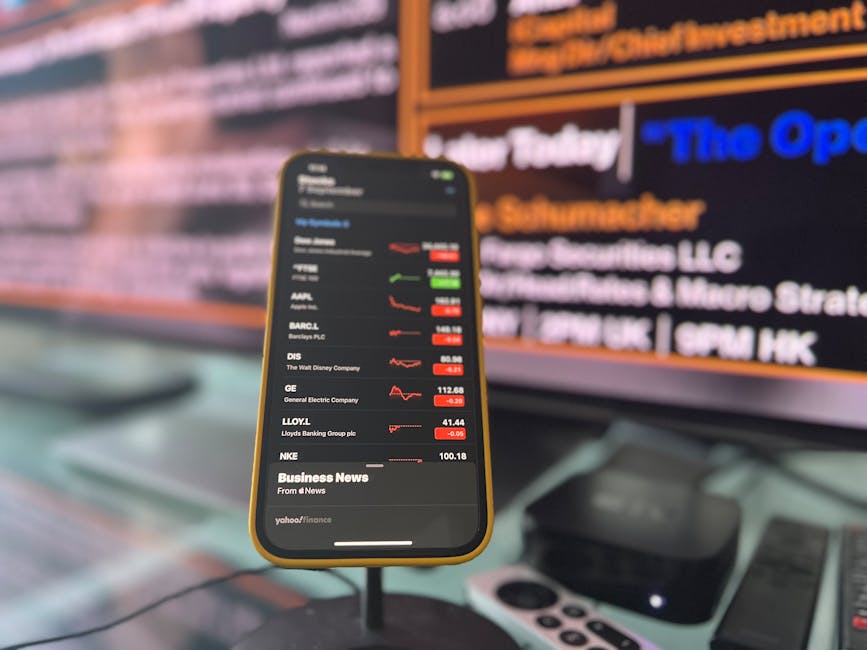
In other words, the phrase "this works…" is a signal to pause. The system is not broken; it’s designed to price in uncertainty. The danger is when we confuse short-term price moves with long-term value. That confusion leads to costly mistakes, like selling great companies during a temporary sell-off or buying a rising stock without understanding the sustainability of its growth story.
A Practical Framework: How to Read Signals Without Overreacting
Rather than chasing dramatic headlines, you can build a repeatable process that helps you separate meaningful signals from noise. Here’s a straightforward, four-step framework any investor can apply:
- Step 1: Check data quality. Is the information coming from a reliable source? Is it corroborated by multiple outlets, company filings, or sell-side research? If not, treat it as unconfirmed until you can verify it.
- Step 2: Look for multiple data points. Don’t rely on one metric. Compare revenue, margins, cash flow, and balance-sheet health. If several pillars show improvement, the signal is stronger.
- Step 3: Compare to peers. Relative value matters. If a peer is growing faster but trades at a similar multiple, investigate why—differences in margins, capital intensity, or customer concentration could explain it.
- Step 4: Test with a scenario plan. Build two paths: a baseline and an optimistic case. What happens if revenue grows 4% vs 12%? If your investment thesis collapses in a reasonable scenario, rethink the position.
These steps aren’t fancy, but they do two big things: they force you to quantify assumptions and they help you separate the signal from the noise. The mental shift is small but powerful: you trade impulsive reactions for a repeatable process grounded in fundamentals and evidence.
Numbers in Action: A Concrete Example
Imagine a mid-sized software company with the following snapshot: 2023 revenue $1.8 billion, net income $180 million, operating margin 10%. The company guides for 6% annual revenue growth over the next three years and maintains a 9% free cash flow margin. The stock trades at a 14x forward price-to-earnings multiple and a 5x forward EV/EBITDA multiple. What does that imply?

Turn the numbers into a rough intrinsic value. If revenue grows 6% for two years, then slowly decelerates, cash flows expand, and the company converts more earnings into free cash flow, you could model a three-year cash flow stream and discount it back at a reasonable rate (say 9-10%). If the resulting intrinsic value is around the current price, the stock might be fairly valued; if it’s significantly above, it could be undervalued, and if it’s below, overvalued. The key takeaway: the same data point—a revenue growth forecast—can lead to a range of prices because the assumptions behind it matter as much as the number itself.
This is where the myth of a single data point becomes dangerous. If you see a headline claiming a stock is “overvalued” or “undervalued” based on one metric, you should ask: which assumptions drive that conclusion? Is the market discount rate too low? Are we embedding optimistic growth into perpetuity? Without these checks, you’re speculating, not investing.
Data Sources, Reliability, and What You Can Trust
Investors rely on a mix of data streams. Corporate reports (10-Ks and 10-Qs), management presentations, and earnings calls are foundational. But you’ll also see earnings estimates, broker research, and market data platforms such as Bloomberg, FactSet, or free sources like Yahoo Finance and company investor relations pages. The key is to evaluate data quality and independence:

- Source credibility: Prefer primary sources (company filings, official presentations) over secondhand summaries.
- Timeliness: Fresh information matters, but ensure it has been digested by multiple market participants before adjusting your view.
- Consistency: Check whether the same data points are reported across quarters and peers for comparability.
Remember: the price you see today is the result of millions of data checks, but it is not a perfect mirror of fundamentals. Markets discount risk and future cash flows, sometimes more quickly than the underlying business changes. That dynamic is not a flaw; it’s a feature of how liquid markets price risk in real time.
How to Build a Simple, Repeatable Investing Process
To avoid the trap of overreacting to a single piece of data, adopt a routine that you can repeat every quarter. Here’s a practical blueprint you can start today:
- Define your investment universe: Focus on 50–150 companies that you understand and which have clear cash-flow visibility.
- Set a valuation framework: Use at least two methods (discounted cash flow and relative valuation) and compare results.
- Assess quality: Look at ROIC, debt levels, and free cash flow conversion to gauge financial resilience.
- Monitor catalysts: Identify upcoming events (earnings, product launches, regulatory changes) that could shift the thesis.
- Control risk: Use position-sizing rules (for example, limit any single name to 2% of the portfolio’s value) and set stop-loss or downside targets that fit your risk tolerance.
- Document and review: Write down your thesis, the data, the scenarios, and the outcome after the event. Learn from the gap between plan and reality.
When you follow a structured routine, you’re less likely to be seduced by dramatic headlines or catchy phrases like "this works…" that promise shortcuts. The truth is that good investing is a habit, not a flash of insight.
Real-World Scenarios: How to Stay Grounded
Scenario A: A company beats earnings by a small margin and raises guidance. The stock spikes 6% in the first hour but then drifts back over the next few weeks as investors question durability. If your model assumed a perpetual 25% growth in free cash flow, your intrinsic value might have overshot. Scenario B: A firm misses revenue expectations but shows signs of higher long-term profitability from a margin improvement program. The stock falls short-term, but the improved cash flow trajectory could justify a higher multiple if the plan proves durable. In both cases, the outcome hinged on how you interpreted the data, not the data alone.

One clear takeaway: data points are useful, but they must fit into a broader narrative that is grounded in cash flow reality and competitive dynamics. Without that, you risk confusing good numbers with good investments.
Conclusion: The Best Use of Your Time as an Investor
Investment success rarely comes from chasing bold claims or chasing a single data point. It comes from building a robust framework that converts information into disciplined decisions. Remember the lesson behind the phrase this works…: the market is a complex system that absorbs data from many sources and reflects it over time. If you want to invest with confidence, you must do the work: verify data, test assumptions, compare to peers, and stay focused on cash-flow-driven value rather than headlines. When you adopt this approach, you’ll find that the most powerful truth about investing isn’t a sensational claim; it’s a repeatable process that works—consistently, for you.
FAQ: Clarifying the Confusion Around Signals and Investing
Q1: What does the phrase "this works…" usually indicate in investing?
A1: It often signals an oversimplified idea or a marketing hook. Real investing requires verifying data quality, testing assumptions, and understanding how a signal fits into a broader, cash-flow based thesis.
Q2: How should I react to dramatic headlines about a stock?
A2: Pause, verify the data, and run a quick two-to-three scenario check. If you can’t justify the move with multiple data points and a plausible cash-flow story, hold off on trading based on the headline alone.
Q3: What data sources should I trust most?
A3: Prioritize primary sources (financial filings, official company presentations) and corroborate with multiple independent outlets. Use paid research sparingly and only when it adds unique value to your thesis.
Q4: Can I ignore news altogether?
A4: Not at all. News matters, but you should weight it against your long-term plan. News can reveal catalysts, but you should assess whether the catalyst changes the intrinsic value and your thesis.
Discussion