Introduction: The AI Inference Pivot Is Real—and It Matters for Investors
The AI revolution isn’t just about teaching machines to understand language or recognize images. It’s increasingly about making those models respond in real time to real data. That shift—from training on vast datasets to inference on live streams—creates a different kind of demand for silicon, software, and services. In short, the money isn’t only in training the next big model; it’s in deploying those models reliably, cheaply, and at scale.
Analysts and industry forecasters point to a future where inference workloads dominate AI compute. Deloitte has highlighted a striking trend: inference workloads could grab two-thirds of all AI computing power by 2026, up from roughly half just a year earlier. That means more chips optimized for latency, efficiency, and cost per query—the exact sweet spot for a veteran player like Intel. Meanwhile, Nvidia, Broadcom, and others aren’t sitting idle; they’re sharpening their focus in parallel tracks. The intriguing question for investors is simple: who benefits the most as the inference era unfolds? The case this article builds is a bold one: Intel going to be a major winner in AI inference, potentially eclipsing some of its loudest peers in this cycle.
What AI Inference Really Demands—and Why It Changes the Game
Training a large language model (LLM) demands massive parallelism, high-end GPUs, and enormous energy. Inference, by contrast, must deliver a fast, accurate response to specific inputs. That puts a premium on low latency, real-time data processing, and efficient use of compute resources. The shift affects margins and buying patterns in data centers, compelling hyperscalers to balance power, cooling, and capex with the need to service customer interactions immediately.
Two practical dynamics shape inferencing today:
- Latency matters more than raw speed: A few milliseconds of delay can undermine user experience or decision quality in financial services, healthcare, or customer support apps.
- Cost per query is king: Data centers must support millions to billions of inferences per day, so total cost of ownership (TCO) per inference is the decisive metric for procurement teams.
With these realities, the market for AI accelerators becomes nuanced. There isn’t a single universal winner; there are ecosystems. Intel’s advantage comes from a broad, integrated stack that combines CPUs, accelerators, memory systems, and software tools that optimize inference workloads across diverse data centers.
Intel’s Playbook: Why This Era Could Emerge as Its Spotlight
Intel is not new to data centers, but the AI inference era could redefine its leadership footprint. Several strands in Intel’s strategy align well with the needs of real-time AI workloads:
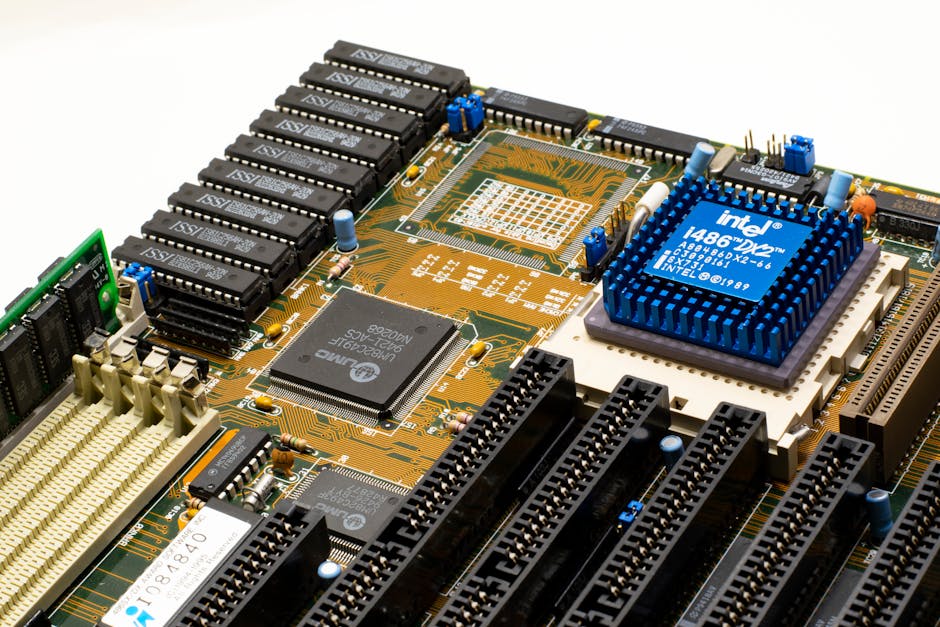
- A broad hardware chassis. Intel’s portfolio spans CPUs, accelerators, and memory subsystems. In inference workloads, this means diversified choices for customers—systems that blend CPUs with dedicated AI accelerators and high-speed interconnects to minimize bottlenecks.
- Habana Labs and inference specialization. Intel’s Habana line includes accelerators designed to optimize inference throughput and energy efficiency. While the market has shifted rapidly, Habana’s technology remains a key component of Intel’s strategy to deliver lower per-inference costs at scale.
- OneAPI and software ecosystem. Intel’s software stack—oneAPI—aims to streamline model deployment across Intel hardware, reducing the time and cost for hyperscalers and enterprises to move from prototype to production. A strong software layer matters as much as raw hardware speed in the inference world.
- Open ecosystem and long-term relationships. Intel’s deep relationships with OEMs, cloud providers, and enterprise customers can translate into multi-year contracts and stable TCO advantages for its customers, an important edge in a market where buying cycles are lengthy and complex.
In a world where two-thirds of AI compute could be tied up in inference by 2026, Intel’s ability to package compute, memory, and software into a tested stack could unlock meaningful share gains. It’s not that Nvidia or Broadcom are not strong; it’s that Intel’s integrated approach might reduce total cost of ownership for large buyers—an outcome investors should watch closely.
Nvidia and Broadcom: Strong Continuities, But Different Inference Roles
NVIDIA remains a dominant force in the AI acceleration space, especially for training and large-scale inference with its GPU families and software optimization. Broadcom, meanwhile, remains central to networking, accelerators, and connectivity that support AI infrastructure at scale. The competitive landscape isn’t a zero-sum game; each player has a distinct role in the data center ecosystem. In that context, the narrative of who wins in the AI inference era is nuanced. There’s a familiar three-way dynamic—nvidia. broadcom. intel going—that investors should parse carefully, not as a simple head-to-head race but as a market with overlapping solutions and divergent roadmaps.
The shorthand “nvidia. broadcom. intel going” captures a trend: big wins come to those who can pair compute with reliable deployment paths and a compelling total cost of ownership. Nvidia excels at raw acceleration and software ecosystems that enable rapid model optimization. Broadcom complements data center networking and storage with silicon and firmware that keep AI workloads fed and connected. Intel’s potential edge is the ability to offer an end-to-end platform that reduces integration complexity for large deployments and mitigates the risk of vendor lock-in.
The Market Dynamics You Should Watch (and What They Mean for Investors)
Two forces shape profitability in the AI inference cycle: demand from hyperscalers and the cost structure of building and maintaining AI clusters. Deloitte’s forecast about inference workloads consuming two-thirds of AI compute by 2026 provides a useful reference point for positioning bets. But the story isn’t purely about share capture. It’s also about the durability of the business model—how well a company can convert hardware sales into recurring software and services, and how effectively it can scale operations to meet demand while controlling costs.
Here are practical indicators to track for investors evaluating players in this space:
- Capital expenditure intensity: How much capex do data centers allocate to AI inference-ready hardware? A rising capex trend with stable software revenue suggests a durable cycle for hardware suppliers with a strong software moat.
- Software ecosystem vitality: A robust software toolkit reduces friction for customers deploying models at scale. Look for open APIs, cross-architecture support, and active developer communities.
- Operational efficiency: Metrics such as inference latency, power consumption per inference, and total cost per query reveal how well a vendor’s hardware and software are working together.
- Supply chain resilience: In a market of high demand, supply constraints can tilt margins. Companies with diversified manufacturing and credible fallback options rock steadier earnings visibility.
When you weigh these factors, Intel’s combination of breadth and depth can translate into a competitive advantage in the inference era. The ability to offer CPUs, accelerators, and software optimized for real-time workloads creates a compelling value proposition in a landscape where customers seek to simplify procurement and reduce integration risk.
Investor Scenarios: How This Could Play Out Over the Next 2–5 Years
There are a few plausible trajectories for the AI inference space given current technology and customer needs. While nothing is certain in the market, analysts often frame potential outcomes as scenarios rather than fixed bets. Here are three to consider:
- Intel climbs the stack and wins a larger share of inference deployments. The company could see steady growth in data-center revenue as its end-to-end platform reduces TCO for large customers. The narrative is supported by Habana’s inference capabilities, the breadth of Intel hardware, and a strong software layer that lowers deployment friction.
- NVIDIA remains a leader in performance-intensive workloads but faces more competition on price and integration. Nvidia continues to dominate the high-end AI acceleration space, yet enterprises increasingly want turnkey solutions that combine compute with software. Intel could lean into that by simplifying procurement and offering integrated stacks.
- BROADCOM’s networking and interconnect focus stays essential, but the hardware mix shifts. Broadcom remains a crucial supplier for data-center fabric and connectivity. Its long-term value lies in scalable, high-margin components, not just GPUs or AI accelerators.
In this environment, the phrase “nvidia. broadcom. intel going” starts to reflect more than a headline—it becomes a framework for evaluating how these players adapt to the same demand, different cost structures, and distinct software ecosystems. The smartest investors will look for those who can deliver real-world performance improvements on a per-inference basis while maintaining healthy profit margins and durable customer relationships.
The Bottom Line for Investors
The AI inference era doesn’t guarantee one winner. It creates a landscape where multiple players can thrive by exploiting different angles: raw acceleration horsepower, software simplicity, or multi-infrastructure compatibility. The case for Intel rests on its ability to offer an integrated platform that reduces the total cost of ownership for large-scale deployments—an equation that matters more as inference workloads climb to a larger share of AI compute by 2026 and beyond.
That said, investors should remain mindful of the realities in this market: performance leadership can still come from Nvidia in many contexts, and Broadcom’s networking and data-center expertise remain critical for building scalable AI infrastructure. The goal of this analysis is to highlight a plausible path for Intel to emerge as a leading beneficiary of the AI inference shift, even in a crowded field where the best outcomes depend on speed, efficiency, and an ecosystem that makes deployment easy for customers across the globe.
Conclusion: The AI Inference Era Is Here—and Intel Has a Clear, Concrete Path
The move from AI training to real-time inference is a transformation in how data centers are built and how prices are justified. Deloitte’s projection that inference workloads will dominate AI compute by 2026 casts a long shadow over the sector’s CAPEX plans and vendor strategies. In this environment, Intel’s integrated approach—combining CPUs, accelerators, memory, and software—offers a compelling narrative for investors who value durable tools, predictable deployment, and a broad set of capabilities that can scale with demand.
Whether the headline reads as “nvidia. broadcom. intel going” or simply as the next chapter of data-center innovation, the essential takeaway is consistent: the winner in AI inference will be the company that best marries performance with practicality, and that builds a platform others can rely on. For investors, that means monitoring Intel’s execution across hardware, software, and go-to-market partnerships, while staying cognizant of the ongoing strengths and limits of Nvidia and Broadcom in their respective lanes.
FAQ
Q1: What is AI inference, and why does it matter for investing?
A1: AI inference is the process of applying a trained model to new data to generate real-time results. It matters for investing because it drives the demand for efficient hardware, software tooling, and scalable data-center infrastructure—and those factors influence revenue, margins, and capital expenditure plans for chipmakers and cloud providers.
Q2: Why could Intel gain in the AI inference era?
A2: Intel benefits from an integrated stack—CPU, accelerators, memory, and software—that can reduce total cost of ownership for large-scale deployments. With Habana for inference acceleration, a mature software ecosystem like OpenVINO and oneAPI, and a broad customer base, Intel is positioned to capture demand across diverse data centers.
Q3: How should investors evaluate AI hardware stocks today?
A3: Look at total cost of ownership for customers, not just peak performance. Key metrics include latency per inference, energy per inference, software adoption, contract visibility, and the pace of multi-vendor integration. Diversified revenue streams—from hardware sales to software and services—also provide resilience in the cycle.
Q4: What is the role of NVIDIA and Broadcom in this story?
A4: NVIDIA remains a performance leader for training and high-end inference, while Broadcom excels in networking and data-center connectivity. Intel’s angle is to offer an end-to-end platform that simplifies deployment and reduces integration risk for large-scale AI deployments.
Discussion