Introduction: The Moment Investors Can’t Ignore
Artificial Intelligence is no longer a classroom concept or a sci‑fi scenario. It’s a practical force reshaping how businesses operate, how products are built, and how profits are generated. In the eyes of many market watchers, the biggest question isn’t whether AI will grow, but how fast and who will profit from it. A central talking point among technology leaders is the idea of an agentic AI shift — a moment when AI systems start acting with a degree of initiative and goal-directed behavior, not just responding to commands. In recent commentary and earnings discussions, Nvidia has framed this as an inflection point for the industry. For investors, this framing matters because it shifts where the value sits: in hardware capacity, software ecosystems, and the services that tie them together. In this article, we’ll unpack what the agentic inflection point means for Nvidia and for portfolios that want to ride the wave rather than be swept away by it.
The Agentic AI Inflection Point: What It Really Means
Agentic AI refers to systems that can take actions toward goals with minimal human prompting. Think of autonomous data center orchestration, proactive optimization of supply chains, or autonomous agents that operate within software environments to complete tasks. It’s a shift from AI that only analyzes or answers questions to AI that plans, decides, and executes with an end objective in mind. When executives talk about an inflection point, they’re signaling that the demand for edge computing, cloud acceleration, and intelligent automation could accelerate more quickly than a model with passive AI capabilities.
Why does this matter to investors? It changes how you value a company’s growth engines. Hardware remains critical, but software frameworks, developer ecosystems, and AI services become as important as the chips themselves. In simple terms, if AI adoption accelerates and becomes more autonomous, the economics of data centers and AI platforms could shift toward higher utilization, faster revenue recognition from software subscriptions, and stickier enterprise relationships. That’s why we see a strong emphasis on leader companies that control both silicon and software ecosystems.
Why Nvidia’s View Matters For Investors
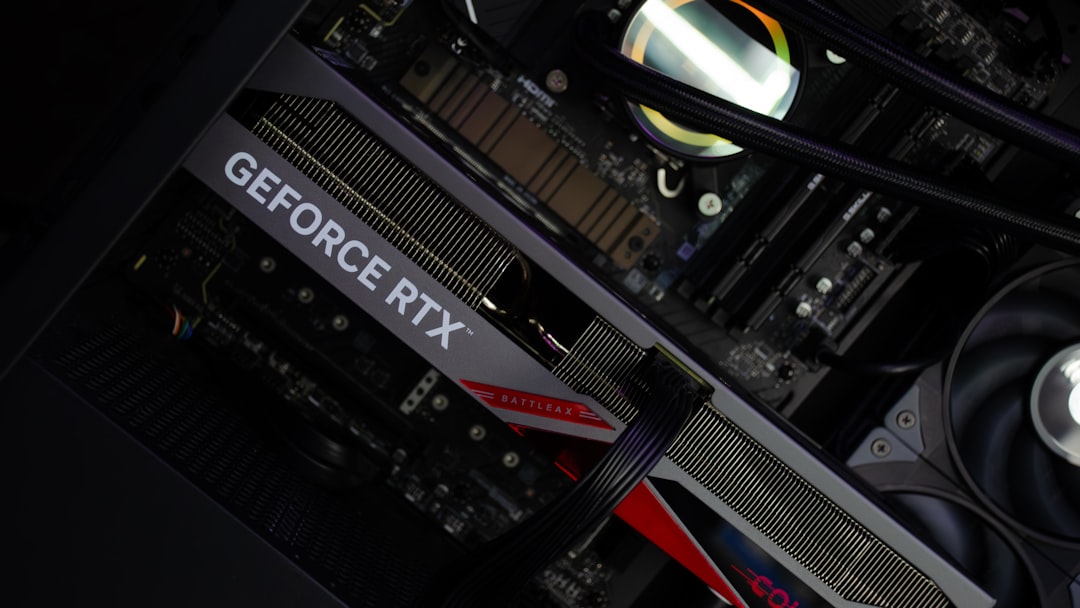
Nvidia has become the poster child for AI acceleration in the data center market. Its GPUs and AI accelerators have become the default tooling for training and inference, and the company continues to stack software and platforms that extend its reach beyond raw silicon. When Nvidia’s leadership discusses the agentic inflection point, they’re not just talking about a hardware upgrade cycle. They’re implying that AI deployments will scale in ways that change how businesses plan capital expenditure, how service providers price AI workloads, and how software developers monetize AI-enabled capabilities.

For investors, this translates into a few practical themes:
- Compute demand remains the backbone: As AI models grow, the demand for powerful accelerators and high-bandwidth memory could keep data-center capex elevated for years.
- Software and ecosystems become multipliers: The value isn’t only in chips but in the software stacks, compilers, libraries, and developer tools that enable efficient AI workflows.
- New business models emerge: Subscriptions, managed services, and AI-enabled platforms can create recurring revenue streams alongside traditional hardware sales.
- Risk is not going away, but is re-weighted: Dependence on supply chains, regulatory scrutiny, and safety considerations still matter, but the potential payoff in AI-enabled productivity is substantial.
To anchor this in numbers: the AI accelerator market has become highly concentrated, with Nvidia occupying a dominant share on many benchmarks and deployments. Market observers approximate Nvidia’s share of AI accelerator shipments and revenue to be well into the 80%–90% range in recent years. That doesn’t guarantee future outsized gains, but it does imply that Nvidia’s trajectory is tightly linked to AI adoption curves. If the agentic inflection point accelerates enterprise and cloud AI use, Nvidia could capture more of the value generated by autonomous AI workflows, not just the compute cycles themselves.
How To Position Your Portfolio Around The Agentic Shift
Investing around a megatrend like agentic AI requires clarity about risk, time horizon, and the role of incumbents versus new entrants. Here are actionable steps you can take to position yourself for potential upside while managing risk.
- Core AI hardware exposure: Consider a core holding in Nvidia or similar accelerators, given the scale of compute demand. A reasonable allocation for a growth-focused portfolio might be 10–20% in a core AI hardware name, depending on risk tolerance. If you already own Nvidia, think about gradual additions or a measured rebalancing if profits have driven the position beyond your target.
- Software ecosystems and platforms: Look for companies that provide AI software ecosystems or platforms that can lock in developers and users (think CUDA development ecosystems, AI model marketplaces, or enterprise AI platforms). These can amplify hardware efficiency and create sticky revenue streams. A separate 5–15% sleeve of such exposure could balance the portfolio against pure hardware risk.
- Cloud AI services and data infrastructure: Companies that enable AI workflows in the cloud—whether through AI-as-a-Service, data services, or hyperscale infrastructure—can benefit as the agentic AI inflection point drives more workloads to the cloud. Consider 10–20% in diversified cloud or infrastructure plays with a tilt toward AI leadership.
- Risk management and cash readiness: Keep a cash buffer and consider hedges or non-correlated assets to weather potential volatility as AI headlines shift sentiment. An emergency reserve of 6–12 months of living expenses for personal investors makes sense during periods of AI-driven market moves.
Example scenario: A mid-size tech investor starts with a 50/30/20 split—50% in core AI hardware (primarily Nvidia), 30% in AI software/platforms, and 20% in cloud infrastructure with an eye on AI adoption. Over 18–36 months, as agentic AI deployments expand across industries, the allocation can be rebalanced toward winners and away from initial overextensions if momentum cools or if valuations surge too high for comfort.
Potential Risks You Should Not Ignore
While the AI opportunity is exciting, it does not come with a free pass. Some investors may be tempted to chase hype without considering the full risk profile.
- Valuation sensitivity: High growth expectations can inflate valuations. If AI adoption accelerates slower than anticipated, downside risk could be magnified in well-loved AI stocks.
- Supply chain and hardware cycles: Semiconductor markets remain cyclical. A new tech setback or a shift in memory prices can impact margins in both hardware and services tied to AI workloads.
- Regulatory and safety concerns: As AI becomes embedded in critical operations, regulators may tighten controls or impose new data-handling rules that affect implementation timelines and costs.
- Competition and platform risk: While Nvidia leads today, a wave of competitors could emerge with faster software integration or more favorable pricing models, potentially eroding moat if not managed well.
Putting It All Together: A Simple Framework For You
To translate Nvidia’s positioning and the agentic inflection point into actionable steps, use this quick framework:
| Area | What To Look For | Investor Action |
|---|---|---|
| Hardware Demand | Data-center AI training and inference workloads | Ensure exposure through leading accelerators; monitor capacity expansions |
| Software Ecosystems | Developer tools, model marketplaces, libraries | Allocate to firms with durable AI stacks and ecosystem incentives |
| Cloud & Services | AI-as-a-Service, managed AI platforms | Choose diversified cloud exposure with AI leadership |
| Risk & Valuation | Regulatory impact, supply chain, competitive moat | Position with hedges and a clear exit plan |
Conclusion: The Road Ahead For Investors
The agentic AI shift represents more than a faster training cycle or a single product upgrade. It suggests a broader rethinking of how companies deploy AI at scale, how software ecosystems lock in developers and customers, and how capital flows into AI-enabled platforms. Nvidia’s framing of this moment as an inflection point underscores the potential for durable growth across hardware, software, and services. For investors, the key is not to chase every AI story but to align portfolio construction with the underlying economic drivers: sustained compute demand, a robust software ecosystem, and the ability to monetize AI-enabled workflows with scalable, recurring revenue streams. If you can balance conviction with caution, the agentic AI era could offer a thoughtful, long‑term trajectory for wealth-building in tech-centric markets.
FAQ
Q1: What does agentic AI mean for everyday investors?
A1: Agentic AI describes systems that can take autonomous actions toward goals. For investors, it points to stronger demand for AI hardware, software platforms, and cloud services, which can translate into higher growth and recurring revenue for the companies that lead in this space.
Q2: Why is Nvidia often seen as central to this trend?
A2: Nvidia supplies the GPUs and software ecosystems that power most AI training and inferencing today. As the agentic AI shift accelerates, Nvidia’s role as a hardware provider and platform enabler can amplify its revenue power and strategic importance in AI stacks.
Q3: How should I measure AI opportunity without getting overexposed?
A3: Focus on a diversified approach: reserve a core allocation to a leading hardware name like Nvidia, complement with software/platform and cloud AI exposure, and maintain a cash buffer to weather volatility. Revisit your plan quarterly as technology adoption gradually unfolds.
Q4: What are the biggest risks to this thesis?
A4: Valuation sensitivity, potential supply chain disruptions, regulatory changes, and competitive pressures. A disciplined framework with position sizing and risk controls can help you navigate these risks while still participating in AI-driven gains.
Discussion