
OpenAI Building Chip With Broadcom: What It Means for the AI Hardware Landscape
The AI revolution has spotlighted Nvidia as the go-to name for accelerating artificial intelligence workloads. When a company like OpenAI—one of the most visible AI research and product labs—teams up with Broadcom to build a custom accelerator, the market pays attention. The announcement of Jalapeño, OpenAI's first in-house AI chip, marks more than a single product launch. It signals a broader plan to scale compute, control hardware costs, and diversify supply chains as OpenAI plans to deploy tens of gigawatts of OpenAI-designed accelerators over the next several years. For investors, the headline question is crisp: should Nvidia investors be worried?
In plain terms, openai building chip with Broadcom describes a strategic collaboration that aims to blend OpenAI’s software stack with a hardware platform tuned to its models. The Jalapeño chip is described as the initial milestone of a multi-year roadmap that targets heavy compute demand from 2026 through 2029. The narrative is attention-grabbing because it comes from one of Nvidia’s top, long-standing customers exploring custom silicon. But a cautious read reveals several layers to consider before racing to conclusions about Nvidia’s fate.
What the Jalapeño Chip Tells Us About the AI Hardware Race
The first thing to understand is that the Jalapeño announcement is not merely about a single processor. It’s about strategic intent: to push beyond a model where a handful of established chipmakers supply the backbone for AI workloads. OpenAI’s plan appears to hinge on hosted accelerators that are specialized for specific tasks in natural language processing, inference, and multimodal workloads. The math isn’t just about faster chips; it’s about more predictable performance at scale, lower marginal costs, and the ability to tailor hardware as AI models evolve.
For many investors, the key takeaway is that the AI compute market could become more multi-sourced and multi-platform. That doesn’t automatically dethrone Nvidia; it questions how dominant any single supplier can remain as demand expands and as clients push for bespoke optimization. In other words, the story here is not simply “OpenAI vs. Nvidia.” It is about a broader ecosystem that could feature competing architectures, more integrated hardware-software stacks, and new pricing and service models tied to compute delivery.
Why This Doesn’t Mean Nvidia Is Finished
It’s tempting to view any OpenAI-broadcom collaboration as an existential threat to Nvidia. Yet history in tech markets teaches a simpler lesson: incumbents often respond by expanding ecosystems, accelerating product roadmaps, and tightening integration with customers. Nvidia’s core advantage remains its breadth of software-friendly tooling, its established software frameworks for AI training and inference, and a massive installed base of data-center GPUs that have become a standard in the industry. The company has also shown a capacity to diversify its own product line and acquire capabilities that complement its hardware with software services, platforms, and developer ecosystems.
From a portfolio perspective, Nvidia investors should consider several realities: - Scale matters: Nvidia’s accelerators still benefit from large, diversified demand across industries, not just AI research labs. - Networks and software matter: The competitive edge increasingly rests on software stacks that simplify deployment, optimization, and maintenance of AI workloads. - Deployment speed matters: The ability to deliver reliable performance at scale can influence data-center economics as workloads grow more complex.
The OpenAI Broadcom collaboration is a reminder that the AI hardware landscape is becoming a multipolar arena. Nvidia may lose some pricing power or market share in niche segments, but the company can respond with faster chips, better tooling, and broader platform support. The market often rewards a robust moat—clarity of roadmap, execution discipline, and a strong ecosystem—over the shadow of a single disruptive product.
What Investors Should Do Now: A Practical Plan
For stock investors, the OpenAI-Broadcom move invites a multi-layered assessment rather than a quick buy or sell decision. Here are practical steps to consider as you calibrate exposure to the AI hardware cycle.
- Map the compute demand trajectory. Look for long-run demand signals (data-center expansion, cloud AI services, enterprise AI adoption) and what share of that demand is likely to flow to Nvidia vs. other players. A useful baseline is to model 5-year AI compute growth in the high-teens to low-twenties percentage range, with capex cycles that align with model complexity.
- Evaluate cost structures and pricing power. If OpenAI-building chip-with Broadcom strategies compress margins for legacy accelerators, ask how Nvidia would respond with cost cuts, efficiency gains, or product upgrades. Margin resilience is a key part of long-run value for any hardware stock.
- Assess the ecosystem moat. Developer tools, libraries, and seamless cloud integration create defensible advantages. Nvidia’s CUDA ecosystem, for example, is not just hardware; it’s a software-first moat that attracts developers and enterprise customers alike.
- Diversify your AI exposure. If you’re overweight in one tech megacap, consider adding a few holdings that cover different points in the AI stack—chips, software platforms, and services—to reduce single-point risk.
How to Read the AI Chip Cycle as an Investor
Investing in hardware is as much about timing as it is about technology. The AI chip cycle tends to run in waves: big breakthroughs bring price appreciation for a few years, followed by consolidation as supply chains adapt and competitors catch up. The presence of a new in-house accelerator—openai building chip with Broadcom—doesn’t erase this cycle; it adds a new node in the network of suppliers and partners. For Nvidia investors, the challenge is to gauge how much of the cycle is pressure and how much is opportunity.
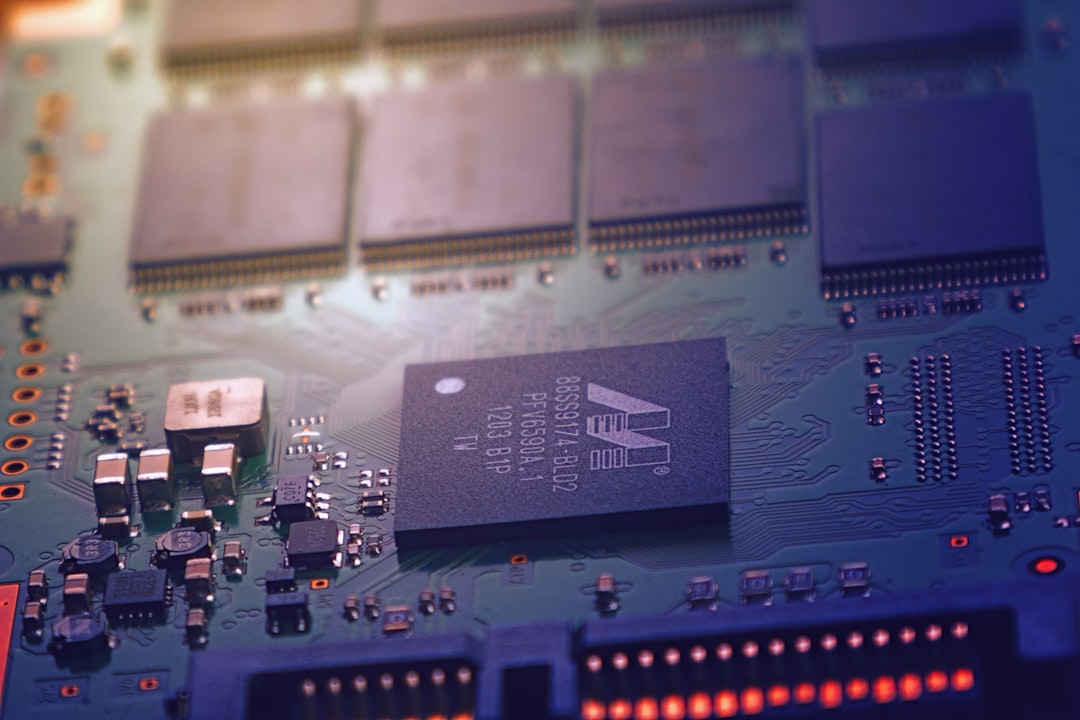
Several practical dimensions influence valuations today:
- Capex intensity: If the industry requires massive investments to deploy new accelerators, companies with proven manufacturing scale and broad software ecosystems may outperform purely hardware-focused peers.
- Deployment speed: The speed at which OpenAI and similar clients can roll out custom accelerators will affect the required hardware refresh cadence across the market.
- Software-defined hardware: Chips that come with optimized software stacks can reduce deployment friction and increase total addressable market, including for smaller cloud providers.
What OpenAI’s Strategy Means for Stock Bets
The OpenAI-Broadcom collaboration adds a layer of strategic risk and opportunity for investors. On the risk side, there is execution risk. Building a custom chip at scale demands supply chain discipline, yield optimization, and a robust software ecosystem to support developers. If Jalapeño struggles to meet reliability or cost targets, the initial excitement could fade fast. On the upside, if OpenAI can realize meaningful efficiency gains and cost savings at scale, it could broaden the overall AI chip market by making more workloads economically viable, opening the door for new players and new partnerships.
From a valuation standpoint, the market often prices in knowns and unknowns. Nvidia’s narrative has been anchored in its dominant position, but investors should also consider: what happens if multiple players offer compelling, optimized accelerators for different workloads? That doesn’t necessarily mean Nvidia loses, but it could lead to a more competitive pricing environment, a broader software ecosystem, and increased demand for AI compute overall. The key takeaway for investors is to watch for a shift from a single-provider narrative to a diversified, multi-vendor ecosystem—with Nvidia as a major, but not sole, participant.
How to Build an AI-Stock-Resilient Portfolio
Building resilience around AI hardware bets doesn’t require guessing the winner of every hardware race. It’s about balance, time horizons, and risk controls. Here are concrete steps you can take to position for both upside and stability:
- Set a time horizon. Longer horizons (5+ years) tend to absorb the volatility of hardware cycles. If you’re investing for retirement or a long-term goal, a patient approach can help weather near-term noise.
- Use position sizing wisely. Avoid concentration. A core position in a leading AI winner-plus a small sleeve of related names (software platforms, databases, and AI-as-a-service) can diversify risk.
- Incorporate risk controls. Use stop-loss or trailing-loss mechanisms for volatile AI hardware bets. Define a price target or a downside threshold you’re comfortable with before you buy.
- Monitor supply-chain indicators. Look for supplier relationships, foundry capacity, and chip yields. Improvements in supply chain efficiency can offset some competitive pressures.
The Bigger Picture: AI Compute, Costs, and Society
Beyond stock prices and quarterly results lies a broader economic and strategic shift. As AI models grow more capable, the demand for compute power intensifies. This pressure can drive more efficient hardware, new manufacturing partnerships, and more integrated software-dense platforms. OpenAI building chip with Broadcom is part of a trend where the boundary between who designs the silicon and who runs the workloads becomes more fluid. For investors, that means watching for: governance of AI tech, transparency in partnerships, and the evolution of data center economics as workloads scale.
There’s also a consumer-facing implication: the speed and cost of AI-enabled products can affect inflation, labor markets, and productivity in various sectors. While these macro effects take time to play out, having exposure to the right mix of hardware and software assets can be beneficial for a diversified portfolio aligned with long-run AI adoption.
Conclusion: Stay Curious, Stay Prepared
The news that OpenAI is building a chip with Broadcom illustrates a broader evolution in AI compute: more players want a piece of the hardware stack, more customization becomes feasible, and the economics of AI deployment could shift in meaningful ways. For Nvidia investors, the headline should be read with nuance—not panic. The industry is moving toward more options and more flexibility, but Nvidia’s scale, ecosystem, and execution still give it substantial staying power. The key for investors is to stay informed, diversify where appropriate, and use a disciplined framework for evaluating how new hardware partnerships affect the AI compute landscape over time.
FAQ
Q1: What is the Jalapeño chip and why does it matter?
A1: Jalapeño is OpenAI’s first custom AI accelerator designed with Broadcom. It signals an intention to own more of the hardware stack and optimize compute for OpenAI’s workloads. It matters because it could influence pricing, performance, and how quickly OpenAI scales its services.
Q2: Should Nvidia investors be worried?
A2: Not panicked, but cautiously curious. The openai building chip with Broadcom news introduces competition and potential changes in the pricing and deployment dynamics of AI accelerators. Nvidia’s breadth, software ecosystem, and scale still give it a strong position, but investors should monitor how workloads are distributed across multiple suppliers.
Q3: What should investors do now?
A3: Consider a diversified approach to AI exposure, employ scenario analysis for different hardware futures, and set clear risk controls. Track development timelines, deployment speeds, and the evolution of the software ecosystems around different accelerators.
Q4: How does this affect the AI hardware landscape in the long run?
A4: It suggests a more multi-sourced, software-driven, and performance-tuned hardware landscape. Expect new partnerships, evolving business models, and a race to optimize cost per operation across multiple chipmakers rather than a single dominant supplier.
Discussion