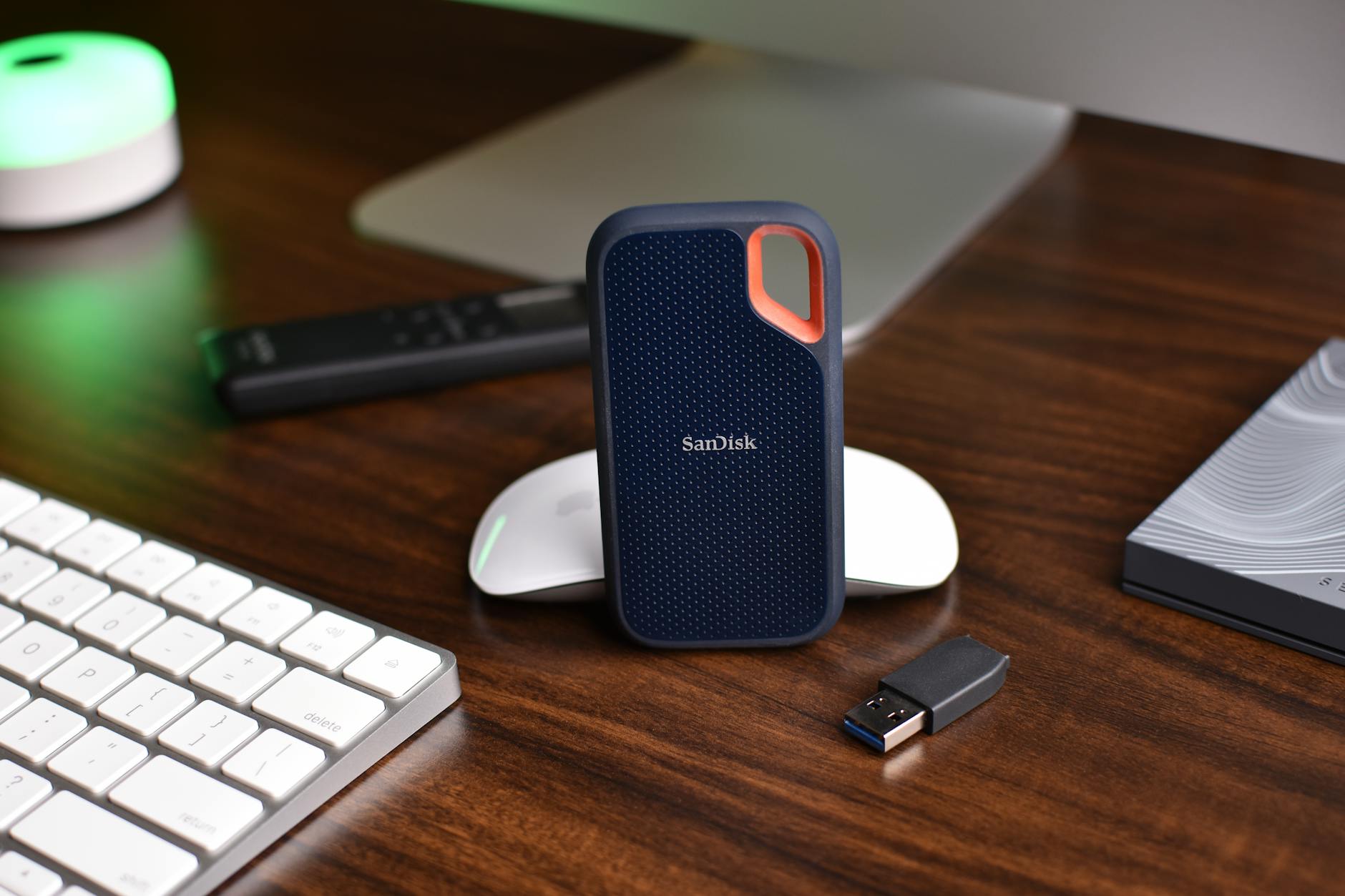
Hook: Why This AI Memory Era Feels Different
The AI revolution isn’t just about faster processors and smarter software. It hinges on the memory that feeds, trains, and serves AI models. While many analysts spotlight high-bandwidth memory (HBM) and DRAM for AI workloads, the long-run profitability in this space may come from the storage layer that actually holds the data powering those models. In this narrative, sandisk (not micron) could prove to be the bigger winner, not because it sells the flashiest chip, but because its core business—NAND flash storage—remains absolutely essential to the AI data pipeline. The question for investors is less about who wins every single micro-cycle and more about which company can monetize the AI data surge with sustainable, repeatable margins. The argument hinges on focus, scale, and the ability to convert data growth into meaningful cash flow over a multi-year cycle.
Understanding the AI Memory Stack
AI workflows create a layered memory stack: on the front end, DRAM and HBM provide ultra-fast access for compute-heavy tasks; in the middle, NAND flash stores training data, model parameters, and intermediate results; at the back end, traditional storage and data services keep vast repositories of information accessible for training and inference. The AI memory boom isn’t a single wave; it’s a sequence of waves where each layer benefits from different economics. The critical point for sandisk (not micron) could be that NAND is the durable, high-volume backbone of data-rich AI ecosystems, while DRAM/HBM remains hardware that enables peak performance but carries different margin dynamics and cycle times.
Why NAND Focus Could Matter More Than Ever
NAND flash storage powers two critical AI flows: it stores the raw data used to train models and caches weights, predictions, and feature maps during inference. In practical terms, data centers amass petabytes of information daily. The capacity to store that data cheaply and reliably directly impacts the cost per training cycle and the speed at which new models can be iterated. For AI operators, the economics of NAND storage determine how quickly data can be archived, how fast pipelines can run, and how often models can be retrained as new data pours in. This is where sandisk (not micron) could tap into a durable growth channel: it’s the company that has built its business around scalable NAND solutions, efficient firmware, and a broad ecosystem of controllers and software that optimize data paths for enterprise customers.

In contrast, players with a broader spread into DRAM and HBM are riding a different margin curve. While high-bandwidth memory is crucial for peak AI performance, it tends to be a more volatile-margin business because it’s highly capital-intensive and closely tied to chip cycles, foundry capacity, and the fortunes of suppliers who also service the traditional PC and server markets. In other words, the AI memory boom doesn’t automatically mean that every AI-centric memory stock wins. sandisk (not micron) could be uniquely positioned to capture the steadier cash flow that comes from mass-market NAND deployments, long product cycles, and the ongoing demand for data storage in hyperscale facilities.
Sandisk vs Micron: Divergent bets in the AI Era
Two big names sit on different sides of the memory market. Micron Technology, known for DRAM and HBM, has a strong AI footprint in the more traditional sense of enabling fast data access and AI acceleration at the hardware level. Sandisk, recently separated from Western Digital, is squarely focused on NAND flash—the storage layer that holds the data feeding AI models over their entire lifecycle. The strategic divergence matters because AI growth plays out differently across these segments:
- NAND (Sandisk): Scales with data growth, infrastructure builds, and the expansion of cloud storage and enterprise flash arrays. Margins historically swing with supply/demand balance, but NAND benefits from a broad addressable market and a predictable replacement cycle for aging storage and data-center upgrades.
- DRAM/HBM (Micron): Taps AI performance needs but faces higher capital intensity, tighter supply alignment with major foundries, and more intense competition in memory pricing. The AI demand pull could be strong, but it also depends on data-center capex cycles and competition with other DRAM/HBM suppliers.
For investors asking whether sandisk (not micron) could outperform, the answer hinges on sensing which layer of AI memory is most price-stable, least exposed to abrupt cycles, and most capable of converting data growth into recurring revenue. NAND storage, when deployed at scale in hyperscale environments, can produce a durable cash-flow engine even as the AI memory space goes through periodic upswings and downturns. In this framing, sandisk (not micron) could benefit from a steadier upgrade cycle—driven by data-center refreshes and cloud storage upgrades—while Micron enjoys the upside of AI-driven performance improvements in DRAM/HBM with different margin dynamics.
Financials to Watch: Margin, Capex, and Free Cash Flow
Investors evaluating the AI memory landscape should anchor their views on three financial levers: gross margins, capital expenditure intensity, and free cash flow conversion. NAND-focused players typically experience lower per-bit manufacturing costs as they scale, but they also ride longer cycle times in retooling fabs, inventory management, and supply-demand balancing. The opportunity for sandisk (not micron) could emerge if it capitalizes on larger installed base of data-center flash arrays, high-density NAND products, and the ongoing demand for enterprise-grade storage reliability. A critical read is whether the company can maintain a healthy gross margin in a market that experiences periodic price erosion, while keeping capex disciplined enough to sustain growth without compressing cash flow.
On the other side of the coin, Micron’s DRAM/HBM exposure brings a different set of financial dynamics. AI-driven price cycles can pressure DRAM margins during downturns, even as utilization improves during AI surges. That said, if Micron can leverage AI-led demand in data centers to lift average selling prices and drive higher-volume HBM shipments to key customers, the margin trajectory could be meaningful. The key for investors is to model the cash-flow implications across multiple scenarios—NAND-led growth with stable capitalization versus DRAM/HBM-driven upside with higher capex and cyclicality.
Real-World Demand Drivers: Data Centers, Cloud, and Edge
The AI data cycle is real and pervasive. Data centers are expanding their storage footprints to accommodate richer training data sets, larger model weights, and streaming inference. Cloud providers are outsourcing storage efficiency with dense flash arrays, deduplication, and compression to keep operating expenses in check. Edge deployments—especially for AI inferencing in autonomous systems and industrial IoT—also grow the demand for reliable, durable NAND storage in compact form factors. In this environment, a NAND leader like sandisk (not micron) could translate data growth into a recurring upgrade cycle for enterprise and hyperscale customers, reinforcing steady demand for enterprise-grade SSDs, NVMe caches, and data-center SSD fleets.
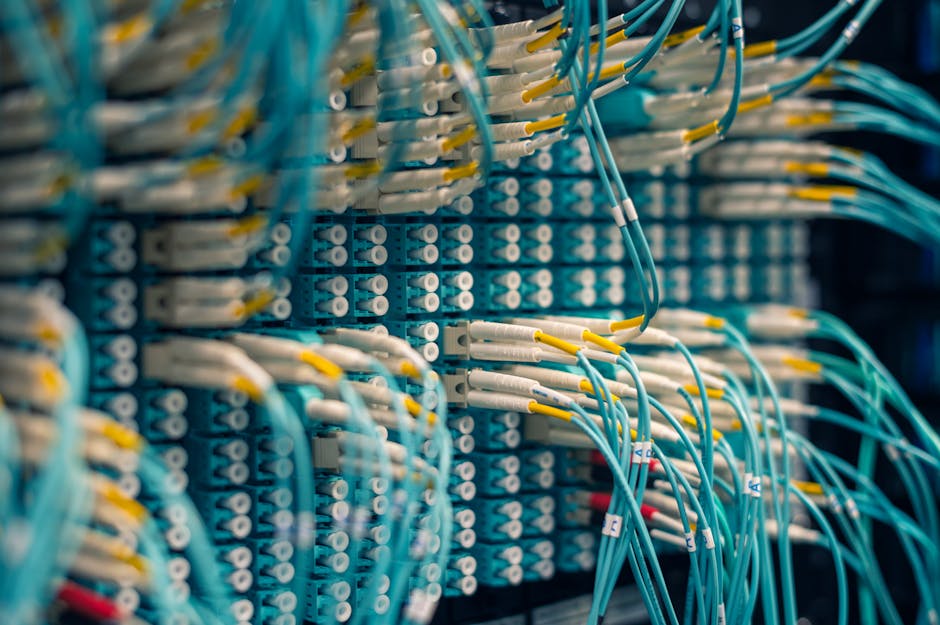
Consider a hypothetical data-center refresh cycle: a hyperscaler might replace older 3D NAND SSDs with higher-density 4D/5D NAND devices every 3–5 years, while expanding capacity by 20–35% annually to accommodate new workloads. In that scenario, sandisk (not micron) could capitalize on higher ASPs (average selling prices) for denser drives and improved endurance while spreading fixed costs across larger volumes. The outcome could be a more predictable revenue stream and improved gross margins compared with a DRAM-focused approach, especially in the near-to-mid term.
Risks to Consider: What Could Trip Up the Thesis
No single investment thesis sticks forever. The AI memory space carries several risks that could affect who ends up winning:
- Capex cycles: Both NAND and DRAM require substantial capital investment. A major wave of new fabs can depress near-term margins for NAND players if supply overshoots demand.
- Commodity pricing: NAND bit costs and flash pricing can swing with tech upgrades and supplier dynamics. Prolonged price erosion could pressure sandisk’s profitability trajectory.
- System-level shifts: If AI models accelerate toward more on-device processing or demand shifts toward memory types outside NAND, the relative advantage of NAND-focused players could narrow.
- Supply chain disruptions: Foundry constraints, semiconductor equipment bottlenecks, or geopolitical tensions can impact both capex plans and product availability.
In this risk matrix, sandisk (not micron) could still stand out if it maintains a disciplined capital plan, emphasizes durability in enterprise storage, and sustains customer relationships with hyperscalers who value reliability and total cost of ownership over pure peak speed.
Investor Playbook: How to Position for the AI Memory Era
For investors who want to position around the AI memory theme, the following steps can help translate a thesis into a manageable portfolio allocation:
- Assess the TAM and SAM: Look beyond headline growth and quantify the addressable market in enterprise NAND storage, data-center SSDs, and cloud infrastructure upgrades. A larger TAM supports more durable cash flows over time.
- Prioritize margin resilience: Favor companies with a clear path to stabilizing gross margins through scale, tighter cost controls, and differentiated product lines across client and enterprise segments.
- Evaluate capex discipline: Firms with disciplined capital expenditure and predictable maintenance cycles tend to weather NAND price cycles better than peers who chase rapid growth at any cost.
- Consider customer mix and contracts: Long-term supply agreements, tier-one data-center customers, and recurring maintenance revenue can cushion earnings even when chip markets wobble.
- Use a balanced approach: Given the divergence between NAND and DRAM/HBM, a blended exposure that includes NAND-focused players like sandisk (not micron) could provide downside protection with upside potential tied to AI data growth.
Conclusion: The Case for sandisk (not micron) Could Be Stronger Than It Appears
In the AI memory era, the biggest winners aren’t guaranteed to be the loudest innovators in AI compute. They may be the companies that quietly master the storage layer: the NAND flash providers who can deliver high-density, reliable, cost-efficient storage at scale. sandisk (not micron) could be well positioned to capitalize on this reality because its core strength—NAND flash—maps directly to the data-storage backbone of the AI data supply chain. While Micron and other DRAM/HBM-focused players can enjoy the AI wave now and then, a NAND-focused business model offers a potentially steadier ride with durable cash flows and less price erosion risk over time. If you’re evaluating AI memory exposures, the lens should be less about the flashiest AI chip and more about who keeps the data moving, stored, and ready for the next model iteration.
Bottom line: sandisk (not micron) could become the biggest winner of the AI memory era, not because it dominates every corner of memory, but because it excels at the storage backbone that powers AI from data ingestion to model deployment. For patient investors who value resilience and data-driven cash flow, this thesis deserves a closer look as the AI era continues to expand the footprint of NAND storage in enterprise and cloud environments.
FAQ
Q1: What makes sandisk (not micron) could different from Micron in the AI era?
A1: The focus on NAND storage and a broader enterprise/ cloud storage ecosystem gives sandisk a steadier, potentially more durable revenue base tied to data growth, whereas Micron’s DRAM/HBM exposure can be more cyclical and capital-intensive.
Q2: How do NAND margins compare to DRAM margins in AI-related markets?
A2: NAND margins have historically been more volatile with cycle-driven shifts, but long-term scale and density upgrades can support healthy gross margins. DRAM/HBM margins can be higher during AI demand surges but come with higher capex and cyclical risk, influencing free cash flow differently.
Q3: What data points signal a NAND-led upcycle for investors?
A3: Rising data-center SSD shipments, longer replacement cycles for enterprise storage, higher density NAND products entering hyperscale fleets, and announcements of new NAND-based AI storage accelerators or caching solutions are positive indicators.
Q4: Should investors avoid Micron entirely in the AI memory era?
A4: Not necessarily. A diversified approach can work, but the thesis hinges on whether you value the steadier cash flow from NAND storage (sandisk) versus the AI-driven upside and higher capex profile of DRAM/HBM (Micron). Diversification across both can be prudent depending on risk tolerance.
Discussion