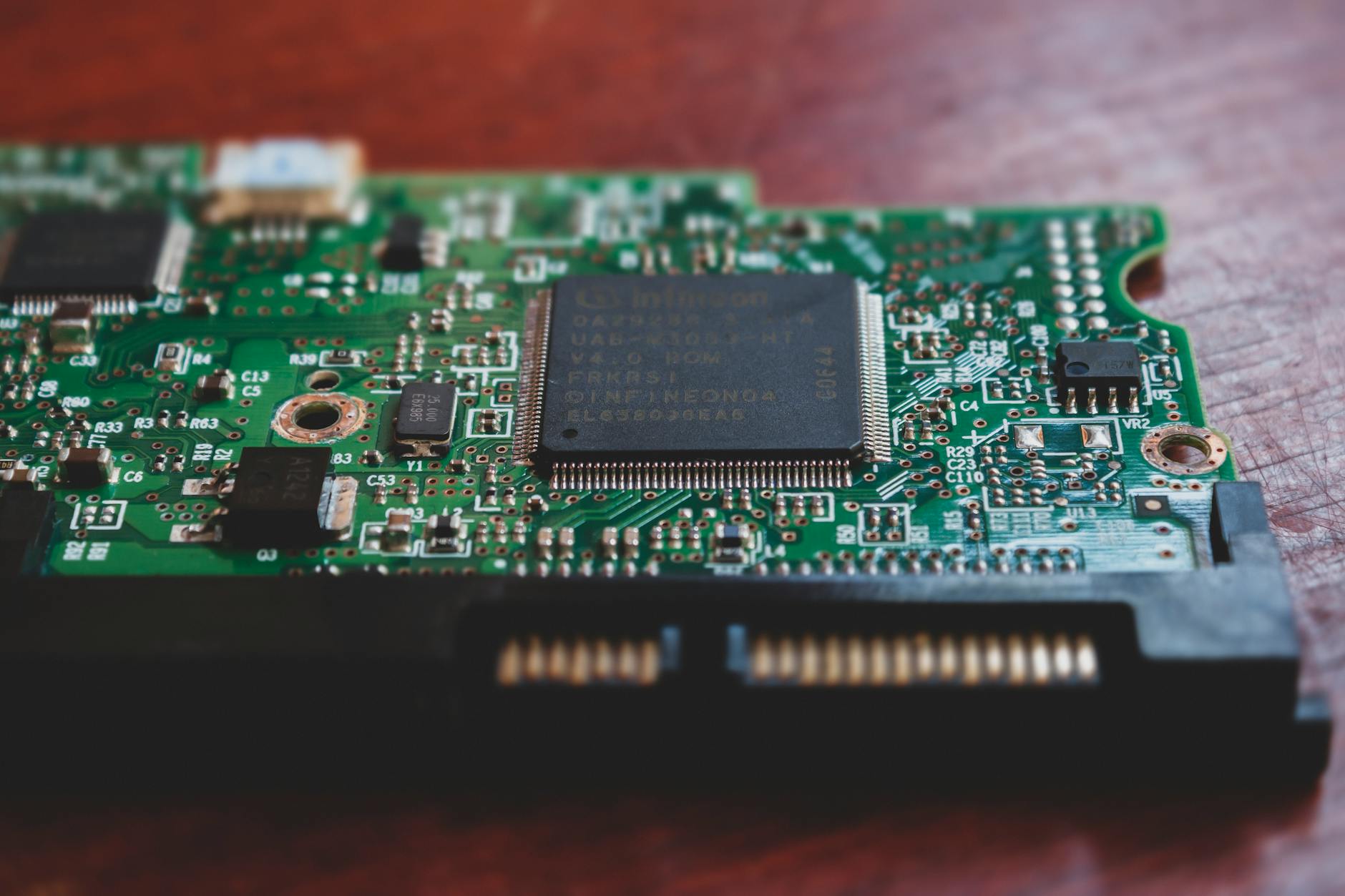
Introduction: The Tiny Chips Driving a Giant Digital World
When you scroll through a news feed, stream a movie, or talk to a smart speaker, you’re interacting with a web powered by semiconductors. These tiny silicon devices run the software, manage the data, and enable the AI behind every modern service. In investing terms, that means semiconductors power digital economy growth in a way that few other industries can match for potential upside and cyclicality. Two popular exchange-traded funds (ETFs) sit at the crossroads of this trend: the chip-focused iShares SEMICONDUCTOR ETF (SOXX) and the broader State Street Technology Select Sector SPDR ETF (XLK). This article explains how these funds differ, where the opportunities lie, and how to build a plan that aligns with your risk tolerance and goals.
Why Semiconductors Matter: The Digital Economy’s Fuel
Chips are the world’s smallest engines of growth. As data, AI, and connected devices proliferate, the demand for faster, more efficient semiconductors climbs. Consider a few real-world trends:
- Cloud and AI demand: AI model training requires massive compute power and memory bandwidth. Data centers need decades of performance upgrades, driving ongoing capital expenditure in logic, memory, and specialty chips.
- 5G and edge computing: The shift from centralized processing to edge devices expands chip opportunities in smartphones, sensors, and industrial devices.
- Automotive electrification: Electric vehicles and advanced driver-assistance systems rely on power management and AI chips, expanding the TAM (total addressable market) for semiconductors.
- IoT proliferation: Billions of devices require low-power, efficient chips, supporting a persistent demand backdrop.
Estimates for the global semiconductor market put it in the ballpark of $600 billion to $700 billion in 2023, with a multi-year growth path driven by AI, data centers, and digital infrastructure. While the market is cyclical and sensitive to supply chain shifts, the long-run trajectory remains favorable for those who bet on the underlying demand for ever-smarter chips.
SOXX vs. XLK: What Each ETF Captures
To understand where semiconductors power digital economy opportunities reside, it helps to know what each ETF targets and how it compounds risk and return.
What is SOXX?
SOXX is a dedicated semiconductor ETF. It concentrates exposure in a relatively small group of chipmakers and suppliers—think companies that design, manufacture, or enable memory and logic devices. Because of this focus, SOXX can deliver strong upside when chip demand surges but can also exhibit higher volatility during demand swings or supply constraints. For investors who want a pure-play bet on semiconductor cycles, SOXX offers a direct, high-concentration vehicle.
What is XLK?
XLK is a technology-sector fund that tracks the broader S&P 500 Information Technology index. It includes software firms, hardware manufacturers, semiconductor equipment suppliers, cloud businesses, and IT services. XLK provides diversification across the tech ecosystem, helping to smooth earnings volatility that might come from chip-only exposure. For investors seeking broad tech exposure with lower single-name risk, XLK is a natural fit.
When to Pick Pure-Play Chips or Diversified Tech
The decision between SOXX and XLK often comes down to risk tolerance and time horizon. Here are common use cases:
- You want concentrated exposure to the chip cycle: SOXX can magnify gains when semiconductor demand is robust and supply tight, but it can also magnify losses during downturns.
- You seek a broader tech backdrop: XLK provides exposure to software, services, hardware, and semiconductor equipment, reducing single‑name risk while still participating in the technology growth story.
- Your portfolio is overweight in tech: A mix of XLK with a smaller position in SOXX can balance macro tech exposure with targeted chip opportunities.
Understanding Risks and Rewards
Investing in semiconductors and tech, in general, involves both opportunities and risks. Here are the key drivers to track:
Semiconductors have boom-bust cycles tied to capital spending, supply-demand balance, and component shortages. These cycles can create price volatility for SOXX and related ETFs. - Supply chain resilience: Geography and diversification of suppliers (foundries, wafer fabs, material inputs) influence risk. Geopolitical tensions or trade policy changes can affect chip supply and pricing.
- Technological disruption: Breakthroughs or shifts in architecture (e.g., chiplet designs, new memory tech) can change the competitive landscape quickly.
- Valuation discipline: Chip stocks and tech companies can trade at premium multiples during hype cycles. Always weigh price against fundamentals and earnings visibility.
Investing Scenarios: How to Think About Allocation
Let’s translate the macro themes into practical portfolio ideas. The goal is to capture the upside of the digital economy while managing risk through diversification and discipline.
Scenario A — Growth-Heavy Tech Core
Allocation: 70% XLK, 30% cash or bonds for ballast. Why: You want broad tech exposure with less volatility than a chip-only bet. This setup can still participate in strong AI and cloud growth but is cushioned by diverse software, hardware, and services companies.
Scenario B — Chip-Driven Upside
Allocation: 60% SOXX, 40% XLK. Why: You believe the semiconductor cycle will accelerate due to AI demand and data center build-out. The chip concentration can drive outsized gains when the cycle improves, but you should be prepared for sharper drawdowns when supply tightness eases or demand slows.
Scenario C — Balanced, Moderately Aggressive
Allocation: 50% XLK, 25% SOXX, 25% diversified tech/health alternatives (e.g., a broad market ETF). Why: This mix pares back single-sector risk while letting you participate in chip-enabled growth and the broader technology ecosystem.
Tracking Fundamentals: Fees, Yields, Beta, Concentration
Two practical lenses to assess ETFs are cost and risk metrics. Here are the typical considerations you’ll encounter with SOXX and XLK:
- Expense ratio: SOXX and XLK offer different fee profiles. Cost efficiency compounds long-term returns, so compare ongoing costs carefully.
- Concentration: SOXX is more concentrated in a smaller set of chipmakers, which can amplify stock-specific moves. XLK spreads risk across software, hardware, and services leaders.
- Beta and volatility: Pure-play chip funds tend to have higher beta relative to the S&P 500 than broader tech funds, reflecting sector cyclicality and supply-demand dynamics.
- Dividend yield: Both ETFs typically distribute modest yields; however, the focus on growth-oriented firms in XLK may influence current income versus capital appreciation dynamics.
Real-World Examples: Supply Chains, Demand Shocks, and Innovation
Investors live through the real-world cycles of chip markets. Here are concrete illustrations that help anchor expectations:

- Supply constraints boost chip prices: When a major fab capacity constraint emerges (e.g., a natural disaster or geopolitical disruption), SOXX components can rally as investors anticipate tighter supply for AI accelerators and GPUs.
- AI-driven demand spikes: A surge in AI training workloads creates a surge in server-class GPUs and memory chips, benefiting chipmakers and their suppliers. XLK benefits from the broader ecosystem even if a single chipmaker underperforms.
- Foundry capacity expansion: If leading foundries announce capacity for the next 12–18 months, SOXX can outperform as market pricing power improves for high-end nodes.
Putting It All Together: A Practical Investment Plan
Whether you’re saving for retirement, funding a college fund, or building a diversified growth portfolio, understanding how semiconductors power digital economy translates into ETF strategy is essential. Here’s a step-by-step plan to implement what you’ve learned:
If you’re 10–20 years from needing funds, you can tolerate more chip-cycle risk. If you’re closer to withdrawal dates, prefer XLK’s diversification. Decide how much of your tech sleeve you want to devote to SOXX vs. XLK. A common starting point is 60/40 in favor of broader exposure, then reweight as you observe cycles. A small difference in expense ratios compounds meaningfully over decades. Compare expense ratios, bid-ask spreads, and tax efficiency. Don’t rely on chips alone. Include a separate allocation to international tech or thematic funds if appropriate for your tax situation and estate planning. Rebalance to your target weights when drift exceeds 5–10%. This helps you capture gains and maintain risk controls.
Risk Management: How to Weather the Next Tech Cycle
Even as the long-run story remains intact, the near term can be choppy. A disciplined plan reduces the chance of mis-timing cycles:

Consider a sleeve of quality mid- and large-cap tech stocks to complement the ETF exposure, but avoid overconcentration in a handful of names. Ensure you have adequate cash or cash-like assets to meet rebalancing needs without forced selling at unfavourable prices. Inflation trends, interest rates, and geopolitical developments can influence tech capex and chip demand—stay informed but avoid knee-jerk reactions to every headline.
Conclusion: The Enduring Argu ment for Investors
In a world increasingly powered by data, software, and intelligent devices, semiconductors are the invisible force that keeps the digital economy moving. The choice between SOXX and XLK isn’t simply about narrow vs. broad exposure—it's about your conviction in chip cycles versus a diversified tech growth engine. If you want a pure‑play bet on the devices and architectures that enable AI, SOXX offers a compelling path. If you prefer a smoother ride that still captures the AI and cloud waves through a wider tech ecosystem, XLK is the prudent anchor. Most investors will find a blended approach satisfying: a core allocation to XLK for stability and growth, complemented by a measured slice of SOXX to participate in chip-driven upside when the cycle tips in favor of semiconductors. As always, anchor your decisions in data, manage risk with clear targets, and keep the focus on how semiconductors power digital economy outcomes—because that truth underpins the long-run case for these tech ETFs.
FAQ
Q1: Why does semiconductors power digital economy matter for investors?
A1: Chips are foundational to AI, data centers, and connected devices. Their demand dynamics drive earnings for many tech players, influencing ETF performance and the long-run growth potential of a tech-focused portfolio.
Q2: What’s the main difference between SOXX and XLK?
A2: SOXX concentrates on the semiconductor sub-sector, offering high conviction and potentially higher volatility. XLK tracks a broad basket of US technology names, delivering diversification and a steadier risk profile.
Q3: How should a new investor approach these ETFs?
A3: Start with a broad tech core like XLK to gain exposure to software and cloud, then consider a smaller SOXX position to capture semiconductor cycle upside. Rebalance incrementally and monitor capex and demand signals in the sector.
Q4: What are practical risk controls when investing in chip-focused ETFs?
A4: Use fixed allocation targets, stagger purchases to avoid timing risks, diversify across tech themes, and keep an eye on macro indicators like interest rates and AI compute demand to inform adjustments.
Discussion