
Introduction: The Space-Industry Pause You Can’t Ignore
In the fast-evolving world of space exploration and commercial launch services, one headline now stands out for investors: Space Force makes obvious moves that affect the dependence on legacy defense primes. The latest pause at Boeing and Lockheed Martin’s space venture—traditionally the backbone of U.S. human-rated and national-security launch capacity—signals a recalibration. It isn’t just a technical hiccup; it’s a reminder that government programs still drive the timing, risk, and return profile of the heavy hitters in space infrastructure.
For more than a decade, market participants have watched the balance between commercial ambitions and government procurements tilt toward the DoD and NASA budgets. The Space Force’s decisions, even when framed as safety or reliability concerns, carry outsized consequences for those who rely on stable cadence in launches, long-term contracts, and backlog visibility. In this environment, space force makes obvious that risk management, portfolio diversification, and disciplined investing matter just as much as a company’s quarterly results.
The Trigger: Why the Pause Happened and What It Means
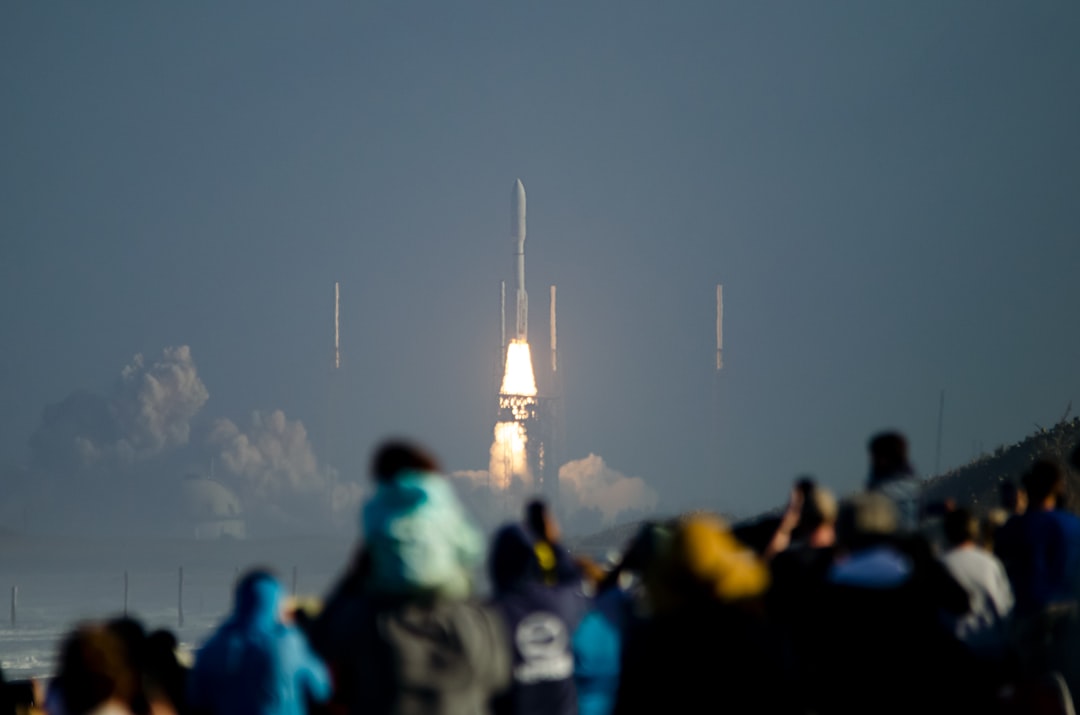
The United Launch Alliance (ULA)—a joint venture owned by Boeing and Lockheed Martin—has been counting on Vulcan Centaur to become a workhorse for national-security, civil, and commercial missions. In the early optimism, executives talked about a cadence of 20–30 launches per year within a few years. Reality, however, didn’t cooperate. Over a two-year window, ULA managed only four launches, and two of those flights carried anomalies. The first Vulcan flight, in January 2024, went smoothly, but the second flight in October 2024 suffered a problem when a nozzle on one of the solid rocket boosters separated during ascent. This isn’t just a technical frustration; it’s a signal to the market that reliability and supply-chain resilience remain a work in progress.
Why would Space Force make such a move? In blunt terms, it’s about risk management and strategic alignment. The DoD and Space Force administer a complex matrix of requirements: mission-critical reliability, cost control, and predictable schedules. When a program shows repeated anomalies or cadence gaps, leadership has to decide whether to push forward with fixes, delay, or reallocate resources. The most straightforward read for investors is: the government is re-evaluating whether legacy launch primes should be the sole backbone of national-security launches or whether a more diversified mix of suppliers and in-house capabilities should be developed to reduce single-point risk.
Space Force Makes Obvious: The Implications for Investors
When a powerful buyer signals risk by pausing launches, the impact radiates through a few key channels: contractor profitability, stock price volatility, and the mix of customers that sustain the launch ecosystem. Here’s how to think about it from an investment perspective.
- Contractor risk and cadence: Boeing and Lockheed Martin stand to lose near-term revenue if launch cadence contracts are delayed. The cadence risk is especially acute for programs explicitly tied to national-security missions. If a pause persists, investors should monitor backlog clarity and cure timelines instead of merely chasing headline sales.
- Competition and market share: SpaceX, which operates with different procurement incentives and cost structures, could capture share during a pause. The Space Force’s decision to reassess reliance on a single vendor or a small group of primes can tilt the competitive landscape toward more diverse suppliers.
- Investor sentiment and volatility: News of pauses tends to spike short-term volatility in aerospace stocks. The longer the pause lasts, the greater the potential for reallocation into less cyclical or less government-dependent names within the broader technology and engineering sectors.
- Portfolio resilience in a maturing space economy: The longer-term trend isn’t a single story about ULA. It’s about the space economy’s evolving mix of government, commercial, and dual-use programs. Investors who diversify across space-adjacent innovators, launch services, and downstream space technologies may weather the fluctuations more effectively.
In this context, the statement Space Force makes obvious underlines a strategic re-evaluation rather than a temporary dip. It’s a nudge toward balance: protect critical national capabilities while opening doors for private-sector competition, innovation, and more predictable commercial revenue streams. For investors, that means adjusting risk expectations and seeking exposure that reflects a broader, more resilient space ecosystem. The truth is, space force makes obvious that the path to sustainable returns in space technology lies beyond a single program or a single vendor.
Winners, Losers, and What It Means for the Market
Every pause reshuffles the map for the major players. Here’s a snapshot of who benefits, who bears the costs, and how the dynamics could unfold in the next 12–24 months.
Winners and Losers in the Short Term
- SpaceX and diversified providers: Companies with lower dependence on a single customer base or those with a stronger commercial focus may see newfound demand as DoD priorities pause and re-balance contracts. SpaceX’s vertical integration and rapid cadence could translate into steadier revenue flow during a period of government pause.
- Primary contractors under pressure: Boeing and Lockheed Martin face near-term margin compression if launch revenue slows and fixed costs remain elevated. Investors should watch for updates in backlog, warranty costs from hardware fixes, and the pace at which new procurements are issued.
- Subsidiaries and suppliers: Supply-chain partners that occasionally benefit from DoD investments may see mixed signals. Delays can extend lead times, impacting cash conversion cycles and working capital requirements across the supplier network.
The broader market response often tempers after the initial reaction. The key takeaway is not “doomsday for legacy primes” but a transition period during which the space economy tests new models for risk-sharing, cost-certainty, and performance guarantees. The phrase space force makes obvious that the government’s outcomes are not purely driven by hardware—policy, budgeting cycles, and mission readiness all play decisive roles in shaping returns for investors.
What Investors Can Do Now: Actionable Steps
Armed with the insight that Space Force makes obvious, here are practical steps to position a portfolio for a space economy that blends government-driven programs with commercial breakthroughs.
- Diversify within the space sector: Don’t rely on one vendor for all space exposure. Consider a mix that includes traditional aerospace primes, space-enabled technology companies, and diversified space-focused funds or ETFs that tilt toward satellite services, data analytics, and launch services. This helps reduce single-program risk and captures growth from both defense and commercial segments.
- Look for cash-flow resilience: Favor companies with strong free cash flow, sustainable dividends, and disciplined capital expenditure. A pause in launches can pressurize near-term earnings, so cash-flow quality becomes a critical differentiator.
- Monitor backlog visibility and contract cadence: Backlog that can be monetized within 12–24 months is a sign of earnings resilience. When a government program slows, backlog clarity helps investors gauge how long a pause might last and whether efforts to diversify will offset the slowdown.
- Scenario planning and risk budgets: Create a few government-leaning and commercial-leaning scenarios for key holdings. For each, estimate revenue under base, optimistic, and pessimistic cases, then apply probability-weighted returns to guide rebalancing decisions.
- Use hedging where appropriate: For portfolios with meaningful space exposure, consider hedges using broad tech or defense-focused funds, or even currency/interest-rate hedges if you expect macro volatility to spill over into the space sector.
For individual investors, a practical approach is to allocate a core space-exposure to diversified operators and technologies, then add satellite data and launch-services players as satellites, demand, and regulatory clarity evolve. The pause does not erase the potential of space exploration and infrastructure—it reframes it. And that reframing is exactly what smart investors should capture, rather than fear.
Real-World Scenarios: How to Think About Risk and Return
Let’s ground this discussion in concrete scenarios that a thoughtful investor can relate to. The Space Force makes obvious implications about risk allocation, and these scenarios illustrate how to translate that into portfolio decisions.
Scenario A — Base Case (Moderate Pause, Steady Backlog)
Assume a modest pause in Vulcan Centaur launches with a plan to cure the anomalies within 6–12 months. DoD budgets maintain a steady pace, but commercial demand for launch services grows at a slower rate. Valuations for legacy primes drift sideways, while SpaceX benefits from any incremental commercial demand and improved cost competitiveness. Investors who hold a balanced mix see modest total returns with lower volatility than a pure-play defense stock.
Scenario B — Optimistic Recovery (Accelerated Commercial Demand)
The pause proves temporary, and commercial space launches accelerate as new constellations come online and private data needs surge. DoD procurement remains intact but becomes broader, with more flexible contracts and multiple suppliers. In this case, diversified space names outperform, and primes regain pricing power as they streamlining cost structures. Space-focused ETFs or diversified space funds could lead the gains.
Scenario C — Pessimistic Drawdown (Cadence Deteriorates Longer)
If the pause stretches beyond a year and DoD budgets shift toward domestic manufacturing and reskilling, some legacy primes could face margin pressure. Stock prices may react negatively in the near term, but a carefully selected mix of growth-oriented space technology leaders could offer a robust long-term recovery path if they demonstrate recurring revenue sources beyond a single government program.
Regardless of the scenario, the common thread is: the space economy remains dynamic, and the phrase space force makes obvious that government procurement is an important, yet not sole, driver of returns. Investors who diversify and maintain a clear risk budget can navigate these shifts with confidence.
FAQs: Quick Answers for Investors
Q1: What does it mean when Space Force makes obvious a pause in launches?
A pause signals a re-evaluation of risk, cadence, and pricing for national-security launches. It can lead to a longer planning horizon and greater emphasis on diversified suppliers and private-sector innovation. For investors, it’s a cue to examine backlog visibility and to adjust exposure to government-dependent firms.
Q2: Which companies are most affected by a launch pause?
Legacy defense primes tied to specific launch contracts—like Boeing and Lockheed Martin—often feel the immediate impact on near-term revenue. Companies with broader commercial exposure or more diversified launch services—such as SpaceX or satellite-data providers—may experience less volatility or even benefit as the playing field shifts toward competition and efficiency.
Q3: How should a retail investor respond today?
Focus on diversification, cash-flow quality, and a disciplined rebalancing plan. Consider adding space-focused diversification—through funds or a mix of space-enabled tech players—rather than concentrating all bets on a single contractor. Keep an eye on DoD budget signals and commercial demand trends to time adjustments.
Q4: Is this a long-term trend or a short-term disruption?
Both. It’s a disruption that tests the space ecosystem’s resilience and capability to adapt. Over the longer term, the space economy is likely to grow as satellite constellations, data services, and space-enabled innovations unlock new revenue streams. The pause could accelerate modernization and a more competitive procurement framework, which can be favorable for investors who position for structural growth rather than a one-off event.
Conclusion: The Pause as a Promise of a Smarter Space Economy
The news that Space Force makes obvious a shift away from a single-vendor dependency is less a setback and more a strategic nudge toward resilience. It calls for disciplined investing, a keener eye on cash flow, and a willingness to diversify across a broader set of space-enabled opportunities. For investors, the key is to treat government-driven uncertainty as a feature, not a bug: a signal to strengthen portfolios with balance, not chase headlines. As the space economy matures, the most enduring winners will be those who combine robust innovation with prudent risk management, ensuring that the next generation of launches, satellites, and data services can scale smoothly—no matter which programs are prioritized by Space Force makes obvious decisions today.

Discussion