Hooked on AI, Heavily Financed by Debt: Why SpaceX Is in a New Financial Frontier
Imagine a private company with a rocket in space and an engine revving in a race toward artificial intelligence that could reshape aerospace, robotics, and even commercial spaceflight. Now imagine that same company borrowing billions to fund that AI engine. That scenario is unfolding with SpaceX as it leans on debt markets to finance a bold, uncertain future. The question on investors’ minds isn’t just about rockets or AI alone; it’s about resilience, discipline, and whether equity-like growth can coexist with a significant debt burden. In this article, we unpack the rationale behind spacex borrowing billion fund, examine the mechanics, weigh the risks, and offer actionable steps for anyone evaluating debt-fueled AI bets.
What the Numbers Tell Us About This Move
SpaceX is pursuing a financing path that blends a legacy debt load with fresh market access. The core dynamic centers on refinancing and extending the maturity profile as the company accelerates its AI program. Two numbers sit at the center of the conversation: a bridge loan of roughly $20 billion that SpaceX used to absorb X and xAI, and a new bond issuance totaling around $25 billion that would be spread across several tranches with maturities from five to 30 years. Publicly discussed as an investment-grade dollar bond offering, the deal would be the company’s first foray into investment-grade debt issuance. While the bridge loan funded a one-time consolidation, the bond proceeds are intended to refinance that obligation and potentially broaden the capital cushion for ongoing AI investments. To investors, this looks like a classic high-leverage growth strategy: borrow to speed up an internal AI initiative, then use debt markets to refinance and reprice obligations at favorable terms. The spacex borrowing billion fund narrative emphasizes longer-dated, semi-structured financing that lowers near-term cash pressure while maintaining optionality for future rounds of investment in AI infrastructure, data centers, and autonomous systems.
Why SpaceX Is Betting on AI—and How It Plans to Pay for It
SpaceX has long been a symbol of ambitious engineering—reusable rockets, rapid launch cadences, and a culture that prizes breakthrough timelines. In recent years, the company’s ambitions have expanded toward AI that could optimize launch trajectories, autonomous decision-making for satellites, and safer, more efficient manufacturing processes. The spacex borrowing billion fund approach signals a conviction that AI is not a side project but a core capability that will influence performance in both the short and long run.
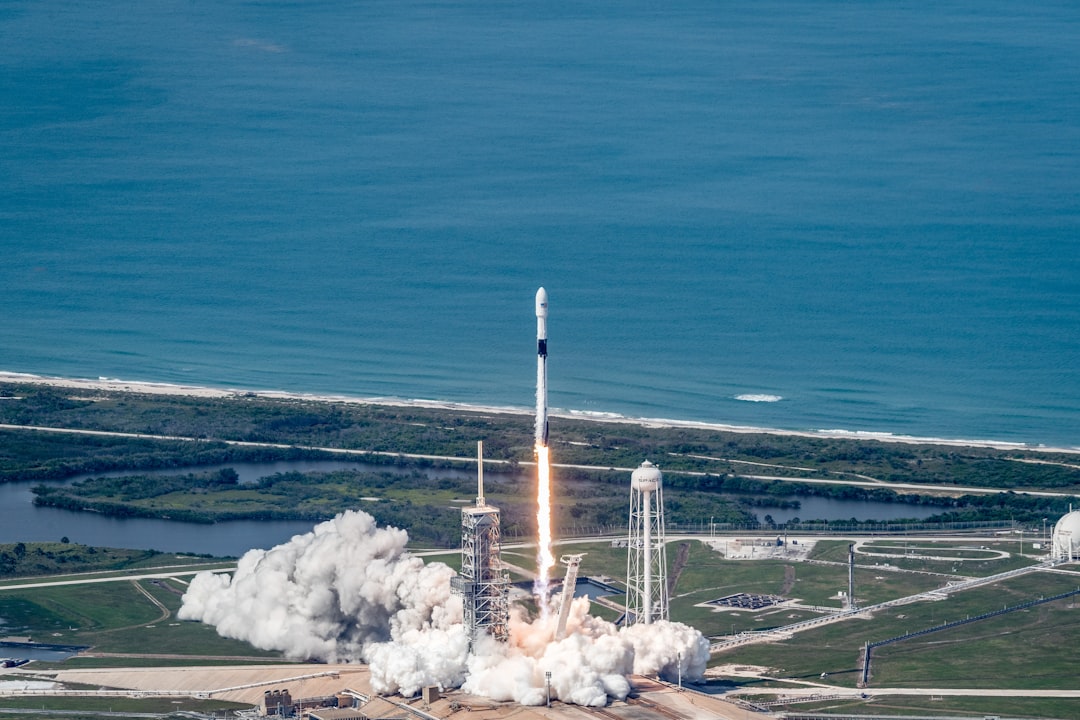
There are several drivers behind this strategy:
- Capital diversification: Rather than rely solely on equity fundraising, SpaceX taps debt markets to spread funding across time and maintain optionality for future investments.
- Strategic leverage: AI assets—models, training data, and scalable automation—can accelerate mission outcomes and reduce per-launch costs if developed in-house.
- Risk management: A larger, more mature balance sheet can soften the blow of volatile aerospace cycles and regulatory shifts by providing a cushion for experimentation.
Understanding the Financing Mechanics
The mechanics of a spacex borrowing billion fund plan involve a combination of refinanced debt and new market issuance. The move typically starts with an asset-backed or corporate bond offering in which the company leverages its long-term prospects and credit profile to secure favorable borrowing terms. The five-to-30-year maturity range indicates an intent to diversify risk across different market cycles while maintaining a manageable refinancing timetable. An investment-grade rating on the new bonds would mark a notable milestone for SpaceX, given its private status and ambitious capital program.
For SpaceX, the refinancing exercise is not just about the numbers—it’s about preserving optionality. A bond issuance of this scale provides a liquidity runway that allows the company to continue investing aggressively in AI, spacecraft, and manufacturing automation without needing to pull back on other growth initiatives. It also means the company must deliver on AI milestones to justify the debt load to investors and lenders, especially if market conditions worsen or if AI projections take longer to monetize.
AI Ambitions: What SpaceX Aims to Build
SpaceX’s AI drive centers on three pillars: autonomous operations, data-driven decision making, and safety-enhanced design and testing. Autonomous systems could streamline launch planning, ground operations, and even trajectory optimization, potentially reducing lead times and increasing flight cadence. Data-driven approaches promise to improve accuracy in weather modeling, vehicle health monitoring, and predictive maintenance. Safety enhancements—critical in aerospace—may rely on AI to detect anomalies faster and respond with precise mitigations in real time.
While the technical details remain closely held, the macro takeaway is clear: AI is no longer a support function; it’s a central enabler of cost efficiency, reliability, and rapid scale. In a spacex borrowing billion fund framework, the payoff hinges on translating AI capabilities into measurable improvements in mission success, launch rate, and cost per kilogram to orbit.
Bold Move or Dangerous Bet? An Investor’s View
There is no denying the boldness of pursuing a spacex borrowing billion fund strategy. It reflects confidence in AI as a driver of long-term value and a belief that capital markets will reward that bet with favorable terms, even when debt levels rise. Yet, leverage of this magnitude also heightens risk. The main questions investors should ask include:

- Can AI-driven productivity gains reliably cover higher interest and debt service costs across downturn scenarios?
- How resilient is the total capital structure if AI milestones lag or if external funding becomes more expensive?
- What is the pace of cash generation from AI initiatives versus the pace of debt amortization and refinancing needs?
The spacex borrowing billion fund move sits at the intersection of opportunity and risk. If AI milestones deliver and the company maintains access to capital on acceptable terms, the approach could compound SpaceX’s advantage in a competitive aerospace and tech landscape. If milestones slip or market conditions tighten, debt service pressure could impede future investments or force strategic compromises that slow progress.
What This Means for Investors and Market Participants
From an investing standpoint, the spacex borrowing billion fund thesis offers a window into how a high-velocity tech pioneer finances growth. It challenges traditional notions of safe, predictable capital allocation by embracing debt as a lever for acceleration. For institutional investors, the key is transparency around AI program milestones, cash flow expectations, and the robustness of hedging strategies that protect against rising interest rates or macro shocks.
For private markets and venture-backed AI bets, SpaceX’s approach also acts as a potential signal. If a major aerospace and launch services company leverages debt to accelerate AI, it may encourage other technology-focused firms to explore similar paths—especially those with robust asset bases, strong revenue potential from AI-enabled products and services, or predictable cash flows at scale.
Practical Steps for Investors Evaluating Debt-Fueled AI Initiatives
Investors who want to engage with debt-financed AI bets should consider a structured framework. Here are actionable steps you can apply to any company pursuing a similar path:
- Model the debt ladder: Build a maturity schedule that shows when principal comes due, how much refinancing might cost, and what credit spreads could look like under different rate scenarios.
- Assess cash burn versus cash flow: Distinguish between AI-related operating losses and non-AI cash flow that could support debt service. A healthy spacex borrowing billion fund profile would rely on AI-driven improvements to turn cash negative into cash positive over a defined horizon.
- Stress-test AI milestones: Create scenarios in which AI milestones hit slower than expected, and test how debt covenants, reserve accounts, and liquidity cushions respond.
- Evaluate governance and transparency: Private companies don’t have the same market disclosures as public ones. Demand clear milestone reporting, independent audits of AI progress, and robust risk management practices.
- Compare with alternative capital: Consider if equity, strategic partnerships, or government programs could reduce dilution or provide non-dilutive funding for AI programs.
Conclusion: Navigating a Frontier of Debt and Discovery
The spacex borrowing billion fund strategy sits at a pivotal crossroads. It embodies a bold belief that AI can be the next major driver of value for a company that already leads in aerospace infrastructure. It also tests the boundaries between aggressive growth and sustainable finance. For investors and market watchers, the key questions aren’t simply about whether SpaceX can build better AI or launch more rockets. They’re about whether the company’s debt lightens or tightens the path to success, how AI milestones translate into real cash generation, and how resilient the financing plan will be under shifting economic tides.
In the months ahead, the market’s verdict will hinge on two things: the actual performance of SpaceX’s AI program and the cost of capital as global interest rates evolve. If the AI initiatives pay off as planned, the spacex borrowing billion fund could become a model for how cutting-edge tech firms finance ambitious growth through disciplined, well-structured debt. If not, the debt load could become a protracted constraint on future strategic moves. Either way, this financing approach will likely be a case study in how one of the world’s most high-profile private companies negotiates the tension between extraordinary opportunity and formidable financial discipline.
Frequently Asked Questions
Q1: Why would SpaceX borrow billions to fund AI initiatives?
A1: Borrowing large sums can accelerate AI development, enable scale without immediate equity dilution, and provide a liquidity buffer to weather market cycles. If AI milestones translate into tangible efficiency gains or new revenue streams, the debt can be justified as a lever for growth rather than a burden.
Q2: What are the main risks of spacex borrowing billion fund strategies?
A2: Key risks include higher interest costs if rates rise, the challenge of delivering AI milestones on schedule, refinancing risk if market conditions tighten, and the potential for cash flow shortfalls if AI benefits take longer to materialize than anticipated.
Q3: How should investors evaluate a company pursuing debt-driven AI expansion?
A3: Look at the debt structure (maturity ladder, covenants, interest coverage), AI milestone visibility and monetization plan, free cash flow projections, and the sensitivity of the thesis to rate and growth environments. Compare with peers to gauge relative risk-reward balance.
Q4: Can AI investments funded by debt actually increase shareholder value?
A4: It can, if AI improvements translate into higher launch cadence, lower unit costs, better predictive maintenance, and resilient governance. The payoff depends on execution, market demand for AI-enabled capabilities, and prudent capital management.
Q5: What should I watch next as this story develops?
A5: Track milestone progress for the AI program, any changes in debt terms or covenants, updates on refinancing conditions, and macro factors like interest rates and aerospace demand cycles. These inputs will shape the risk-adjusted outlook for spacex borrowing billion fund-style initiatives.
Discussion