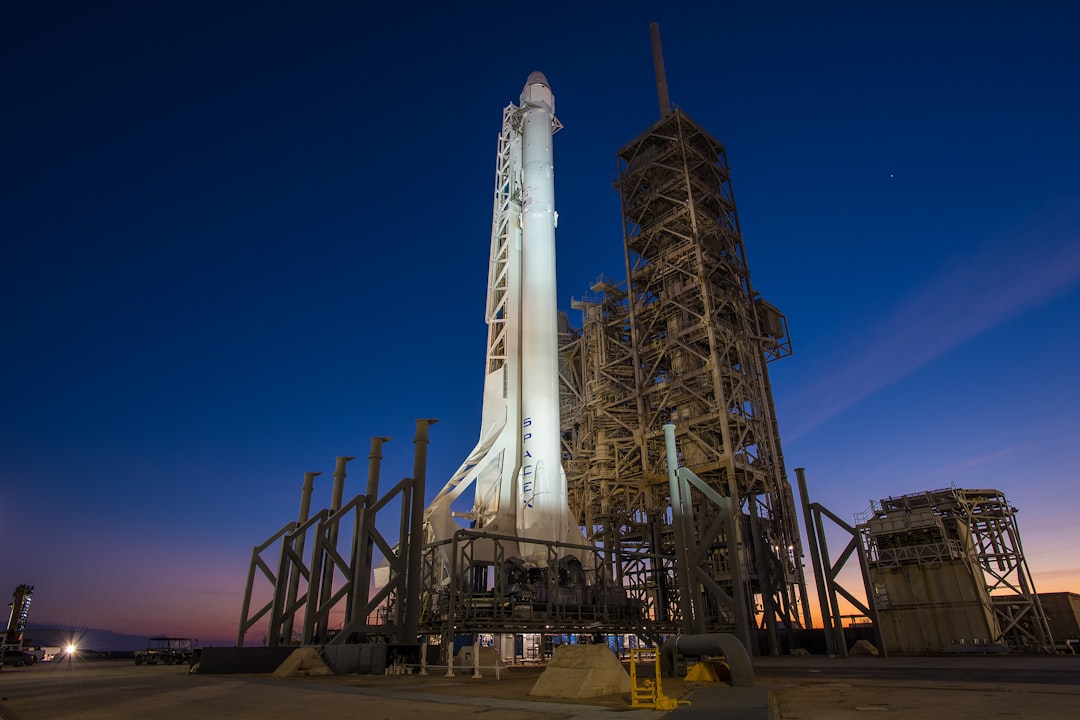
June Date Lights the Fuse for SpaceX Public Speculation
Markets woke to an eye-popping rumor on a quiet May morning: SpaceX is targeting June 12 for an initial public offering. While official confirmation remains elusive, the chatter has intensified across trading desks, hedge funds, and private-market platforms. If true, the deal would pack a rare combination of real-world revenue and bold growth bets into a single listing. The prospect has sparked a broad debate about how investors value a company that spans rockets, satellites, energy ventures, and AI-enabled space software.
In the current market climate, spacex public june speculation is taking on a life of its own. Traders are weighing the potential for a multi-trillion-dollar valuation against the uncertainties of a space-focused business that operates well beyond traditional consumer tech. The idea of SpaceX joining the public markets has echoes of the most transformative tech IPOs, but the risk-reward calculus remains more complex than most past debuts.
Why SpaceX Could Reshape IPO Benchmarks
SpaceX sits at the intersection of aerospace prowess, satellite connectivity, and AI-driven space applications. A public offering would not only unlock liquidity for founders and early investors but also serve as a barometer for how far markets are willing to value a diversified space-tech platform. Proponents argue that the company’s recurring revenue streams from launches, satellite services, and long-term government contracts create a durable growth thesis. Critics, however, caution that a private valuation already embedded in the stock-market psyche may be hard to translate into a public, year-over-year earnings framework.
Industry watchers point to several potential catalysts. A successful IPO could provides a capital runway for more frequent launches, faster development of Starlink-like networks, and expansion into new ventures such as space-based data analytics and autonomous aerospace systems. But skeptics highlight the sector’s sensitivity to government budgets, geopolitical tensions, and the cost curve of rocket development—factors that could complicate valuation math once the market looks under the hood.
Valuation and the “Big Number” Question
Speculation centers on a valuation that could stretch into the trillions, with some whispering about figures in the $1.75 trillion to $2 trillion range. Even among seasoned IPO watchers, such numbers are extraordinary for a company whose private market shares are not freely traded and whose competitive landscape is rapidly evolving. The comparison set is unique: SpaceX sits in a space-tech universe alongside government-backed space agencies, commercial rocket firms, and a swelling group of private startups—each with different revenue profiles and risk profiles.
Analysts caution that a large public float may not immediately translate into a simple multiply-by-earnings valuation. In a rare blend of hardware-heavy risk and software-enabled services, valuation could hinge on forward-looking contracts, long-term launch windows, and the scale of satellite-delivery networks that could monetize data, communication, and sensing capabilities for decades to come.
Quotes From Market Voices
Industry voices offer a spectrum of views on spacex public june speculation. Jane Morales, senior market strategist at Crestline Capital, says, “If SpaceX can credibly outline revenue streams beyond launches—think sustained satellite services and scalable AI-enabled mission software—the IPO could redefine how investors price space-capable tech.”
Alex Romano, equity analyst at NorthStar Partners, adds, “The risk is that the market could overvalue the growth narrative before we even see a credible path to consistent earnings. The first year after a public debut often tests whether the company can bridge private optimism with public accountability.”
On the other side, venture-backed investors and space-industry veterans emphasize the strategic importance of a public listing. “Liquidity and governance can unlock a new era of collaboration with government buyers and private partners,” notes Priya Sethi, head of technology research at Atlas Financial. "The question is whether the market will reward a diversified, long-horizon strategy or demand shorter-term catalysts.”
Is the Timing Right for a Space Bet?
June has historically been a telling month for IPOs—if a company is ready, a listing can ride a wave of summertime liquidity. For SpaceX, timing matters for both underwriters and investors who balance risk against the potential for outsized returns if the space sector continues to expand. The market environment today features higher volatility in interest rates, robust appetite for disruptive tech, and a growing willingness to back companies that blend hardware milestones with software-enabled monetization.
Still, the timing also invites debate about the political and regulatory backdrop. Space policy, export controls, and national security considerations could influence pricing, especially if newly public investors seek protections around dual-use technology and international partnerships. Observers say that any June debut would be closely watched by peers and rival entrants in the space race, including established aerospace players and new entrants aiming to disrupt launch costs and service delivery.
What This Could Mean for Investors
If SpaceX moves forward with a June IPO, investors will be weighing a few central decision points. First, liquidity and trading dynamics: a high-profile IPO could attract both retail and institutional buyers, but price discovery may be volatile in the opening days. Second, growth vs. profitability: markets will scrutinize revenue diversification, the cadence of rocket launches, and the profitability of satellite networks as stand-alone businesses. Third, issuer governance: a public SpaceX would face questions about board composition, executive compensation, and long-term alignment with public shareholders.
Asset managers are already mapping scenarios for how a SpaceX public listing might fit into portfolios. Some see a role as a specialized growth asset with a tilt toward technology and industrials, while others warn that the stock’s sensitivity to macro shifts and geopolitical risk will require careful position sizing and hedging strategies. The mood in trading rooms is a mix of curiosity, caution, and a recognition that a SpaceX IPO would be a watershed event for space tech and beyond.
Key Data At a Glance
- Target IPO date: June 12 (unconfirmed; under review by underwriters)
- Proposed raise: up to around $80 billion
- Valuation range floated by market chatter: $1.75 trillion to $2 trillion
- Listing venue: under consideration; likely options include NYSE or Nasdaq
- First-day expectation: analysts foresee a wide band from modest gains to double-digit pops, depending on pricing and demand
- Strategic focus: rockets, satellite networks (including space-based data services), and AI-enabled space software
Timeline, Roadshows, and Next Steps
If SpaceX confirms the plan, a traditional roadshow would begin in the weeks ahead, with bankers pitching a cross-section of global investors on the story’s durability and growth potential. The company would publish a prospectus detailing revenue breakdowns, win rates on launches, backlog, and any partnerships that could support long-term cash flow. Regulators would review the filing for disclosures on risk factors, international trade, and any dual-use technology considerations that could influence investor perception.
In the meantime, spacex public june speculation continues to circulate. Traders watching the narrative may see price action driven as much by broader tech sentiment as by the specifics of SpaceX’s business plan. The stock market does not price in every variable in a vacuum, and a SpaceX debut could be as much about macro risk appetite as it is about private-market milestones becoming public-market realities.
Bottom Line: A Public Space Frontier Then and Now
The prospect of SpaceX stepping onto the public stage is as much about signaling a new era of space-enabled value as it is about raw financials. If the June 12 window holds, investors will have a rare chance to engage with a company whose ambitions sit at the core of next-generation infrastructure—launch services, global connectivity, and AI-driven space solutions. As spacex public june speculation morphs into a concrete plan or a cautious denial, one thing is clear: the IPO could redefine how markets value complex, multi-directional tech platforms that operate beyond Earth’s atmosphere.
Async updates from SpaceX and its underwriters are expected in the coming weeks. Until then, the investing world watches closely, weighing the headline-catching potential against the hard road of turning bold plans into sustainable, profitable growth for shareholders.
Discussion