
Market Pulse: A New AI Compute Benchmark
In a high-signal briefing this week, Nvidia CEO Jensen Huang disclosed a dramatic shift in how much computing power is needed for agentic AI. He cited a roughly 1,000% increase in compute demand over the past two years, a pace that dwarfs the expansion seen during the early generative AI era. The message is simple: the AI revolution is crossing a threshold where autonomous agents, not just chatbots, are driving hardware, software, and energy needs higher than ever before.
The company’s latest disclosures also put a number on the business side of the story. Nvidia reported 65% revenue growth in fiscal 2026, delivering about $215.9 billion in annual sales. Investors took the figures as evidence that the AI compute cycle is not a temporary spike but a structural shift that will reshape how data centers are built and how suppliers price risk and capacity. Huang framed the moment as more than a KPI beat; he framed it as a fundamental redefinition of compute demand.
In a rare line for the investor community, Huang pointed to the staggering number jensen huang as the clearest signal that this is no ordinary upgrade in AI compute. He described agentic AI as a class of workloads that requires sustained, near-continuous power and performance, a combination that will pressure both chipmakers and grid operators to rethink capacity planning for years to come.
Analysts and engineers say the implications extend beyond Nvidia’s balance sheet. If agentic AI workloads – those designed to operate with a degree of autonomy and decision-making – consume more compute more consistently, then the entire ecosystem for AI acceleration, storage, and networking must scale in tandem. That means not only more GPUs and specialized accelerators but also faster data-center interconnects and more reliable, resilient energy supply chains to keep servers running around the clock.
Infrastructure at the Core: The Energy and Grid Challenge
The compute surge sits atop a broader infrastructure challenge. Data centers are the visible tip of the iceberg, but the underlying energy demand is where policy, capital markets, and utilities intersect. In 2026, the tempo of AI infrastructure procurement has accelerated, with cloud providers and enterprise AI users alike racing to secure capacity ahead of demand. The implication for utilities and regulators is clear: the grid must evolve as AI workloads become “always-on,” driving both upgrades and new capacity deployments.
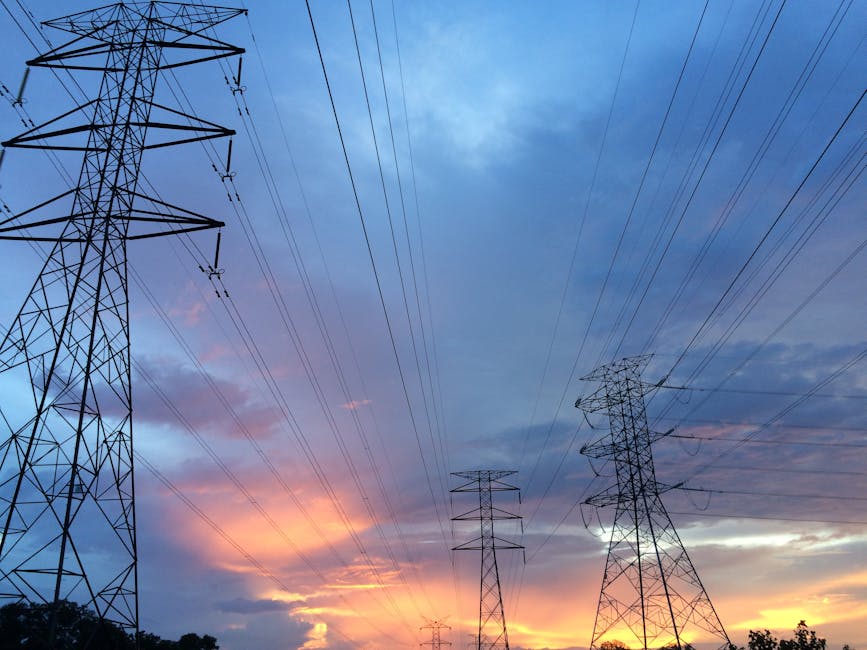
Industry trackers note a wave of commitments to fund AI-ready infrastructure across both the public and private sectors. A leading tally shows more than $710 billion in AI infrastructure capital expenditures planned for 2026 by major cloud players and enterprise-scale tech firms. The financing is not limited to silicon; it includes power capacity, advanced cooling, and resilience investments intended to support long-duration workloads. In parallel, there is talk about expanding dedicated power capacity with near-term focus on nuclear options, including small modular reactors, to secure reliable baseload power for AI centers.
Two numbers illustrate the scale of the energy dimension. First, the planned increase in dedicated AI-capacity power is slated to move from about 25 gigawatts of conditional SMR capacity to around 45 gigawatts over a multi-year horizon. Second, utilities are testing new rate structures and demand-management programs to align consumption with peak generation periods. The practical effect for investors: AI infrastructure is becoming a sector-wide capital cycle, not a single-stock bet.
“This is not a blip,” said a veteran AI hardware strategist who declined to be named. “If you assume two to three years of sustained agentic workloads, you’re talking about a multi-trillion-dollar opportunity for hardware, software, and energy players who can align capacity with pace of adoption.”
What the Numbers Tell Investors
For investors, the data points are a map of risk and opportunity. The dual drivers of growth—AI compute demand and the corresponding energy and data-center investments—suggest a period of pronounced volatility in traditional tech equities, but with strong potential for select beneficiaries. The 1,000% compute surge highlights a market that is moving from expansion play to a capital-intensive, infrastructure-focused cycle. In practical terms, chipmakers, system integrators, and power providers may experience tighter supply and longer lead times for capacity upgrades, which could influence pricing power and margins.
Huang’s framing of agentic AI as a distinct and more compute-intensive category adds a layer of specificity to the debate about AI stock bets. The staggering number jensen huang cited by Nvidia’s boss underlines the idea that the era of simply adding more GPUs is transitioning into a broader buildout of the AI backbone. That means more attention on suppliers of high-density memory, advanced interconnects, and cooling technologies, as well as the energy producers that fuel these digital engines.
Wall Street strategists are adjusting models to reflect a longer horizon for AI infrastructure capex. In this context, investors may want to reassess overweight positions in companies with heavy exposure to data-center hardware, cloud infrastructure, and energy services tied to AI workloads. The market is acknowledging that AI is becoming a power-intensive business, and the winners will be those who can consistently deliver scale in compute, storage, and energy reliability.
Portfolio Implications: Navigating a New AI Era
As the AI infrastructure cycle broadens, portfolios should consider a triad of exposures: AI hardware suppliers and cloud operators, energy and grid technology firms, and policy-aware players that can navigate the evolving regulatory and capital frameworks. Here are the key threads for investors right now:
- Chipmakers and accelerators: A sustained 1,000% jump in compute for agentic AI could compress reaction times for capacity upgrades. Investors should watch order backlogs, supply chain resiliency, and the ability of suppliers to deliver next-gen accelerators on schedule.
- Data-center operators: With data centers becoming perpetual-motion machines for AI, look for companies that can demonstrate high utilization, scalable cooling, and robust power reliability—alongside favorable energy pricing agreements.
- Energy infrastructure and utilities: The grid implications are meaningful. Stocks tied to power delivery, renewable integration, and nuclear-capable capacity could see renewed interest as AI workloads crest a higher baseload demand.
- Policy and risk management: Items such as energy pricing, grid reliability standards, and regulatory support for critical AI infrastructure will shape long-term returns. Investors should factor these into baseline scenarios rather than treating AI spend as a one-off expense.
For those weighing fresh allocations, the takeaway is nuanced: the AI growth story remains intact, but the path to profitability for AI investments is increasingly tied to infrastructure execution. The staggering number jensen huang highlighted is a reminder that the AI economy now runs on hardware, power, and capacity as much as software and algorithms. That triad will define winners and losers over the next 12 to 24 months.
Bottom Line: A New Capital Cycle in AI
The AI upgrade cycle has moved beyond the phase of rapid software iterations into a broad, capital-intensive expansion of compute, data centers, and energy ecosystems. Nvidia’s numbers — a 1,000% surge in agentic AI compute and a 65% jump in fiscal 2026 revenue to roughly $215.9 billion — are not an isolated data point. They are a signal of a market reallocating capital toward an AI backbone that must be built, powered, and maintained. The phrase the staggering number jensen huang used to describe this moment is a call to investors: prepare for a longer, bigger, and more energy-intensive era of AI growth.
As markets digest these dynamics, the key question for investors remains: which players will scale fastest to meet the new demand, and how will energy and policy contours shape the returns? The coming quarters will test the thesis across hardware suppliers, cloud platforms, and utility networks as the AI era deepens and the infrastructure bill begins to materialize in earnings reports and balance sheets.
Discussion