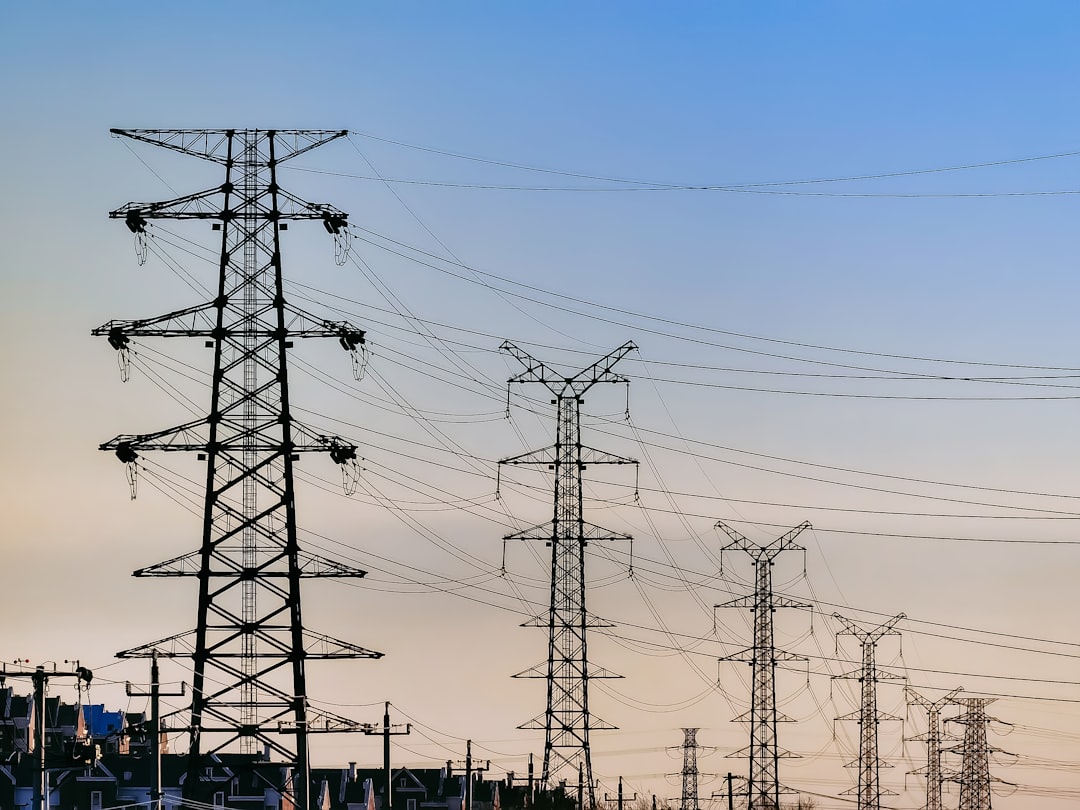
Market Context: tech’s power demand surges reshape electricity use
The electrical grid is facing a discrete turning point as tech’s power demand surges push data centers from the back rooms of cloud providers to the forefront of utility economics. Industry trackers say hyperscale campuses now account for a growing slice of grid load, with electricity demand tied to AI training cycles and real-time inference balloons that can swing by the hour. The effect is a tighter link between data-center performance and utility earnings, a dynamic investors are watching closely as markets price growth in tech and energy together.
Analysts note that the recent cadence of AI announcements and cloud migrations has amplified demand volatility for grid operators. While data centers reliably buy long-term power contracts, they also demand agile grid services, energy storage, and fast-ramping capacity to handle peak workloads. The result is a market where traditional utility revenue models face a new, data-driven stress test and where the next phase of AI infrastructure could redefine who profits from reliable power supply.
Profit engine for utilities: data centers become a new revenue stream
Utilities are adjusting to a world where large-scale data centers are not just a customer class but a strategic driver of earnings. In practical terms, higher demand charges, bespoke power tariffs, and capacity-lease agreements are beginning to show up in quarterly results. Data-center operators, meanwhile, are expanding energy-buying programs, including long-duration storage and hybrid on-site generation, as they push efficiency gains and reliability across tens of megawatts of critical IT load.
Key data points driving this shift include:
- Global data-center energy consumption is estimated to hover around the low single-digit percentage of total electricity use, with the share rising as AI workloads scale and regional resilience becomes a priority.
- Hyperscale capex has accelerated, with industry estimates putting yearly spending in the hundreds of billions of dollars globally as operators chase new campuses and more efficient cooling systems.
- Utilities are exploring updated tariff structures and tariff-aggregation schemes to capture demand-response value from data-center fleets without hurting competitiveness.
- Data-center REITs and related energy service companies have seen selective multiple-expansion in markets where the data-center footprint intersects with regulated assets and long-duration revenue streams.
“The trend is clear: tech’s power demand surges are creating a more predictable, if complex, earnings profile for utilities,” says Lisa Moreno, energy market strategist at GridSight Analytics. “If the grid can accommodate AI-driven load with fast storage and modular generation, utilities could monetize reliability in ways not possible a decade ago.”
Big Tech and regulated utilities: the acquisition narrative
One of the more provocative ideas circulating in policy and deal-making circles is the notion that the next logical step in the AI buildout could involve Big Tech owning regulated utilities outright. The logic rests on the ability of vertically integrated energy assets to stabilize the heavy, fluctuating loads of AI workloads while offering regulated returns to investors. But the path to consolidation would be fraught with regulatory scrutiny, political pushback, and antitrust considerations that make such deals far from straightforward.
Industry observers caution that regulators would weigh the consequences for ratepayers, market competition, and grid reliability. Even among supporters of deeper tech-energy integration, there is broad agreement that any move to privatize or concentrate control of critical energy infrastructure would require comprehensive policy design and robust oversight. A utility executive who spoke on background framed the challenge this way: “We’re talking about a system that touches every home and business; if technology giants want to own that system, they’ll need a regulatory blueprint, not a shortcut.”
Practical barriers aside, the market is already pricing in a future where AI-driven demand signals get embedded into asset valuations. For investors, that means potential upside from regulated utility assets tied to data-center growth, but also heightened sensitivity to policy shifts, rate approvals, and capital discipline in an industry known for long payback periods.
Investor landscape and market reaction
In the near term, stocks tied to data-center capacity and grid services have shown a mixed, yet decisive reaction to the evolving energy-use narrative. Data-center REITs and cloud-adjacent energy players have outperformed broader tech indices on days when AI news feeds stronger demand signals for server farms. Utilities, while sometimes pressured by higher fuel costs or changes in capex plans, have benefited when their portfolios gain exposure to mission-critical energy assets tied to data-center reliability.
Market participants also note that the sector’s volatility could persist as policy teams in Washington and state capitals consider how to structure incentives for clean grids, demand response, and energy storage. “The timing and scale of policy support will determine whether tech’s power demand surges translate into durable, above-market returns for the utility sector,” says Ahmed Patel, energy equity analyst at Northshore Securities. “Investors are pricing in scenarios where technology budgets, grid upgrades, and regulatory clarity align to produce steadier cash flows.”
Some quantitative milestones are circulating in private briefings and public conferences. Early-2026 data show a broad tilt toward higher utility earnings visibility in markets with integrated data-center clusters and favorable interconnection policies. On the data-center side, tech giants continue to announce expansions in multiple regions, reinforcing expectations of continued energy intensity and, correspondingly, higher grid-service demand.
Outlook: risks, opportunities, and what to watch
The road ahead for tech’s power demand surges is a study in complexity. The upside for utilities could come from stabilizing revenues, enhanced inflation-protected returns, and the ability to monetize reliability with data-center customers who value uptime as a business imperative. The flip side is a continued sensitivity to energy prices, policy shifts, and the risk that grid operators cannot keep pace with new loads without expensive upgrades. For technology companies, the key questions revolve around energy efficiency, supply-chain resilience, and the strategic value of owning or partnering with critical energy assets.
Policy trajectories will matter as much as market mechanics. A wave of modernization programs is underway in the U.S. and Europe aimed at upgrading transmission lines, expanding storage, and deploying microgrids in data-center corridors. If these projects accelerate, the combined effect could be a more favorable backdrop for data-center profits and utilities’ earnings mix. But if regulatory or regulatory-approval friction slows these upgrades, equity markets could reprice the risk of slower-than-expected scale or tighter capital discipline.
For now, the central narrative remains: tech’s power demand surges are reshaping the economics of energy, data centers, and utilities. The next phase of AI infrastructure could unlock new, durable profit channels for the grid, even as it tests the traditional boundaries of how energy assets are owned and regulated. Investors should monitor policy signals, technology adoption curves, and the pace of grid modernization as they assess the long-term value of this converged energy-growth story.
Key data points to watch
- Data-center electricity demand as a share of global use remains a moving target, with growth tied to AI training cycles and edge-computing expansion.
- Annual hyperscale capex continues to run in the hundreds of billions of dollars worldwide, funding campuses, cooling upgrades, and on-site energy projects.
- Utility revenue models are under review in several jurisdictions to incorporate demand response and capacity-lease mechanisms tied to large data-center loads.
- Market reaction shows selective outperformance of data-center-related equities during AI-driven growth periods, with utilities occasionally catching up when grid resilience becomes a priority.
- Policy developments on grid modernization and energy storage incentives will be primary drivers of risk and opportunity in this space.
The market has not fully priced the next logical step for the AI buildout: tech’s power demand surges may eventually reframe who holds and how they monetize essential energy infrastructure, a shift that could redefine investing in the utilities and data-center ecosystems for years to come.
Discussion