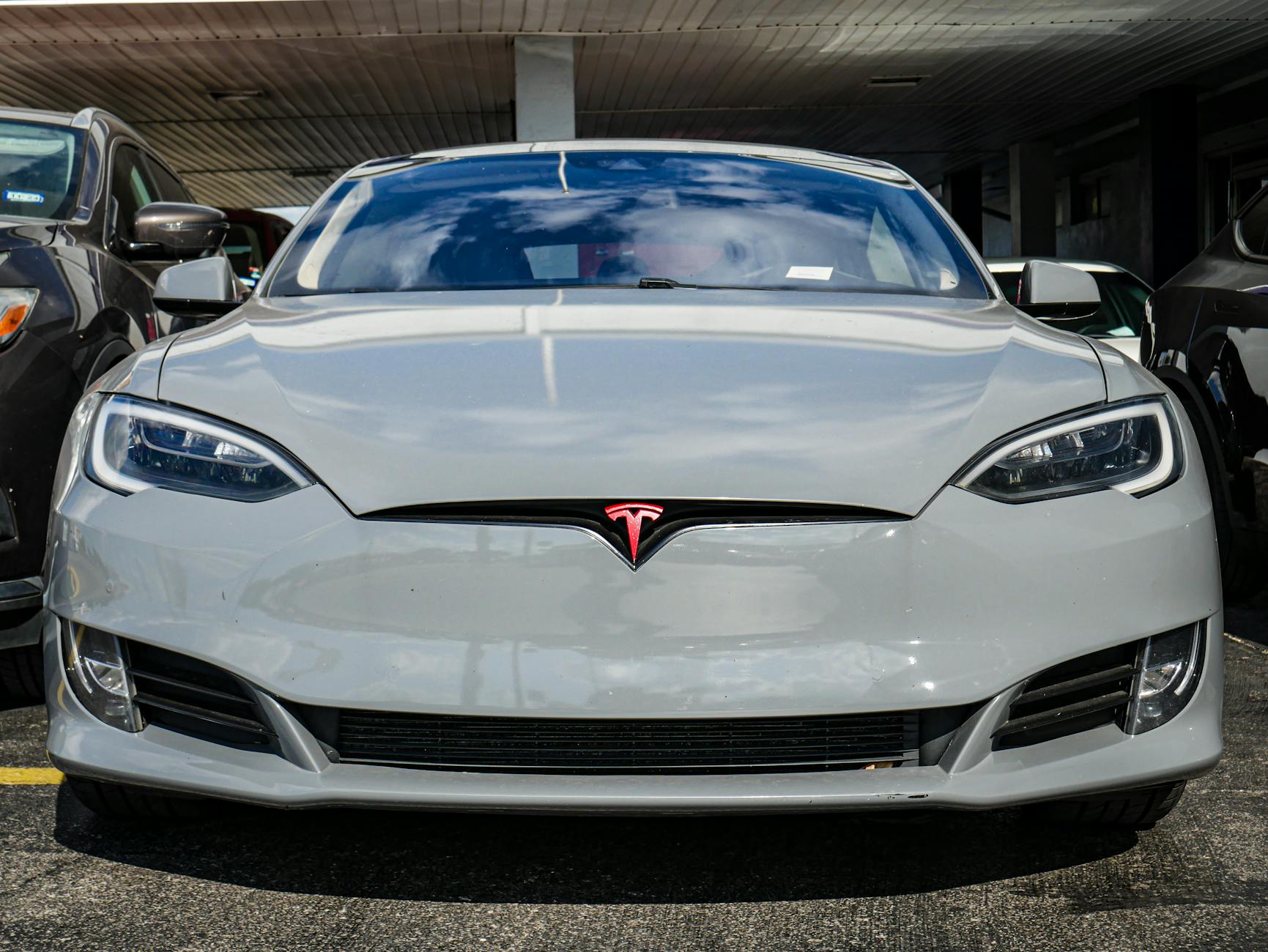
Tesla Fades: Three Big Stories Pull In Different Directions
Tesla shares edged lower on Thursday, trading around $382 by midday, with a rough 3% slide that puts the stock under pressure for the week. The mood, as of March 19, 2026, reflects a market digesting three intertwined stories that are pulling the stock in different directions. Investors are weighing tighter regulatory scrutiny on autonomous driving, a capital-intensive push into in-house chipmaking, and a strategic move to share the company’s Supercharger network with a major automaker partner. The result is a tug-of-war setup that has left analysts debating the path forward for TSLA.
In a market environment that has been choppy for tech and growth names, the latest moves highlight how tesla fades: three stories can coexist in the same trading day without a clear consensus on the stock’s fair value. The shares are down roughly 15% year-to-date from their year-end levels, underscoring that this isn’t a one-off wobble but a broader reevaluation of risks and opportunities around Tesla’s dual role as a carmaker and a tech silicon supplier.
Market participants are trying to gauge how much weight each narrative should carry. On one side, the National Highway Traffic Safety Administration is intensifying its look at Full Self-Driving and the safety implications of autonomous driving features. On another, Tesla is pressing a long-term bet on controlling the silicon stack through Terafab, a venture aimed at vertically integrating AI chips and control software. And on a third axis, the company is allowing Stellantis to access its Supercharger network, a move that expands charging options for non-Tesla vehicles but potentially narrows the moat around Tesla’s own ecosystem.
NHTSA Turns Up the Pressure on FSD
The federal safety watchdog is expanding its review of Tesla’s autonomous driving technology, tightening the screws on what the company can claim about FSD and how it is marketed to consumers. The NHTSA’s latest assessment covers roughly 3.2 million vehicles equipped with FSD or driver-assistance features, with nine crashes cited as part of the ongoing scrutiny. The regulator’s posture has shifted from a broad safety review to a closer, more aggressive inquiry into software updates, driver monitoring, and the marketing language used to describe autonomous capabilities.
Analysts say the elevated regulatory attention adds a meaningful layer of risk for investors who had counted on rapid progress in automated driving to unlock higher margins. A higher hurdle to achieving regulatory clearance for certain safety claims could delay the monetization of autonomous features and complicate deployment timelines for hardware and software iterations. The NHTSA’s stance also increases the likelihood of mandatory recalls or remedial software updates if regulators determine safety thresholds were not met.
“Regulators are signaling that they will demand more robust proof of safety and clear, conservative messaging around capability,” said Maya Chen, senior equity analyst at GreenBridge Capital. “The FSD debate isn’t going away, and any material regulatory action could weigh on sentiment and the multiple investors assign to Tesla’s growth curve.”
- Regulatory scope: 3.2 million U.S.-registered Teslas subject to enhanced FSD review.
- Crashes cited: Nine incidents under evaluation since the initial probe began.
- Potential outcomes: Software updates, feature adjustments, and possible restrictions on marketing claims until safety benchmarks are met.
The FSD dynamic isn’t just about safety boxes ticked or not; it’s about timing and credibility. If regulators insist on more stringent disclosure or proof of safety, Tesla may face slower adoption of autonomous features or higher compliance costs. For investors, this adds a layer of uncertainty that compounds the challenges of forecasting FSD’s financial upside amid a rapidly evolving regulatory environment.
Another major thread in tesla fades: three stories is Tesla’s plan to bring chip production in-house through Terafab, a move designed to secure silicon supply for AI processing and autonomous systems. The project signals a long-run ambition to reduce reliance on external semiconductor suppliers, which could smooth production and software cycles if the plan reaches scale. But Terafab is also a classic multi-year, capital-intensive bet in an industry where fab capacity and advanced process nodes can run years behind plan and cost forecasts can widen quickly.
People familiar with the initiative describe Terafab as a strategic pivot aimed at aligning hardware and software development more tightly with Tesla’s software-defined vehicle strategy. The arc is clear: owning more of the silicon stack could improve control over performance, efficiency, and release cadences for FSD and other AI-powered features. The risk is that the program requires substantial upfront investment and a proven ability to execute on wafer fabrication, packaging, and supply chain logistics—areas that can strain balance sheets during the ramp phase.
Analysts emphasize that Terafab is not a short-term driver of margins, but a longer-term lever that could enhance Tesla’s ability to monetize AI capabilities if the venture achieves scale ahead of the competition. “Terafab is a strategic asset in the long run,” said Raj Patel, tech equities analyst at Meridian Capital. “If the plant(s) come online on or ahead of plan, and if they secure favorable chip yields, Tesla could gain a meaningful edge in AI silicon. The challenge is the initial capital outlay and the risk of delays.”
- Strategic aim: Vertical integration of AI chips and related autonomous-system hardware.
- Capital intensity: multi-year, multibillion-dollar investment with uncertain timing.
- Operational risk: fab development, yield optimization, and supply-chain readiness.
The Terafab story intersects with broader market trends—skilled wafer capacity, foundry pricing, and geopolitical tensions that influence semiconductor supply. Even as investors weigh the potential upsides, they must contend with the possibility of slower-than-expected ramp and higher upfront costs. Teslas’ decision to pursue this path reflects a willingness to sacrifice near-term cash flow for strategic control of hardware and software cycles that underpin future value creation.
The third pillar in tesla fades: three stories involves expanding the charging network beyond Tesla-branded vehicles. Tesla recently opened its Supercharger network to Stellantis vehicles, a move that substantially broadens the addressable charging market for the company’s infrastructure but also invites scrutiny about how it affects the brand’s moat. Stellantis, one of the world’s largest automakers, has access to a charging network that has been a distinctive advantage for Tesla owners since the early days of the company’s growth story.
From a services revenue perspective, expanding Supercharger access creates new usage streams. Tesla can monetize charging sessions, potential software services, and even data insights through partner integrations. On the other hand, the broader adoption of a charging network by non-Tesla brands could erode the exclusivity that historically drew buyers to Tesla’s ecosystem. If more cars use Superchargers, the network can become a more ubiquitous utility rather than a premium differentiation tool, potentially compressing the premium Tesla can command for a seamless charging experience.
Industry observers see the Stellantis partnership as a litmus test for the durability of Tesla’s moat in the era of open access to charging. “This is a strategic pivot in how Tesla monetizes its charging network and scales it beyond the Tesla-only model,” said Elena Rossi, auto sector analyst at EquiScan. “The near-term financial impact will hinge on how aggressively Stellantis and other partners commit to usage, and how customers respond to a charging option that crosses brand lines.”
- Partnership scope: Stellantis vehicles gain access to Tesla’s Supercharger network in selected regions, with broader rollout possible over time.
- Revenue dynamic: Incremental charging fees and related services could add to Tesla’s top line, though the pace depends on adoption and pricing.
- Moat consideration: Wider access may dilute the exclusive value proposition of owning a Tesla for the charging experience, depending on pricing and reliability.
For Tesla fans and critics alike, the Stellantis move embodies tesla fades: three stories in real time—one thread amplifying revenue opportunities, another testing competitive advantages, and a third reshaping how customers encounter the company’s hardware ecosystem. The practical impact on margins remains uncertain in the near term, but the strategic implications are clear: the charging network could become a more generalized utility rather than a Tesla-exclusive asset, depending on how quickly and widely Stellantis and other partners deploy compatible vehicles.
What’s driving the short-term price action is a mix of regulatory risk, strategic investment, and partnerships that could reframe the company’s risk-reward profile. The market is clearly weighing the near-term headwinds—FSD scrutiny and capital outlays—against longer-term catalysts like improved silicon supply, potential efficiency gains from chip control, and a broader charging ecosystem that could unlock new revenue channels.
Investors are watching how the regulatory path unfolds, how Terafab’s capital program is funded and executed, and how Stellantis’ adoption of the Supercharger network translates into actual usage and profitability. The coming quarters will reveal whether tesla fades: three stories will converge into a cohesive narrative that could justify a higher multiple for the stock, or whether the headwinds will prove too persistent to overcome soon.
Market conditions continue to add another layer of complexity. The broader tech space has faced multiple rounds of volatility, with investors favoring clarity on regulatory timelines and cost discipline. If the FSD roadmap becomes clearer and Terafab demonstrates early signs of cost competitiveness, the stock could stage a bounce. If not, the stock could drift sideways or lower as the market prices in ongoing execution risk.
As of today, traders are discounting a path where tesla fades: three stories interacts with the company’s core strengths—scalability of manufacturing, software-enabled product differentiation, and a rapidly expanding charging network. The question for investors remains the same: can Tesla align these moving parts into a sustainable margin expansion story, or will the near-term constraints keep the stock on a more cautious trajectory?
With three major narratives in motion, this week’s price action serves as a reminder that tesla fades: three stories will continue to shape how investors interpret Tesla’s growth prospects. The company’s stock is unlikely to offer a simple, one-story rally anytime soon; instead, traders should expect a spectrum of data points, each with the potential to tilt sentiment in a new direction.
Bottom line: three big developments are moving the stock today in different directions. For traders and long-term holders alike, the coming updates from regulators, chip-production momentum, and charging-network economics will determine whether Tesla can convert these headwinds into a durable upside or remains in a state of measured retrenchment. tesla fades: three stories remains a fitting frame for what could be a protracted recalibration in the stock’s value recognition.
Discussion