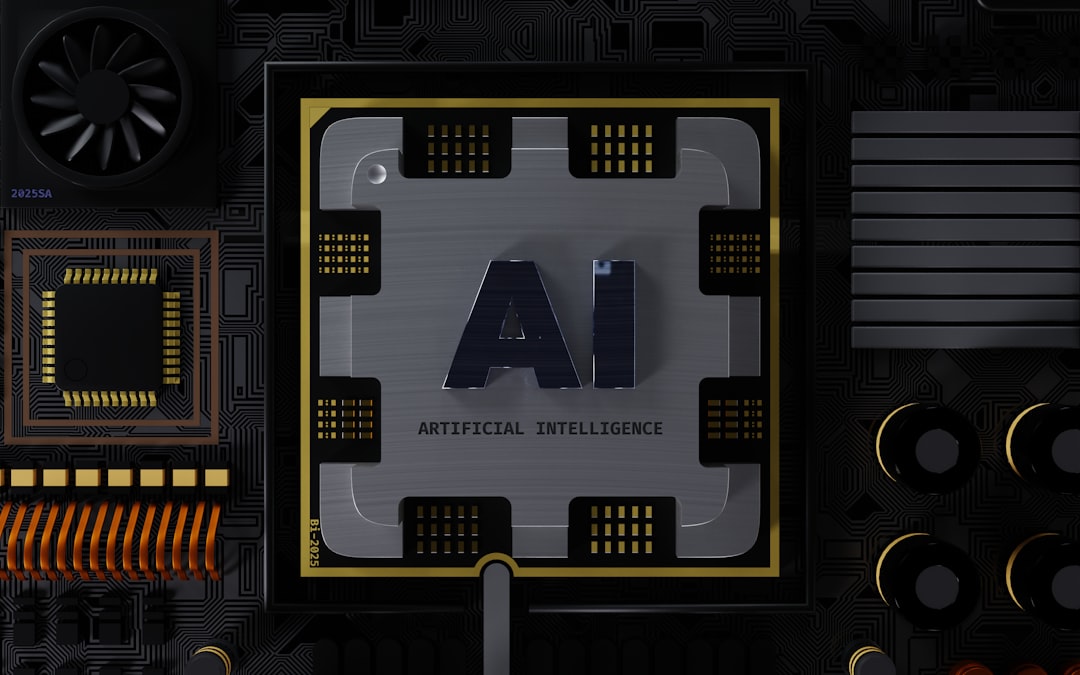
Hooking the Next AI Infrastructure Wave
Artificial intelligence is no longer a purely experimental field. It has become a core driver of how businesses operate, how services scale, and how competitive advantages are built. In this shifting landscape, investors often look to the stock that sits at the heart of the AI engine: the chipmaker powering the training of the largest models. Nvidia has worn that crown for years, riding demand for GPUs that train state-of-the-art AI. Yet as AI moves from research labs toward practical deployment, a different kind of advantage could emerge: an AI-first ecosystem that blends hardware, software, and services under one roof. In this context, this artificial intelligence (ai) stock—Alphabet—presents a compelling case for why it could become bigger than Nvidia over the next decade.
Why Nvidia Has Dominated—and What Changes This Time
N Nvidia’s GPUs became the backbone of AI model training because of their parallel compute capabilities, efficiency, and a thriving ecosystem of software frameworks and developers. The company’s expansion into inference hardware and data-center solutions helped it capture a large share of the AI infrastructure market. But the AI era is broadening. Inference, multimodal AI, enterprise-grade AI tools, and cloud-native AI services are not only about raw compute power; they’re about turning AI into practical, measurable business value at scale.
For investors, the key question is: which company can sustain AI-driven growth as the market matures? Nvidia will continue to push on speed, efficiency, and specialized hardware. The other side of the coin is a company that can package AI capabilities into software platforms, cloud services, and developer tools that billions of devices and workloads rely on. This is where Alphabet—through its Tensor Processing Units (TPUs), Google Cloud offerings, and a broad software-first strategy—presents a different kind of AI leadership.
This Artificial Intelligence (AI) Advantage: Alphabet’s TPU-Minded Stack
Alphabet’s core differentiator in the AI race is its commitment to an end-to-end AI stack that’s tightly integrated. The centerpiece is the Tensor Processing Unit (TPU), a family of custom accelerators designed for AI workloads and deeply woven into Google’s software and services. Compared with more general-purpose chips, TPUs are crafted for specific AI tasks, which can yield higher performance per watt and lower total cost of ownership for certain workloads. Alphabet has built software libraries, frameworks, and data-center orchestration specifically around TPUs, aiming to squeeze more efficiency out of the hardware in practical, real-world use cases.
The TPU Moat: Why Hardware-Software Synergy Matters
TPUs aren’t just faster accelerators; they’re the nerve center of Alphabet’s AI workflows. When software and hardware are designed in concert, you get deeper optimizations across model training, hyperparameter tuning, and deployment. Alphabet’s investment approach aims to reduce AI latency, improve energy efficiency, and lower the cost per inference—critical metrics as AI becomes more widespread in production settings.
Cloud AI Services: A Network Effect That Scales with Data
Google Cloud remains a growing, though still smaller, competitor to hyperscale cloud leaders in terms of revenue and scale. The cloud business is where Alphabet can monetize its AI accelerators by offering managed AI services, model training, deployment tooling, and enterprise AI integrations. As businesses adopt AI at scale, the value of an AI cloud platform compounds: more customers → more data → better models → more value back to customers. This virtuous loop can create durable revenue streams that extend beyond hardware cycles.
Agentic AI and Data-Center Strategy
Alphabet’s AI ambitions include general-purpose capabilities, domain-specific assistants, and enterprise-grade AI agents that operate across apps and services. In a world where AI agents automate workflows, a company that can deliver reliable hardware, robust data-center operations, and developer-friendly tooling is well-positioned to capture long-tail demand. The strategic bet is simple: if Alphabet can keep AI tasks on TPUs while expanding its cloud footprint and software ecosystem, it could outpace competitors in total addressable AI spend over a multi-year horizon.
What Makes This Artificial Intelligence (AI) Stock Different From Nvidia
The most compelling distinction is focus. Nvidia’s strength lies in compute hardware and ecosystem support for model training and inference. Alphabet, by contrast, blends hardware with a software-first strategy across search, ads, YouTube, Android, and cloud AI services. Think of Nvidia as a powertrain for AI—fast, efficient, and indispensable for training modern models. Alphabet represents the broader AI architecture—data, software, platforms, and services that allow AI to deliver real-world value at scale.
- End-to-end AI integration: TPUs are not just chips; they’re the nucleus of Alphabet’s AI stack, surrounding software libraries, model optimization tools, and cloud services.
- Cloud-scale execution: Google Cloud’s AI offerings aim to democratize access to powerful AI, enabling businesses to deploy, monitor, and scale AI workloads with managed infrastructure.
- Diversified revenue streams: Alphabet’s advertising and non-advertising businesses provide a resilient base as AI spending expands across enterprise and consumer segments.
In this context, this artificial intelligence (ai) stock presents a counterpoint to a pure-play hardware winner. The potential driver of outsized upside is the ability to monetize AI through software, platforms, and cloud-native services that become indispensable as AI becomes embedded in everyday business processes.
How to Value an AI-Driven Company Like Alphabet
Investing in this AI-focused stock requires a nuanced lens. Traditional semiconductor metrics tell only part of the story. The key is to evaluate both the hardware efficiency and the software-driven revenue potential, including the pace at which Google Cloud can scale AI services, the adoption of TPUs across Google’s own products and customer workloads, and the friction costs for customers to switch AI workloads to another platform.
Key Metrics to Monitor
How much data-center capacity is dedicated to AI workloads, and how efficiently TPUs convert that capacity into useful results? Growth in Google Cloud AI services, including model training, hosting, and inference workloads. - R&D as a percentage of revenue: A rising AI R&D intensity often signals a commitment to long-term platform leadership.
- Free cash flow yield: Positive cash flow supports aggressive AI investments and share repurchases or dividends.
- Strategic partnerships: Collaborations with enterprises, developers, and other cloud players can amplify network effects for AI adoption.
Investment Scenarios: How this Artificial Intelligence (AI) Stock Could Move
Think in terms of a few plausible trajectories. In a base case, Alphabet strengthens its TPU-enabled cloud and sees steady AI adoption across its services, delivering predictable long-term upside. In a bull case, AI-native enterprise customers accelerate their spending on Google Cloud AI tools, TPU utilization expands rapidly, and Alphabet expands its AI software ecosystem to third-party developers. In a bear case, regulatory hurdles or cloud competition dampen cloud growth, but Alphabet still benefits from its diversified revenue base and AI-enabled consumer products.
Risks and Realities to Consider
As with any AI-centric investment, there are meaningful risks. One of the largest is execution risk: translating a hardware-first advantage into scalable, revenue-generating cloud and software services. Competition is fierce in cloud AI—led by platform owners who control data, bring strong developer ecosystems, and offer compelling price-performance economics. Additionally, regulatory scrutiny around data privacy, AI governance, and consumer protection can shape the pace at which AI solutions are adopted across industries. Finally, capital-intensive AI investments require a strong balance sheet and cash flow discipline to weather cycles in AI demand and hardware cycles.
Practical Ways for Individual Investors to Engage
If you’re considering adding this artificial intelligence (ai) stock to a diversified portfolio, here are practical steps to stay disciplined while exploring the opportunity:
Evaluate how much of Alphabet’s AI upside is driven by cloud platform growth versus improvements in consumer technologies and ads. A balanced exposure reduces single-source risk. Pay attention to new cloud AI services, developer tools, and TPU-based performance claims. These milestones often correlate with revenue growth more than hardware specs alone. Consider a dedicated allocation guardrail (for example, 0.5% to 2% of a typical 10-stock AI sleeve) and rebalance as performance and AI-specific catalysts unfold. Don’t rely on a single stock. Balance with a hardware-focused name, a pure-play software AI company, and a non-AI-related backbone stock to reduce sector concentration.
Portfolio Scenarios and A Simple Benchmark
To illustrate how this AI thesis could translate into real-world results, consider a hypothetical investor building a focused AI sleeve. The investor allocates 2% of a $100,000 portfolio to this artificial intelligence (ai) stock, with the rest spread across a mix of growth, value, and dividend investments. If the AI stock compound annual growth rate (CAGR) over the next decade sits in the 8%–12% range, the resulting position size could add meaningful upside to the sleeve, particularly if cloud AI adoption accelerates and TPUs prove more energy-efficient than anticipated. Of course, outcomes will vary, and you should model a few scenarios before committing capital.
How to Think About Valuation in an AI-Driven World
Valuation for this artificial intelligence (ai) stock hinges not only on current earnings but on the durability of its AI platform and the scalability of its cloud AI services. Investors should look for a compelling long-term growth narrative supported by realistic milestones: TPU adoption rates, the pace of Google Cloud AI revenue growth, and the extent to which AI tools become embedded across Alphabet’s consumer and enterprise ecosystems. In addition, it’s prudent to compare Alphabet’s AI progress with Nvidia’s hardware leadership to understand both the symmetry and the gaps between software-led and hardware-led strategies.
A Quick Note on Timeframes, Taxes, and Hurdles
Investors should be mindful that AI-driven returns tend to be uneven in the short run. The decade ahead could see multiple cycles of innovation, macro headwinds, and regulatory shifts that influence stock performance. For taxable accounts, consider how long you plan to hold (long-term capital gains) versus how actively you trade around AI catalysts. Tax considerations shouldn’t drive core investment theses, but they do affect after-tax returns and should be part of your planning.
Conclusion: A Dual Path to AI Leadership
In the AI infrastructure race, Nvidia has defined a powerful path through hardware leadership. However, the next era of AI deployment—where software ecosystems, cloud platforms, and AI-enabled services drive value—could tilt in favor of Alphabet. This artificial intelligence (ai) stock brings a distinct advantage: end-to-end integration that blends TPU hardware with a software-first platform across Google Cloud, consumer products, and enterprise solutions. If Alphabet can sustain TPU-driven performance while expanding its cloud AI offerings and maintaining financial discipline, the company could grow beyond Nvidia’s hardware-centric trajectory over the next decade. As always, investors should engage with a clear thesis, rigorous risk checks, and a disciplined allocation plan before entering any AI-focused trade.
FAQ
Q: What makes this artificial intelligence (ai) stock compelling beyond hardware?
A: The appeal rests on end-to-end AI—hardware (TPUs) plus software tools and cloud services that enable businesses to deploy AI at scale. This integration can drive durable revenue streams beyond chip sales alone.
Q: How should I think about risk when investing in AI leaders like Alphabet?
A: Key risks include cloud competition, regulatory developments, data privacy concerns, and execution risk in scaling enterprise AI services. Diversification within AI and a disciplined position size can help manage this risk.
Q: What would be a reasonable investment plan for this AI thesis?
A: Start with a small, defined allocation (for example, 0.5%–2% of a growth-focused sleeve) and set clear milestones for AI platform adoption, TPU utilization, and cloud revenue growth. Reassess every 6–12 months and adjust based on the trajectory of AI adoption and competitive dynamics.
Q: How should I compare Alphabet and Nvidia as AI picks for my portfolio?
A: View Nvidia as a hardware engine and Alphabet as a software-plus-platform engine. Evaluate the strength of each moat—compute efficiency and ecosystem for Nvidia; end-to-end AI stack and cloud scale for Alphabet. A balanced portfolio can capture both paths to AI leadership.
Discussion