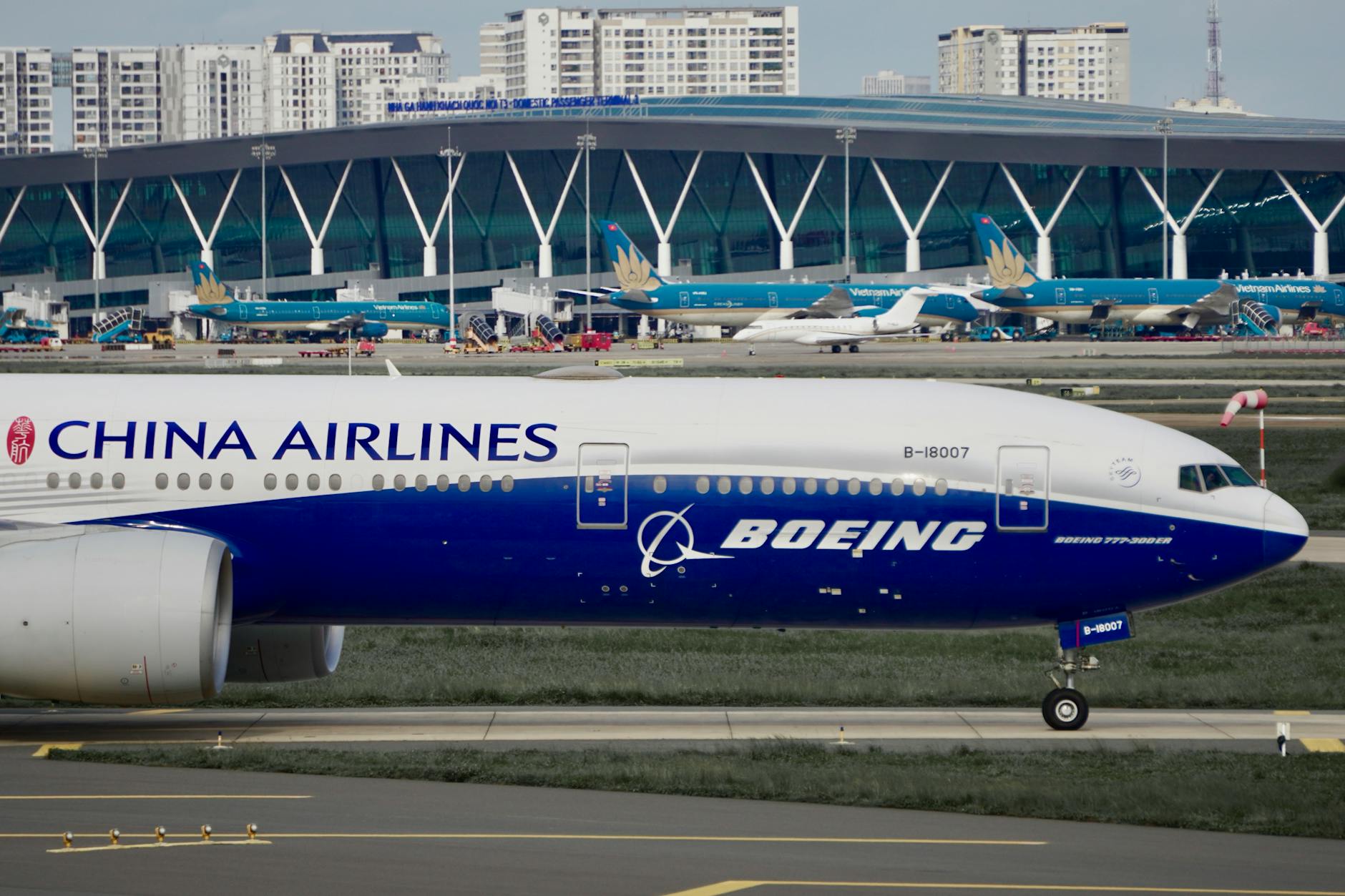
Market Pulse: Trump Bought Boeing Stock As 200-Plane China Deal Emerges
In a development that blends politics, finance and global aviation, regulatory filings indicate that trump bought boeing stock in the weeks before a landmark 200-plane order with China was disclosed. The sequence has investors weighing potential conflicts of interest against the potential for domestic industry policy to accelerate demand for large commercial aircraft.
Industry watchers say the two-part headline — a political figure's stock move followed by a major international purchase commitment — could create a rare alignment of policy and commerce. If the China deal moves forward as described, it could reshape revenue visibility for Boeing and its suppliers at a critical point in the cycle.
Inside the 200-Plane China Deal
A preliminary agreement outlined in industry briefings contemplates a purchase of 200 wide-body and narrow-body aircraft, with potential for expansion to as many as 750 jets over time. The pact is described as the U.S. and China setting a new benchmark for aviation trade and technology transfer in a climate of heightened scrutiny around foreign access to strategic aviation platforms.
Key elements include significant supplier participation, notably GE Aerospace, which would supply a sizable portion of the engines. The initial order is expected to run through a mix of engine types and configurations that align with both existing fleets and modernization plans across several Chinese carriers.
- Deal size: 200 aircraft initially; potential expansion to 750 jets.
- Engine supply: GE Aerospace projected to provide 400-450 engines at the outset.
- Strategic impact: First major Chinese sales wave for Boeing in nearly a decade, with long-term support revenues anticipated from maintenance and spares.
The scope of the agreement underscores how governments are increasingly using large industrial purchases to strengthen economic and political ties. The deal’s timing coincides with an elevated emphasis on domestic manufacturing capabilities and resilience in global supply chains.
Financial Backbone: Boeing and GE Aerospace
From a corporate health perspective, Boeing still carries a heavy debt load, with the company reporting roughly $44.3 billion in outstanding obligations. Still, executives and analysts say a stabilized production cadence and steady large-jet orders could dramatically improve revenue visibility, especially if the China deal translates into ongoing output and long-run maintenance revenue.
GE Aerospace, Boeing’s long-standing partner on propulsion systems, posted a robust year in 2025, with about $1.9 billion in profitability and a double-digit operating margin of 23.3%. Analysts note that engine demand speaks to a broader aviation cycle that could extend into two or more years, depending on how quickly airlines add capacity and upgrade fleets.
- Boeing debt: approximately $44.3B.
- GE Aerospace 2025 profitability: about $1.9B; operating margin 23.3%.
- Long-run revenue visibility: hinge on production stability and service agreements tied to engines and airframe maintenance.
Industry point-of-view leaders describe the combination of a large-order agreement with a supplier-backed engine plan as a potential blueprint for future export-led growth, particularly if political considerations ease some cross-border friction in the aviation market.
Market Reaction and Investor Narrative
The stock market absorbed the headlines with caution. Boeing shares moved on the back of the news, while GE Aerospace tracked the broader technology and industrials complex. Traders cited the dual force of a large export deal and a regulatory filing that allegedly shows a political figure increasing exposure to the stock of a major national champion.
Analysts emphasized that the financials should be assessed in the context of a multiyear production schedule, supplier capacity, and the ability of airlines to return to pre-crisis utilization rates as routes reopen and travel demand normalizes.
In this environment, observers are weighing the possibility that trump bought boeing stock was a signal of confidence or a calculated hedge against policy shifts that could influence aviation trade rules. The exact timing of the purchases relative to the deal’s public disclosure has become a focal point for market regulators and watchdogs who track how political activity intersects with corporate ownership.
While some investors view the situation as a reminder of how policy can shape demand for capital-intensive industries, others warn that any perceived conflicts of interest could invite scrutiny from lawmakers and the public, potentially affecting future mandates and government‑backed procurement paths.
What This Means for Boeing, GE Aerospace, and Investors
For Boeing, the central question is whether the China deal proceeds and whether production can scale without destabilizing the supply chain. A successful ramp could translate into improved revenue visibility and a steady stream of services income from the engine and airframe ecosystems that GE Aerospace supports.
GE Aerospace faces a similar calculus: a multi-year engine program linked to a major international order would yield recurring maintenance and spares revenue alongside upfront engine sales. The company’s strong 2025 margin reinforces its ability to weather volatility in defense and commercial cycles as airlines adjust fleets post-pandemic.
- Investment thesis: A large, multi-year order paired with a stable engine program could boost revenue visibility for both Boeing and GE Aerospace.
- Risks: Political scrutiny, cross-border tariff and export restrictions, and potential delays in production could weigh on returns.
- Investor takeaway: Watch for production cadence, supplier capacity, and the evolution of China’s aviation market access policies.
In the near term, traders will monitor how the 200-plane plan unfolds, how it affects Boeing’s delivery schedules, and whether the Chinese market sustains the pace required to justify the initial mass of orders. The development could also test investor appetite for political risk in the industrial sector, especially as government-backed procurement conversations intensify in the United States and partner nations.
Regulatory Lens and Political Context
The events unfold at a moment when U.S.-China relations and trade policy influence business strategy across multiple sectors. Lawmakers have signaled renewed focus on national security implications for the aviation supply chain, including critical components and manufacturing capabilities. In that context, a high-profile stock move tied to a major export agreement becomes part of a broader narrative about how politics can interact with capital markets.
Observers note that the industry’s health is tethered not just to demand and capacity, but to policy decisions that shape who can buy what, and under what terms. The interplay between a major international contract and the personal investment moves of political figures adds another layer of complexity for risk managers and portfolio strategists alike.
Bottom Line for 2026 Investors
As markets calibrate to this evolving scenario, the core takeaway is clear: the aviation sector remains highly sensitive to policy signals and international diplomacy. The 200-plane China deal, if realized, could serve as a catalyst for revenue visibility across Boeing and its ecosystem, including GE Aerospace. Meanwhile, the matter of trump bought boeing stock has already sparked questions about timing, disclosure, and the potential for influence on corporate strategy.
For investors focusing on the investing category, the key today is to monitor how the deal progresses, how suppliers adjust capacity, and how lawmakers respond to the intersection of politics and major industrial orders. In a market environment shaped by interest rates, tariff concerns, and evolving geopolitical risk, this story exemplifies how the most consequential moves can hinge on a single agreement and a single trading day’s disclosures.
Discussion