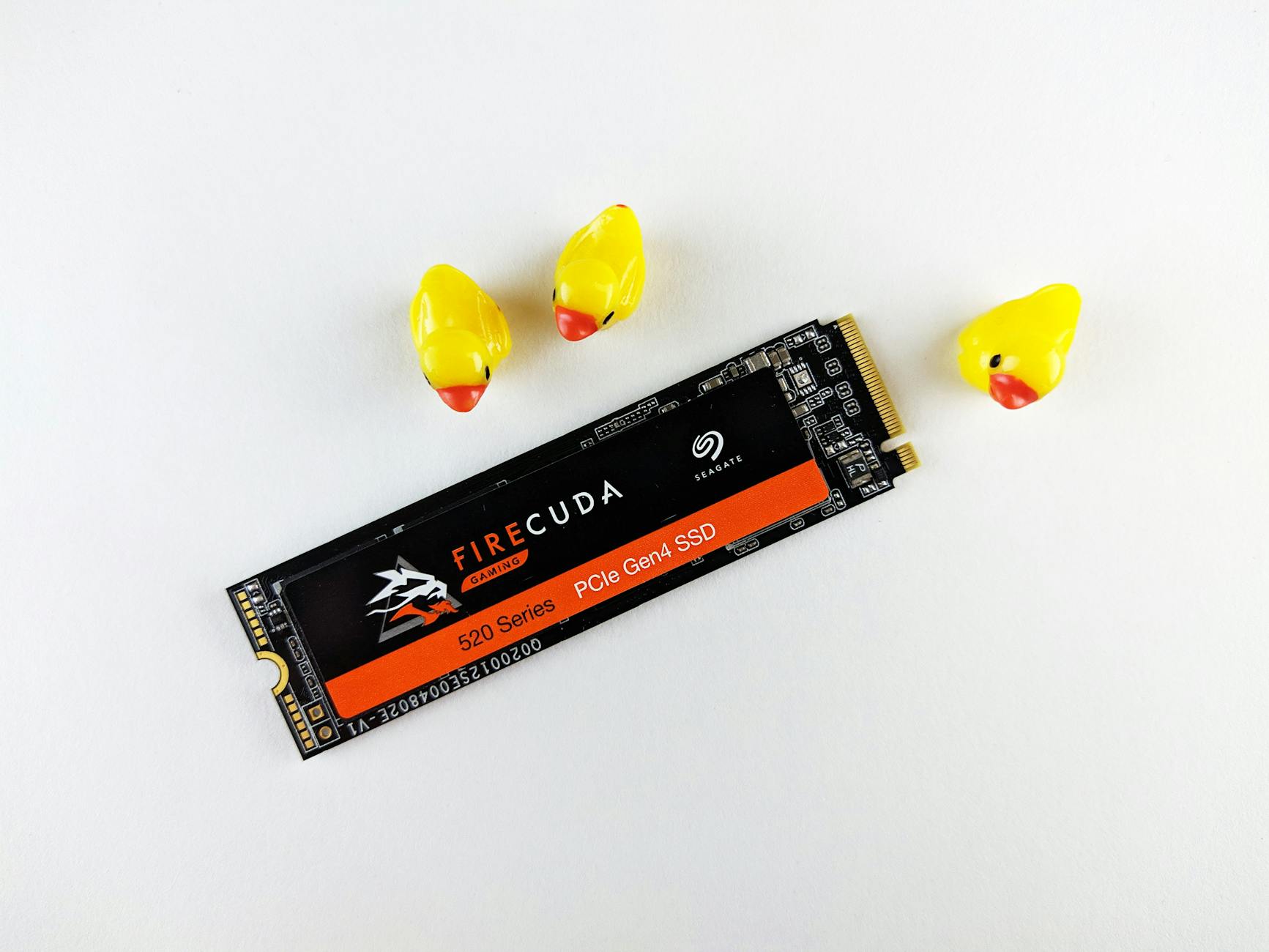
Market Pulse After Sell-Off
On March 3, 2026, Western Digital and Seagate faced a sharp, market-wide pullback driven by geopolitical jitters and fears of tighter semiconductor supply. Western Digital (WDC) slid roughly 5% during the session after it wrapped up a $3.1 billion stake sale that reshapes its capital structure and concentrates focus on its hard-disk drive TSR (tech storage) assets. Seagate Technology (STX) bucked the trend, climbing about 3% as investors bet on sustainable demand for enterprise and consumer HDDs despite broader risk-off conditions.
The day’s moves underscored a broader theme: investors are recalibrating how they value legacy storage franchises in a world of growing flash alternatives and cloud-era storage architectures. In the immediate aftermath, the market was split between investors who prize a fortified balance sheet and predictable cash flow, and those who chase growth catalysts and higher dividend yields. The question many desks are asking is: western digital seagate after the latest round of events, which path offers the better risk-adjusted upside?
A Split Path: Fortified Balance Sheet vs Growth Momentum
Western Digital’s pivot toward a leaner, debt-tighter structure is its core message after the stake sale, according to company disclosures and management commentary. By selling a sizeable stake and concentrating operations around core HDD capacity, WD signals a return to a more traditional, steady-state model with clear capacity commitments through 2027 and beyond. The company also reiterated that its HDD production is sold out for the near term, and its long-term supply agreements extend into the late 2020s, a signal to investors that the business intends to ride a durable, if slower-growing, cash-flow stream.
Seagate, conversely, is trading on a narrative of resilience in both pricing and capacity utilization. The company has consistently highlighted that enterprise drive deployments and data-centre storage demand remain robust, supported by hyperscale buyers and a growing installed base of AI and analytics workloads. The stock’s bounce from the sell-off reflects a bet that Seagate’s mix can stay anchored to revenue stability even as the memory market remains volatile and flash prices fluctuate. Analysts say the market is pricing in continued execution leverage rather than a dramatic acceleration in top-line growth.
Key Data Points Amid the Rebalancing
- Stock reaction: WD fell about 5% intraday; STX rose around 3% during the same session.
- Valuation snapshot: WD trades at a forward multiple near the mid-20s, while STX sits in the low-to-mid 20s, reflecting an ongoing debate about growth versus safety in legacy storage assets.
- Cash and liquidity: WD completed a $3.1 billion stake sale and emphasised a fortress balance sheet aimed at weathering macro headwinds.
- Capacity outlook: WD reports its HDD capacity is largely spoken for through 2027–2028, reinforcing the narrative of a durable demand backdrop for traditional storage media.
- Dividend and yield: STX’s yield remains modest, offering near-term income for investors who favor lower risk sub-sectors in the hardware space.
Industry watchers note that the divergence between Western Digital and Seagate after the March session reflects two distinct interpretations of the same structural shift: a slower but steadier cash-flow machine versus a growth-minded play with a tighter margin profile. A veteran equity analyst commented, “This is less about who wins the next couple of quarters and more about who preserves optionality in a market where flash and cloud re-rate the traditional HDD franchise.”
The Tactical Case for Western Digital
Proponents of Western Digital argue that the company’s capital allocation discipline, combined with a stronger balance sheet, positions it well for a late-cycle recovery in enterprise storage spending. The stake sale reduces ownership risk for investors seeking clarity on the company’s capital structure, while the underlying HDD franchise benefits from a multiyear horizon of predictable demand tied to archival storage, cold storage workflows, and backup migrations in enterprise settings.
“The market is pricing in a cautious path for WD, but the real upside is in the stabilised cash flow and the optionality of capital returns once capacity constraints ease,” noted a portfolio strategist at a mid-sized advisory firm. For retirement-minded investors, the story is straightforward: a low-volatility, dividend-friendly base with a credible path to free cash flow generation—even if growth is not rapid—can offer ballast in a diversified portfolio.
Yet even as WD touts its fortress balance sheet, skeptics point to the risk of multiple compression if HDDs lose share to newer storage formats or if cloud providers re-architect their storage tiers in a way that reduces unit volumes. The counterargument emphasizes that a strong horizon for HDD demand remains intact in certain segments, particularly in long-term archival use cases and cost-sensitive markets where spinning disks remain the most economical option.
Seagate’s Momentum: Growth Bets or Margin Pressure?
Seagate’s narrative is more growth-oriented, with investors betting on steady improvements in unit volumes and resilient pricing power. The company’s exposure to enterprise-grade HDDs and high-capacity drives helps preserve margins in a period of fluctuating component costs and currency effects. The stock is often viewed as a barometer for how well a classic storage player can navigate the transition toward higher-density drives and hybrid storage architectures in data centers.
Analysts flag that the growth thesis hinges on price stability and the rate at which enterprise capex rebounds. A market observer noted, “Seagate remains exposed to macro swings, but its cost structure and mix are better aligned for a mid-cycle improvement in demand.” If sector demand improves alongside stronger utilization of cloud storage platforms, Seagate could extend a multi-quarter outperformance relative to some peers. Conversely, if memory pricing remains volatile or if data centers slow their upgrade cycles, the stock could face near-term volatility despite a solid long-term narrative.
The Western Digital Seagate After Debate: Which Path Fits Your Portfolio?
Investors weighing western digital seagate after recent events must consider their own time horizons and risk tolerance. Those seeking a retirement-friendly stance may prefer Western Digital’s disciplined capital structure and capacity-backed earnings visibility, which could translate into steadier cash returns over the long haul. On the other hand, investors chasing growth and yield upside might lean toward Seagate, particularly if enterprise HDD demand holds steady and a boundary-pushing data-center cycle gains traction.

Market environment matters, too. With macro uncertainty lingering and inflation conversation shifting, the storage sector’s traditional cycle has become more nuanced. Supply chain normalization, component costs, and geopolitical tensions continue to influence pricing and supply decisions. In this context, the performance delta between western digital seagate after the latest trading activity could endure for several quarters as both names navigate the post-sell-off climate.
Bottom Line: A Clearer Winner Emerges For Some Profiles
As the dust settles from the March sell-off, one interpretation of western digital seagate after is clear: the split between a fortified, low-volatility HDD franchise and a growth-oriented storage play is sharpening. For investors prioritizing capital preservation and predictable cash flow, Western Digital’s move to clean up the balance sheet and solidify HDD capacity commitments offers a compelling risk-adjusted profile. For those who can tolerate more volatility in exchange for higher growth potential and near-term upside in earnings power, Seagate remains a viable proxy for continued enterprise storage demand.
Both stocks live in a space where the long-run story will be driven by enterprise storage economics, data-center investments, and the pace at which legacy HDDs can coexist with flash and emerging storage technologies. The question is not only which stock wins in a vacuum, but which aligns with your investment discipline as market conditions evolve. The ongoing discussion around western digital seagate after this sell-off will likely shape portfolio allocations for weeks and months to come.
Investor Takeaway
For now, the market appears to reward discipline and clarity of strategy. Western Digital’s balance-sheet fortification and capacity visibility provide a defensible base case for conservative investors, while Seagate’s growth-oriented positioning keeps it in the conversation for those seeking higher upside in a volatile environment. The dynamic between the two names is likely to persist as long as memory-market volatility and cloud storage cycles continue to play out in rhythm with macro news.
Discussion