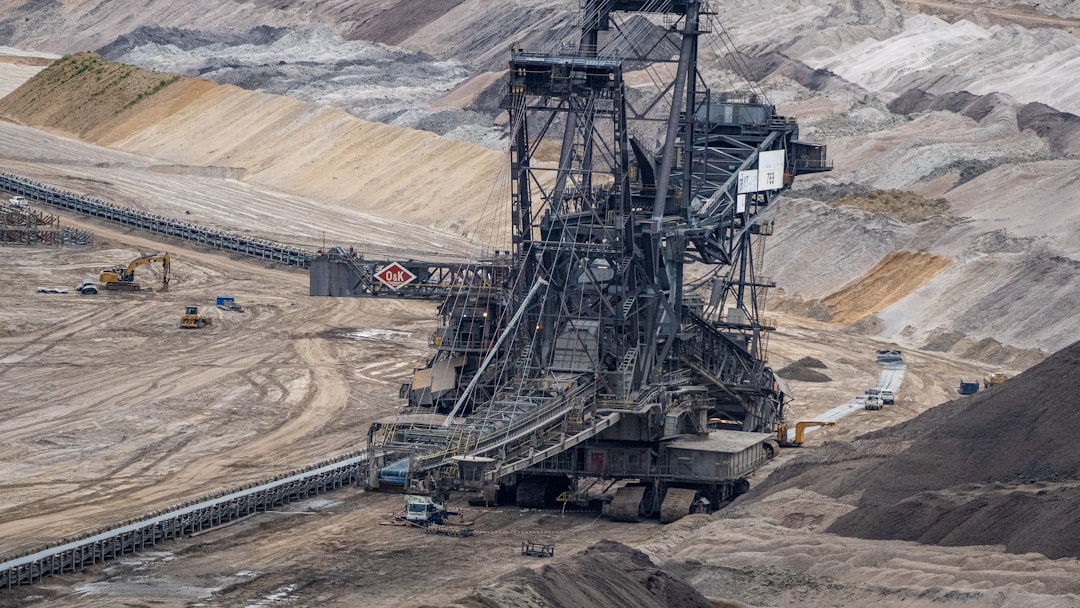
Hook: A Mining Pop On Your Radar
Markets tend to move in bursts, and mining stocks can be some of the most dramatic. When you spot a mining stock just popped, you’ll often see an intraday spike that grabs attention and raises questions about the sustainability of the move. Is this a sign of a longer-term upcycle in the sector, or a temporary reaction to a one-off event? This article breaks down the dynamics behind a pop, shows you how to evaluate the move, and offers concrete steps you can take to position yourself with clarity rather than impulse.
What It Means When a Mining Stock Just Popped
Hearing that a mining stock just popped usually triggers two streams of information: news that touches the company’s bottom line (like a contract win, asset sale, debt reduction, or favorable regulatory news) and broader market forces (commodity prices, currency moves, or investor sentiment). Either can cause a sharp price move, but the implications for an investor depend on what actually drove the rally.
In practice, a mining stock just popped can reflect one or more of these catalysts:
- Commodity price support: Even a modest uptick in gold, copper, or silver can lift mining equities because higher commodity prices tend to boost revenue potential and free cash flow.
- Operational improvements: Declines in production costs, higher ore grades, or better-than-expected mine output can surprise the market in a positive way.
- Strategic moves: Asset sales, joint ventures, or licensing deals can unlock value or de-risk a portfolio, which investors often reward with a price pop.
- Capital structure changes: Paying down debt, raising new equity at favorable terms, or cutting burn can improve balance sheet health and future profitability.
However, a jump in price doesn’t automatically translate into a buy signal. It often reflects a narrative short-term traders are chasing. The question for each investor is: does the underlying business actually improve, or is the stock simply catching momentum on a story that hasn’t yet proven its durability?
Key Metrics That Help You Assess a Pop
To evaluate whether a move is justified, you need to connect the headline news to the numbers. Here are the most important metrics and what they tell you:

- Free cash flow and cash on hand: Is the company turning cash into usable funds after capital expenditure? A healthy cash cushion reduces solvency risk and funds growth work without new debt.
- All-in sustaining cost (AISC) and unit costs: Are costs trending lower? A mining operation with improving efficiency can better withstand weaker commodity cycles.
- Debt load and maturity profile: If the company is extending maturities or paying down debt, it suggests a more resilient balance sheet—important during volatile markets.
- Reserve life and mine plan quality: Longer reserve life and a credible development plan indicate enduring value rather than a short-term flash.
- Commodity exposure and hedging: A diversified mix of metals or hedges against price declines can protect downside during pullbacks.
If the article you’re reading or the press release emphasizes a single favorable headline without supporting numbers, that’s a red flag to slow down your decision-making. A solid investment thesis after a pop should rest on a few durable fundamentals, not just a one-off surprise.
How To Decide If You Should React
If you’re weighing whether to act after you’ve seen a mining stock just popped, use a simple framework to decide:
- Confirm the catalyst: Find the press release, regulatory filing, or earnings call that explains the move. Is the catalyst one-off or part of a longer-term trend?
- Assess sustainability: Does the new information improve the company’s free cash flow prospects or reduce risk? Look for sequential improvements in costs, margins, and capex discipline.
- Compare to peers: Are peers in the same sector showing similar dynamics, or is the pop company-specific? Broad-based strength can support a case for the sector; company-specific factors matter for stock selection.
- Check valuation context: Is the stock now trading at a meaningful premium to peers, or is the move justified by improved fundamentals? Metrics to watch include price-to-earnings (P/E), price-to-cash-flow (P/CF), and enterprise value-to-EBITDA (EV/EBITDA).
- Define risk controls: Set price targets, stop losses, and position sizing. A pop doesn’t guarantee future gains, but disciplined risk management can protect your capital.
For many investors, the outcome after a pop hinges less on the headline and more on the credibility of the underlying business plan. In other words: a strong catalyst plus solid financials plus sensible valuations equals a higher probability setup; a big headline with weak fundamentals often signals a trap for the unwary.
Real-World Scenarios: What Drives a Pop and How It Plays Out
To illustrate how a mining stock just popped can translate into a longer-term move (or fade away), here are three plausible scenarios investors commonly see in the real world:
- Scenario A — Margin improvement in a copper-focused miner: Copper prices rise from $3.60 to $4.20 per pound, drilling costs fall due to better ore grades, and the company announces a cost optimization plan that trims sustaining costs by 6% over the next year. The stock pops on the day of the news and then stabilizes as investors confirm the margin expansion through quarterly results.
- Scenario B — Asset sale unlocks value: A gold producer sells a non-core asset for $150 million, reduces debt, and increases free cash flow. The market responds with a jump in forward-looking profitability, but the durability depends on whether the company can deploy the cash effectively in growth projects or simply strengthen the balance sheet.
- Scenario C — Exploration success raises optionality: A silver miner reports promising drill results in a high-potential district. The pop reflects optimism about future ounces, yet the path to realized value depends on permitting, construction timelines, and eventual mine development choices.
In each scenario, the short-term move is a function of news and perception. The longer-term outcome depends on how the company translates that news into actual earnings, cash flow, and return on invested capital.
Practical Steps To Position Yourself After a Pop
If you decide the time is right to consider the stock after a pop, here’s a practical playbook you can follow. It’s designed to be concrete, repeatable, and scalable for different budget sizes.
Step 1: Revisit Your Core Thesis
Ask yourself: Does the catalyst change the company’s core value proposition? If you believed the stock was undervalued due to high costs and stale assets, does the news move that thesis closer to fair value? If the answer is yes, you might have a reason to invest; if no, you might be better off waiting for a clearer signal.
Step 2: Quantify the Upside and Downside
Run a simple two-way scenario analysis. For example, consider a hypothetical miner with a current price of $28 per share, a 5% expected annual growth in free cash flow, and a downside risk if copper prices slip to $2.50 per pound. Estimate potential price targets under both up and down scenarios and compare them to your risk tolerance. If the upside justifies risk according to your rules, you may proceed—otherwise, stay patient.
Step 3: Use Defined Entry and Exit Points
Set a conservative initial buy level, a mid-point target, and a hard stop. Example: buy at or below $28.00, target $32.50 within 12 weeks on sustained volume and positive earnings guidance, and place a stop at $25.50 to limit downside. Adjust as the story evolves and new data arrives.
Step 4: Diversify Within the Sector
Instead of concentrating a large chunk of capital in a single stock, consider a small position in multiple mining names with complementary exposures (for example copper-focused, gold-focused, and diversified miners). Diversification can smooth idiosyncratic risk and reduce the chances of a single-event blowup derailing your portfolio.
Step 5: Monitor the Macro Backdrop
Mining stock performance often tracks commodity cycles, inflation expectations, and global demand shifts. Keep a running eye on commodity prices, exchange rates, and interest-rate expectations. A favorable macro backdrop can extend a stock’s momentum; a sudden shift can snap it back quickly.
Risks To Keep Front Of Mind
A price pop can be a trap if you don’t account for potential downsides. Here are common risks you should consider:
- Commodity price volatility: If commodity prices reverse course, the stock could retreat quickly as investors re-price earnings.
- Operational risks: Delays in mine development, lower-than-expected ore grades, or unexpected maintenance issues can erode projected margins.
- Regulatory and geopolitical factors: Policy changes, tax rules, or cross-border tensions can impact project timelines and costs.
- Valuation risk: A sharp pop can push multiples to extended levels, making further upside harder to realize without a commensurate improvement in fundamentals.
Always balance potential upside with these risks, and avoid overpaying for a narrative that hasn’t proven itself in results.
Conclusion: A Pop Isn’t a Promise—But It Can Be A Clue
The phenomenon of a mining stock just popped is a reminder that the market often reacts to news with speed and intensity. A successful, sustainable investment after such a move requires more than a catchy headline. It demands careful assessment of catalysts, solid fundamentals, disciplined risk controls, and a clear plan for entry and exit. By anchoring decisions to tangible data—cost trends, cash flow strength, debt management, and macro conditions—you can distinguish meaningful value from a momentary surge.
As a practical investor, your goal is not to chase every pop, but to position yourself where the odds favor continued upside while protecting your downside. With a thoughtful framework, a pop can become an opportunity rather than a rush to catch the next quick move.
Frequently Asked Questions
Below are quick answers to common questions investors ask after a mining stock just popped.
Q1: What does a pop in a mining stock usually indicate?
A pop often signals new information or a perceived improvement in the company’s near-term prospects. It can be driven by good news about assets, production costs, or strategic deals, but it can also reflect momentum from traders who expect quick gains. Always verify the underlying catalyst and check whether fundamentals support the move.
Q2: Should I buy after a stock pops?
Not automatically. Use a disciplined process: confirm the catalyst, assess durability via financials and guidance, compare with peers, and set predefined entry and exit points. If you’re unsure, consider waiting for a pullback or a more robust confirmation signal before committing capital.
Q3: How do I evaluate a mining stock after a pop?
Review free cash flow, debt levels, and the mine plan. Look at all-in sustaining costs, reserve life, capital expenditure plans, and the sensitivity of earnings to commodity prices. Compare the company’s valuation with peers to determine if the pop is justified by fundamentals.
Q4: What are the top risks to watch after a pop?
Key risks include commodity price reversals, operational hiccups, regulatory changes, and over-optimistic assumptions in guidance. If any of these unfold unfavorably, the stock could revert toward its prior levels. Protect yourself with diversification and clear risk controls.
Discussion