Market Pulse: Demand Slows as Trade Labor Shortage Persists
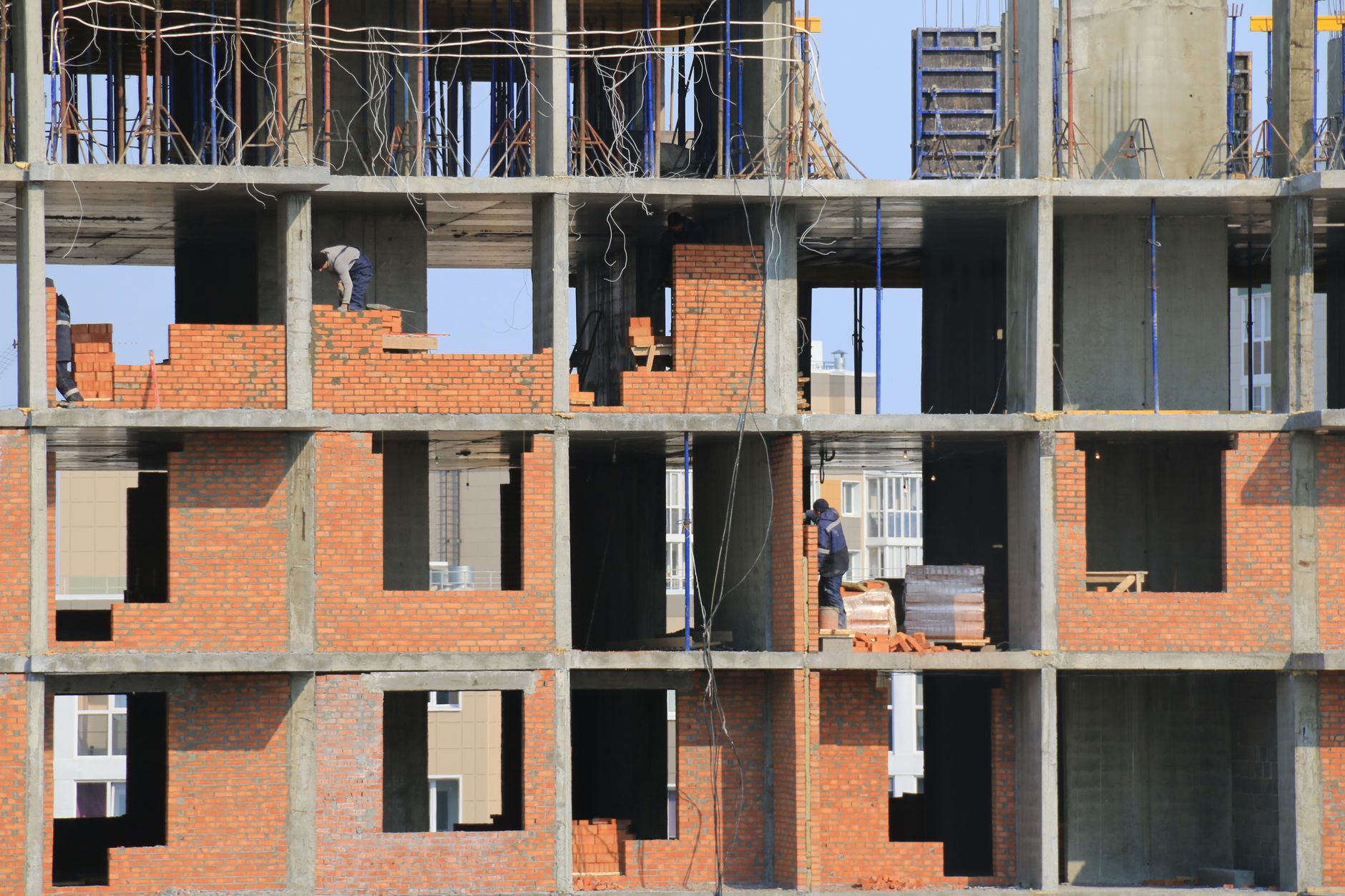
The housing market cooled again in the latest national reading, with new home sales retreating for the third month in a row. The slowdown comes as skilled-trade availability remains a stubborn drag on production, constraining the pace at which builders can deliver homes. Lenders are watching the cadence of construction projects closely, because longer build times tie up capital and raise carry costs for communities that rely on new homes to absorb inventory.
Mortgage rates have hovered in a higher range this spring, with the 30-year fixed inching toward the mid-6% area in recent weeks. While buyer demand shows pockets of resilience, builders report that financing costs and project delays compound the productivity gap created by labor constraints. In practical terms, this means fewer finished homes completing on plan and slower absorption on the back end of communities.
Analysts describe a market where the bottleneck is no longer just a pool of unfilled jobs, but how efficiently a project can be staffed and sequenced from site prep to punch list. As one loan officer put it, "the pace of construction is a function of labor availability, forecasting accuracy, and the rhythm of subcontractor collaboration."
Why the Misread Persists: The Hard Truth About Capacity
Many executives in production homes acknowledge the problem, yet concrete methods to quantify labor capacity remain elusive. The result is a recurring misalignment: builders plan around optimistic capacity, while the actual workforce operates at a different tempo. This gap reverberates through every stage of the loan cycle, from underwriting to entitlement to completion.
Industry observers point to a simple, stubborn fact: every hour a skilled tradesperson spends away from constrained work permanently reduces overall output. In business terms, the constraint isn’t just about headcount; it’s about how that headcount translates into efficient, repetitive workflows. Fragmentation—workers hopping between job sites, crews forming and dissolving as plans evolve—erodes productivity and raises rework costs.
Some commentators invoke the Theory of Constraints to frame the problem. Yet even the early steps—identify and exploit—often stop short at the site level. As a result, many builders haven’t built a reliable model for measuring what their local labor market can sustain on any given day. The consequence: variations in cadence, inconsistent crews, and the perception that the bottleneck is temporary rather than structural.
Data-Driven Realities: What the Numbers Are Saying
- Mortgage rates: hovering in the mid-6% range for 30-year loans, with mortgage cost volatility contributing to cautious consumer spending on new homes.
- Labor-market signals: skilled-trade openings remain elevated above pre-pandemic norms, while union and nonunion wage growth has accelerated in select markets.
- Builder backlogs: project queues extending 6–10 months in many regions, extending the time from ground breaking to closing and increasing financing exposure for lenders.
- Productivity gaps: crews that operate in geographically concentrated clusters tend to achieve higher first-pass yields than crews that switch between multiple plans and sites.
Against this backdrop, the environment has created a paradox: demand for new homes is softening, yet the hurdle to deliver remains the availability and deployment of skilled labor. That paradox fuels cautious underwriting and tighter capital discipline among lenders, who are reassessing risk in long-cycle projects.
The Tradeoffs in Lending: How Banks See the Labor Crunch
Financial institutions are adjusting loan terms to reflect the longer build cycles driven by labor constraints. Some lenders have widened reserves for contingency, while others require deeper coverage for cost overruns tied to labor delays. The net effect is a higher hurdle for builders seeking financing for ground-up development and large-scale communities.
Credit executives emphasize that capacity planning should be a core part of underwriting. A senior analyst at a national lender notes, "If you can't quantify labor capacity and project cadence, you can't accurately forecast loan-to-cost or expected completion timelines." The implication for borrowers: more stringent project milestones, closer oversight, and higher sensitivity analyses for interest-rate cliffs and material-price swings.
What Builders Are Doing Now: Offense, Not Just Defense
Despite the constraints, a few productive responses have taken hold. Innovators in the field are pursuing a mix of technology, policy, and workforce initiatives aimed at expanding effective capacity.
- Offsite construction pilots: some firms are testing panelized systems and modular modules to reduce on-site labor needs and improve schedule reliability.
- Automation and robotics: lightweight automation at assembly sites seeks to compress cycle times and stabilize crews against daily variability.
- Immigration reform advocacy: industry groups argue that a tempered, policy-driven approach to skilled immigration could expand the pool of available tradespeople.
- Training pipelines: partnerships with community colleges and trade unions aim to grow the next generation of carpenters, electricians, and plumbers through structured apprenticeships.
These moves are noble, but experts caution that they amount to the long arc of change rather than a quick fix. The reality is that even ambitious innovations need time to scale and to be integrated into the risk models that govern lending and project budgeting.
Path Forward: Quantify, Cadence, Collaborate
To break the cycle, industry leaders urge a disciplined approach that treats labor as a measurable constraint, not a vague risk. The following steps are repeatedly cited by experts as essential to closing the gap between demand and delivery.
- Quantify local labor capacity: build real-time dashboards that track crew availability, saturation, and velocity across multiple trades and regions.
- Standardize cadences: use repeatable planning cycles—weekly milestones, standardized crew mixes, and predictable handoffs between trades.
- Strengthen supply-chain collaboration: lock in subcontractor schedules and material deliveries to reduce windshield time and late changes.
- Pair financial and operational planning: align cost forecasts with labor-forecast models and maintain flexible contingencies for wage swings and retraining needs.
- Policy and workforce development: advocate for programs that expand apprenticeship opportunities and streamline permitting for modular builds where appropriate.
Even with these strategies, industry observers caution that the path to normalization will be gradual. The market remains sensitive to macro shifts: inflation, rates, and the political environment will continue to influence both housing demand and construction financing in the near term.
Editorial Note: The Phrase to Watch
In discussions about capacity and productivity, several voices inside the industry start from the same premise: labor is the most visible constraint, but it’s not the only one. The way the trade shortage is interpreted matters because it shapes financing decisions, project design, and the speed at which homes reach buyers. In this context, the phrase "homebuilders still tend misread" captures a recurring warning: the assumption that more workers alone will restore pre-crisis productivity may be missing the structural shifts in cadence, planning, and supply-chain integration.
As the housing market navigates 2026, it will be the combination of disciplined capacity measurement, disciplined cadencing, and smarter financing that determines whether new homes come to market on schedule or slip behind the curve. The risk for lenders is not merely a higher rate of cost overruns but a longer horizon over which capital remains tied up in stalled projects. The risk for borrowers is slower access to credit and tighter terms when builders cannot demonstrate reliable, data-driven project throughput.
In the end, the industry can ill afford to overlook the operational levers that truly move the needle. If the market wants to resume steady construction of new homes, it must translate promise into cadence, and cadence into predictable delivery. That is the test of whether homebuilders can move from reactive fixes to proactive, measurable improvements in labor capacity.
Bottom line: The labor crunch is no longer a one-note problem. It requires a disciplined, data-driven approach to capacity planning and a renewed focus on cadence and collaboration. Until that shift happens, the statement "homebuilders still tend misread" will remain a cautionary refrain for lenders, policymakers, and homebuyers alike.

Discussion