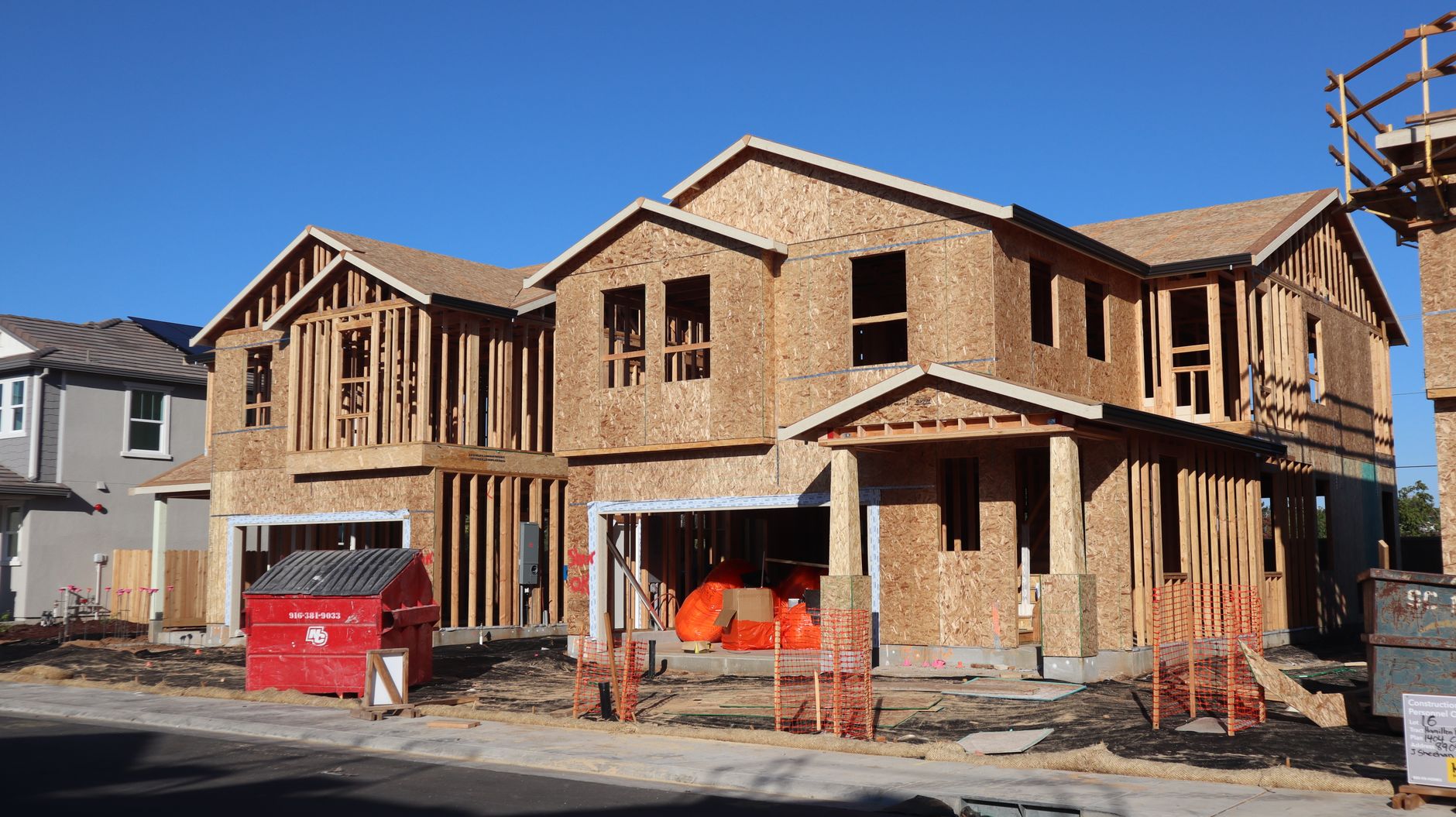
Introduction: Why Cheap Deals Are Turning Heads in the Housing Market
If you follow real estate news, you may have noticed a familiar headline: amid shifting demand, major homebuilders have sold blocks of new homes at prices that would have seemed impossible a few years ago. For investors, that finding translates into a rare opportunity to purchase new inventory at prices that improve cash flow from day one. It’s not a free ride, though. The window is sensitive to interest rates, local demand, and builder incentives that can change from month to month. In this guide, you’ll learn why these discounts are happening, what to look for in a loan, and concrete strategies you can apply to lock in gains while minimizing risk.
For a long time, the market rewarded speed: quick closings, high down payments, and bidding wars for new construction. Today, the landscape is different. Builders are carrying higher inventories, financing is tighter in some markets, and capital markets have added nuance to how new homes are financed. That combination has produced a situation where the phrase major homebuilders have sold can describe substantial price reductions and generous buyer incentives in certain regions. If you’re ready to act with a clear plan, you can turn these conditions into a dependable, long-term investing strategy—anchored by responsible loans and solid cash-flow projections.
Understanding Why These Deals Are Appearing Now
To make sense of the headline about discounting, you need to connect three realities: builder inventory levels, financing costs, and buyer demand. Here’s how they interact and create opportunities for investors who know where to look.
- Inventory buffers: Large builders often maintain a pipeline of unsold spec homes and quick-move inventory to protect margins. When demand slows, they accelerate discounts or offer closing-cost credits to move these units faster.
- Financing headwinds: If mortgage rates remain elevated or volatile, fewer buyers qualify for new construction, pushing builders to propose price reductions or rate buydowns to maintain sales velocity.
- Market adaptation: Local markets aren’t the same nationwide. In markets with faster appreciation or higher construction costs, price reductions can still be substantial in absolute dollars, even if per-square-foot pricing remains strong in some pockets.
For investors, these dynamics translate into a few practical truths: discounts aren’t universal, they’re negotiated, and they’re often paired with concessions that improve your overall all-in cost. The phrase major homebuilders have sold is less about a single dollar figure and more about a shifting strategy in response to inventory, rates, and demand. Keeping a close eye on builder activity in your target markets is crucial for spotting the best opportunities.
What The Numbers Are Saying: How Deep Are the Discounts?
While every market is different, several data points illustrate the trajectory investors should track when evaluating new-build opportunities from large builders. Below are representative metrics you’ll likely encounter if you’re comparing a handful of developments in the same metro area:
- In some markets, advertised base price reductions on spec homes range from 4% to 12% versus last year’s peak pricing. When you factor in incentives like closing-cost credits or rate buy-downs, the all-in cost to a buyer can be meaningfully lower than the list price.
- Builders may offer up to 3% to 5% in concessions (closing costs or rate buydowns) to secure a deal, effectively lowering the mortgage payment by several basis points.
- Discounts are often more aggressive toward the end of a fiscal quarter or year-end when builders need to hit sales targets for financial reporting.
- Even with price drops, the strongest deals tend to cluster around well-located developments with robust access to work centers, schools, and amenities.
In practice, the lowest all-in cost comes from combining a price concession with favorable loan terms. For example, a unit that could list at 450,000 might be offered with a 10,000–15,000 price cut plus a 1.5% rate buydown or closing-cost credits that reduce the first-year payment by several hundred dollars per month. The result can be a substantially stronger cap rate on a rental property or a shorter horizon to cash flow break-even for your portfolio.
Key Strategies: How Investors Can Take Advantage
Now that you understand why these cheap deals exist, the question becomes: how do you engage with builders and finance these purchases in a way that protects your downside and maximizes your upside? The core is a disciplined approach to financing, negotiation, and post-purchase management. The following tactics are designed to help you translate price discounts into real, repeatable gains:
1) Prioritize the Right Financing Path
New construction purchases intersect with several loan types, each with its own pros, cons, and eligibility criteria. Your choice will significantly impact cash flow and long-term returns. Here are the main options investors typically consider:
- Conventional fixed-rate mortgages: Best for long-term buy-and-hold properties with 20% down or more. Rates are fixed, providing predictable cash flow and easier debt service planning. Expect loan-to-value (LTV) ranges around 70%–80% for investment purchases in today’s market, with typical down payments of 20% or higher.
- Construction-to-permanent loans: A two-step approach that converts from a construction loan to a permanent loan once the build is complete. This can reduce the number of draws and simplify financing, but the terms depend on the lender and may include higher fees during the construction phase.
- Portfolio loans: Some banks offer in-house financing for investors who want quick closings and flexible terms. These can be advantageous if you’re building a small portfolio, but you’ll pay attention to rate sheets and potential prepayment penalties.
- FHA/VA loans for investment properties: Typically not available for standard investment purchases; these programs are better suited to owner-occupied homes. If you’re considering owner-occupant strategies (live-in with a rental down the line), talk to a lender about your option set.
Pro Tip:
2) Negotiate Like a Pro: Price, Credits, and Timeline
Builders have a few levers to move a deal beyond the sticker price. When you’re negotiating, you’re not just chasing a lower price—you’re chasing a lower all-in cost and a faster path to rent-ready status. Here are practical negotiation lever points and how to use them:
- Price concessions: A discount off the base price can be combined with closing-cost credits to lower your effective investment cost. If the builder won’t budge on price, ask for a credit at close equal to 2–4% of the purchase price.
- Rate buy-downs: A 1–2% rate buydown for the first year or two can significantly reduce monthly payments, especially during a period of higher rates. Compare the long-term cost of a higher price versus a smaller upfront concession.
- Upgrades and incentives: Ask for credits toward essential upgrades (appliances, HVAC, or tile upgrades) that add resale value and appeal to tenants or future buyers.
- Closing timeline and occupancy: If you can close faster, you may secure an earlier occupancy date, reducing interim carrying costs. If you plan to rent immediately, confirm that the unit will be rent-ready upon closing.
Pro Tip:
3) Run the Numbers Before You Buy: Cash Flow, Not Just Price
Discounts are enticing, but the real test is whether the property will produce solid cash flow after debt service, taxes, insurance, HOA, and maintenance. A simple framework helps you screen deals quickly:
- Projected rent: Use conservative rents based on recent comps in the development’s area. If similar units rent for $1,800–$2,200 in the same complex, plan for $1,900 as your conservative baseline.
- All-in monthly costs: Mortgage payment (principal + interest) plus property taxes, homeowners insurance, HOA dues, and maintenance reserves.
- Cash flow and cap rate: Cash flow = rents minus all monthly costs. Cap rate = net operating income divided by purchase price. A target cap rate of 6–8% is a reasonable starting point for new construction in many markets, though higher in markets with strong rent growth and lower vacancy.
Understanding these numbers helps you decide whether the discount on a builder’s unit translates into a meaningful, sustainable return. Remember that major homebuilders have sold these ready-to-rent units with a mix of incentives that can strengthen cash flow—if you structure your financing carefully and select markets with solid rental demand.
4) Build a Market-Forward Investment Plan
Because new-build discounts can vary by market, adopt a plan that scales as you build a portfolio. Here’s a straightforward framework you can adapt:
- Market focus: Identify 2–3 metro areas with strong job growth, diversified economies, and stable rental demand. Track builder activity weekly, including price cuts and incentives.
- Deal funnel: Create a step-by-step process for evaluating deals: initial screening, lender pre-qualification, site visit, price/incentive negotiation, and closing readiness.
- Financing playbook: Pre-approve lenders and understand your maximum LTV, rate lock windows, and closing-cost credits. Build a case file for each deal to compare apples to apples.
- Portfolio strategy: Start with a single-unit investment to refine your approach, then scale to 3–5 properties in 12–24 months once you’ve established a reliable process.
Case in point: in markets where price reductions of 6%–10% were common and closing-cost credits added another 2%–3% of value, an investor with a 20% down payment and a 30-year fixed loan could reach a cash-flow sweet spot faster than in markets with less competitive incentives. When you combine the builder discounts with a smart loan and a well-chosen rent strategy, you tilt the odds toward a robust return profile.
Real-World Scenarios: How This Plays Out in Practice
Let’s walk through two practical scenarios to illustrate how discounts, loans, and rents interact to create solid returns. In each example, we’ll use conservative assumptions to show what cash flow and equity growth might look like over a 5-year period.
Scenario A: Single-Family Unit in a Prime Suburb
Assumptions:
- Purchase price after discount: $420,000
- Down payment: 25% ($105,000)
- Loan type: Conventional fixed-rate, 30-year, 6.75% interest
- Property taxes: 1.15% of purchase price annually
- Homeowners insurance: $1,200 per year
- HOA: $75 per month
- Maintenance reserve: $100 per month
- Projected rent: $2,100 per month
First-year numbers (rounded):
- Mortgage payment (P&I): ~$2,740
- Taxes and insurance: ~$1,950/year
- HOA + maintenance reserve: ~$1,500/year
- Monthly cash flow before taxes: roughly -$350 (negative) in the first year, but that improves as rents rise and as you build equity.
Five-year view: If rents increase modestly to $2,300, and maintenance remains stable, you could see a positive cash flow by year 3–4, with equity growth from principal paydown and appreciation. The discount off the list price helps reduce your initial risk and shortens the time to positive cash flow, especially if interest rates stabilize or decline somewhat in year 2–3.
Scenario B: Micro-Portfolio Approach with a Builder-Inventory Strategy
Assumptions:
- Two identical units in the same development
- Down payment: 20% per unit
- Combined purchase price before incentives: $880,000
- Discounts and credits: 8% price reduction + 3% in closing credits
- Loans: 30-year conventional at 6.5%
- Combined rent: $4,200 per month
- Taxes/insurance/HOA/maintenance: $1,100/month total
Combined numbers: First-year cash flow roughly $150–$250 per month after all costs. Over five years, assuming rent growth and stable expenses, the portfolio could produce a solid 6–7% cap rate on invested equity, with the additional benefit of building a scalable footprint in a market with growing demand.
Risks to Watch and How to Mitigate Them
Despite the upside, there are real risks when chasing discounts offered by major builders. Here are the top concerns and practical ways to address them:
- Rate volatility: If rates rise, even discounted prices may not translate into better cash flow. Mitigation: secure rate locks, consider rate buydowns for early years, and stress-test your model with higher-rate scenarios.
- Construction and timeline risk: Delays can erode cash flow. Mitigation: choose projects with reliable builder track records and a clear occupancy date; negotiate penalties for delays or holdbacks where feasible.
- Market risk: A local downturn could reduce rents or increase vacancy. Mitigation: diversify across a couple of markets with strong job growth, and build conservative occupancy assumptions into your pro forma.
- Financing constraints: Not all lenders will fund new-construction purchases for investors. Mitigation: secure pre-approval ahead of time and align on LTV limits, reserves, and required documents.
Overall, the key is to couple the builder’s discounts with disciplined financing and a robust rent strategy. When you do, the long-term upside can be substantial, but you must manage risk with careful underwriting and contingency planning. As market conditions shift, the mantra remains: major homebuilders have sold, but the deal is not guaranteed for every buyer—you must prove your viability and readiness to close.
FAQ: Quick Answers to Common Questions
Q1: What does it mean that major homebuilders have sold at discounts?
A1: It means builders are moving inventory with price cuts and incentives, which can lower your all-in cost if you’re prepared to negotiate, secure favorable financing, and close efficiently. Discounts are most meaningful when combined with rate buy-downs or closing credits.
Q2: Are new construction purchases a good fit for rental investors right now?
A2: Yes, when you can secure favorable financing and meaningful incentives. The key is to model cash flow carefully, account for HOA and maintenance, and ensure your rent covers debt service with a comfortable cushion for vacancies and repairs.
Q3: Which loan types work best with builder discounts?
A3: Conventional fixed-rate loans with 20%+ down payments are common for buy-and-hold investors. For builders offering rate buydowns or closing credits, construction-to-permanent or portfolio loans can also be attractive, but you must compare the long-term cost and ease of financing to decide what fits your strategy.
Q4: How can I negotiate effectively with a builder?
A4: Start with a clear bottom line (target price and credits), gather multiple offers to create competition, request rate buydowns and closing-cost credits, and verify the timeline to occupancy. Bring a pre-approval letter and a simple, believable pro forma to back up your requests.
Q5: What’s the best way to structure a quick return on a new-build investment?
A5: Focus on a tight closing, strong rent comps, and cost-efficient financing. Use a combination of a price reduction and a rate buydown to lower the first-year payment, then lock in steady rent growth with long-term tenants and proactive maintenance planning.
Conclusion: A Thoughtful Path to Profit in Today’s Builder-Discount Era
Discounts on new construction aren’t a universal windfall; they’re a function of inventory, rates, and market demand. The phrase major homebuilders have sold captures a snapshot of a dynamic landscape where builders must balance moving inventory with maintaining margins. For investors, the opportunity lies in pairing those discounts with solid loan terms, a realistic rent plan, and a portfolio-building mindset. If you approach each deal with disciplined underwriting, a clear financing strategy, and a focus on long-term cash flow, you can turn today’s builder incentives into a repeatable income stream rather than a one-off gain. Remember to stay grounded in data, manage risk carefully, and keep your eye on markets showing durable demand and strong employment growth. The window may shift, but the core principles of prudent borrowing, careful screening, and steady property management remain timeless.
Discussion