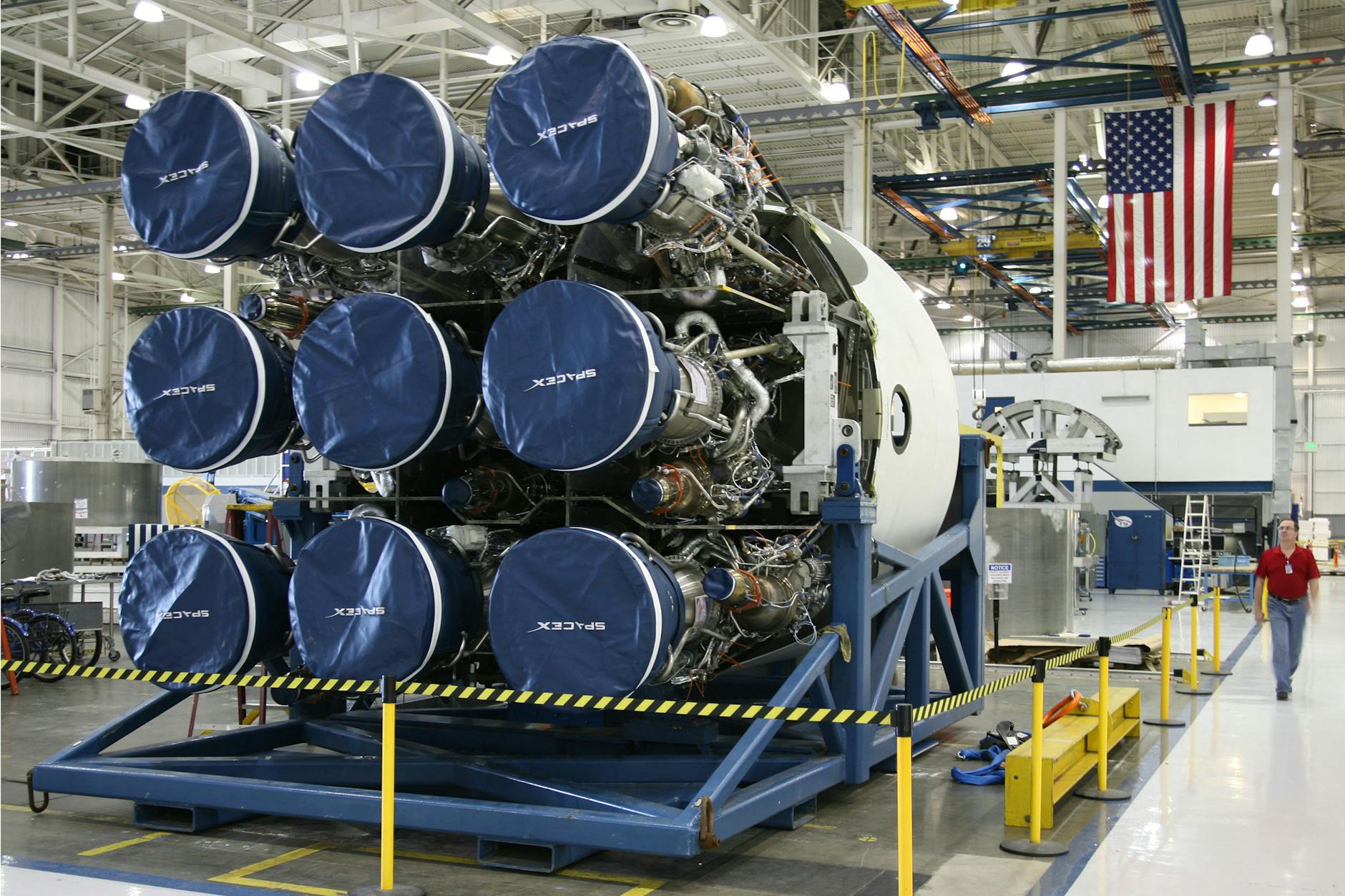
Anthropic’s SpaceX Compute Deal Signals a New Phase in Frontier AI
In a move that tightens ties between two high-profile players in the AI race, Anthropic’s SpaceX compute deal expands access to the Colossus supercomputer in Memphis and promises to accelerate capacity for Claude Pro and Claude Max subscribers. The arrangement comes as the AI data center boom has grown into a political and cultural conversation, with critics raising energy and safety concerns even as demand for ever-faster models keeps rising.
Industry observers say the agreement embodies a broader shift: compute power is becoming a central bottleneck for AI progress, and firms are willing to anchor themselves to a single massive facility to ensure reliability and scale. The Colossus cluster, famed for housing tens of thousands of GPUs, sits at the heart of this dynamic, now supported by a multi-year expansion tied to Anthropic’s latest product lineup. The news is timely not just for crypto-tinted tech circles, but for households watching the price of AI-enabled services edge closer to routine daily use.
Anthropic, known for its emphasis on AI safety, is leveraging SpaceX’s AI compute ecosystem to push past recent usage caps that frustrated Claude Pro and Claude Max customers. The company cited a need to balance reliability with safety controls as demand for higher-performance deployments grows. In a field where software updates can outpace hardware capacity in weeks, the ability to lean on a dedicated, highly powered data center matters to end users and to enterprise buyers alike.
anthropic’s spacex compute deal: What it covers
The core of the agreement centers on access to SpaceX’s Colossus facility’s massive GPU cohort, including the latest Nvidia accelerators. Industry insiders describe Colossus as one of the most compute-dense installations in North America, designed to support frontier AI workloads and the rising need for private, enterprise-grade inference and training. The parties did not disclose a public price tag, but sources familiar with the arrangement described it as a multi-year commitment intended to scale with demand for Claude Pro and Claude Max support tiers.
A SpaceX spokesperson underscored the collaboration’s practical focus: “We are aligning capacity with customer demand while maintaining strict governance around safety and reliability.” An Anthropic representative echoed the sentiment, noting that the deal will help reduce wait times for key customers and accelerate feature rollouts tied to the company’s safety-first philosophy.
Data Center Backlash Grows: Energy, Misinformation, and Local Pushback
The Anthropic’s SpaceX compute deal arrives at a moment when the AI data center buildout has drawn scrutiny from policymakers, energy advocates, and local communities. Critics argue that the industry’s high power draw and rapid construction of new campuses strain local grids, elevate electricity costs for nearby residents, and shift land-use patterns in urban and peri-urban regions.
Conspiracy theories and misinformation about AI’s impact have also proliferated in online spaces, complicating public perception and regulatory risk. Analysts note that the online chatter tends to mix legitimate concerns about data privacy, security, and safety with unverified claims about autonomous machines taking over jobs or shaping political outcomes. The result is a climate in which investors must weigh real grievances—like grid resilience and transparent sourcing of energy—with the noise of social media narratives that can move markets as easily as a quarterly earnings beat.
What This Means for AI Investors and Consumers
For investors, the anthopic’s spacex compute deal highlights how the capital-intensive nature of AI projects is reshaping competitive dynamics. Firms that can lock long-term access to reliable, scaled compute networks may outperform rivals facing sporadic capacity constraints. In practice, this means potential gains for Anthropic if Claude Pro and Claude Max subscribers see meaningful improvements in uptime and capabilities, and for SpaceX if demand for its AI infrastructure grows at a faster pace than anticipated.
From a consumer perspective, more capable AI services could translate into faster, more accurate assistants, better automated analytics, and more robust enterprise tools. Yet the energy footprint and data governance questions remain front and center. As households increasingly rely on AI-powered features—from personal finance tools to automated budgeting assistants—public scrutiny over where compute happens and how it’s powered will persist.
Market and Policy Reactions: Early Signals
Analysts describe a tug-of-war between the push for advanced AI capabilities and the push for responsible deployment. On one hand, the anthropic’s spacex compute deal could set a new benchmark for reliability and scale, potentially pushing other technology integrators to negotiate similar capacity expansions. On the other hand, regulators and grid operators are watching how these multi-megawatt deployments affect energy markets and resilience planning, especially in states with tight or aging electrical infrastructure.
Policy researchers say the conversation has shifted from whether AI should be big to how big and how safe. Some policymakers are exploring targeted energy incentives for strategic AI clusters while advocating stricter reporting on energy use and cooling efficiency. In the immediate term, the market is watching for signals about capacity supply, pricing trends for large-scale AI compute, and the speed at which AI services begin to reflect these new capabilities in consumer pricing and enterprise licensing.
Key Data Points and Timeline
- Colossus: The Memphis-based supercomputer housing tens of thousands of Nvidia GPUs, central to the anthopic’s spacex compute deal.
- Current capacity: More than 220,000 Nvidia GPUs reported to be linked to Colossus’ expanding footprint.
- Parties: Anthropic and SpaceX AI unit (SpaceX AI) collaborating on compute expansion for Claude Pro and Claude Max.
- Timeline: Groundbreakings and early expansions dated to 2024, with new capacity rolling out through 2025 and continuing into 2026.
- Geography: Memphis, Tennessee, serves as the primary hub for the Colossus cluster linked to this deal.
- Strategic aim: Improve uptime, reduce usage limitations, and enable broader deployment of safety-first AI models.
What to Watch Next
Several factors will determine how the anthopic’s spacex compute deal reshapes the AI data center market and everyday AI experiences:
- Execution risk: How smoothly capacity expands without introducing new latency or reliability issues for Claude Pro and Claude Max users.
- Regulatory response: Whether policymakers accelerate landmark energy transparency requirements for hyperscale AI campuses or pursue new cyber and safety standards.
- Competitive moves: How other AI and cloud players respond with their own compute deals and campus expansions, potentially creating a new wave of capital-intensive partnerships.
- Consumer impact: The pace at which users feel tangible improvements in AI speed, accuracy, and safety in everyday apps and services.
Bottom Line for 2026
The anthopic’s spacex compute deal underscores a crossroads for frontier AI: scale is advancing, but accountability and energy considerations are rising in importance. The collaboration signals confidence that the next leap in AI capabilities will be built on a bedrock of robust, predictable compute, even as the public conversation around data centers—energy use, governance, and trust—continues to intensify. For now, households and investors alike should watch how capacity translates into real-world tools, and how policy-makers respond to an industry that has quickly evolved from backroom hardware discussions into a shared national attention point.

Discussion