Market Context
The space economy is entering a new growth phase as the U.S. government shifts from orbital demonstrations to long-term lunar infrastructure. NASA announced a first tranche of contracts worth hundreds of millions of dollars to four domestic firms, marking a clear step toward a permanent presence on the Moon. Analysts say the move could unlock new supply chains and create jobs across the tech and manufacturing sectors in the next five to ten years.
For investors, the broader takeaway is that government-backed space programs are becoming steadier sources of demand for specialized hardware. That has the potential to shape budgets, risk assessments, and portfolios that tilt toward aerospace, defense, and high-tech manufacturing. The next big question: how quickly will private partners scale up to meet ambitious timelines?
In Washington, lawmakers have signaled continued support for Artemis, the program that lays the groundwork for a lunar base. The contracts announced this week align with a plan to establish a lunar surface presence that can host crews, rovers, and autonomous systems while building out power, habitats, and communication networks over the coming decade.
"We’re laying the groundwork for a permanent, sustainable presence on the Moon," said Carlos Garcia-Galan, NASA’s Moon Base Program Executive. The comments underscore NASA’s intent to blend public funding with private-sector capabilities to accelerate practical outpost-building instead of relying on episodic missions alone.
From investors’ desks to contractor rosters, the emphasis has shifted toward a steady delivery timetable, with buy-in from multiple tech corridors across the United States. The first phase of the moon base project centers on transit hardware and autonomous systems rather than immediate human settlement.
Key Facts at a Glance
- Contract value: The initial awards total in the hundreds of millions, spread across four U.S. firms.
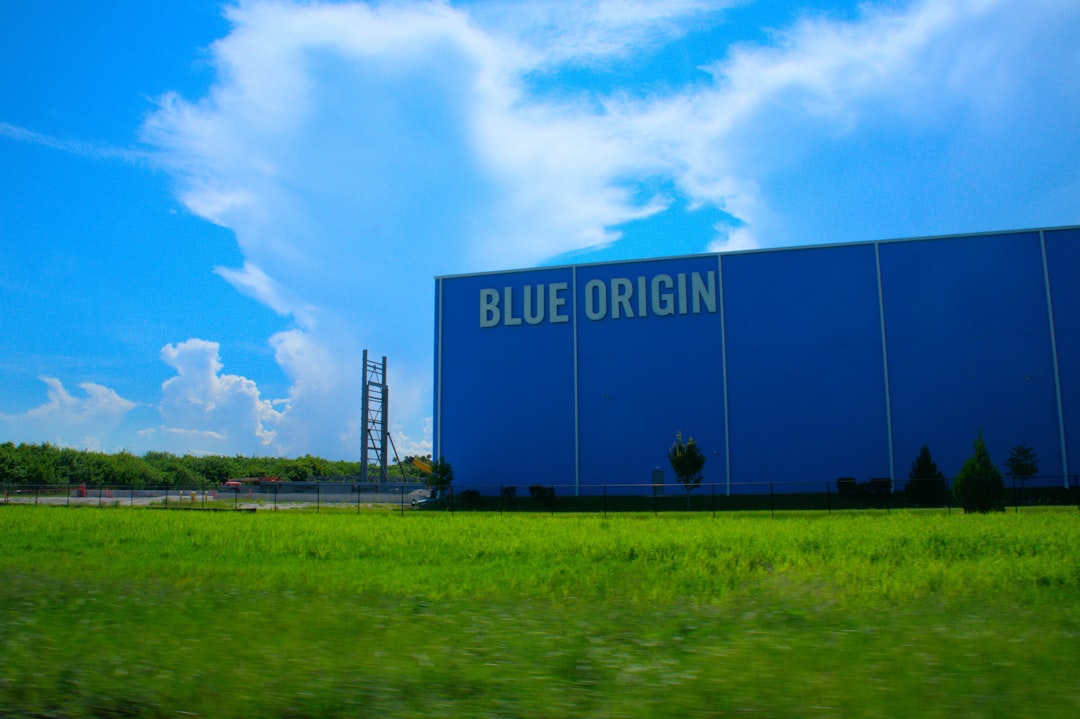
- Blue Origin Providing NASA: The company will supply a pair of lunar landers designed to shuttle lunar terrain vehicles to the surface near the Moon’s south pole.
- Vehicle partners: Astrolab and Lunar Outpost will develop the lunar terrain vehicles that the landers will deliver.
- Drones on the way: Firefly Aerospace is contracted to deliver the first drones to the Moon, expanding scout and survey capabilities on site.
- Timeline: Hardware is intended to arrive before the earliest Artemis crewed landings, potentially as soon as 2028.
- Artemis III: Planned for mid-2027 with crewed docking and surface operations contingent on successful lander integration.
- Phase two: From 2029 into the early 2030s, the moon base expands to include a power grid and larger surface infrastructure.
Blue Origin Providing NASA: Lander Strategy
The centerpiece of the deal is blue origin providing nasa landers, a naming convention NASA uses to describe how private vehicles will carry crucial surface assets to the lunar regolith. This arrangement is paired with two early partnerships—Astrolab and Lunar Outpost—responsible for the surface vehicle platforms that will ride into the Moon’s harsh environment. The near-term aim is to deliver rovers and mobile habitats that can operate autonomously for long stretches, reducing crew time on the surface while extending mission science and exploration.
The choice of a two-lander arrangement is designed to add redundancy and flexibility for crews and robotic assets. If one lander experiences a hiccup, the other can still deliver essential gear, including habitat components, power equipment, and mobility systems. The collaboration is being watched closely by contractors and suppliers across the supply chain, who expect a ripple effect in orders for radiation-hardened electronics, landing gear, and life-support modules.
Analysts note that blue origin providing nasa landers signals a broader transition in the space economy: when the government leans on private builders for critical assets, risk-sharing becomes a core feature of project design. A NASA spokesperson emphasized that private-public partnerships will be essential to meeting aggressive cadence goals while containing costs for taxpayers.
"This is a major step toward a broader commercial space economy, with sustained demand for specialized components and systems," said a Blue Origin spokesperson, speaking on background as the program evolves. The sentiment reflects a growing belief that lunar infrastructure will rely on repeatable, scalable tech rather than a single, high-visibility mission.
Other Contractors and Tech
Beyond the landers and rovers, the Artemis pipeline includes drones that can perform rapid scouting, mapping, and hazard assessment across the lunar surface. Firefly Aerospace is tasked with delivering the first batch of airborne systems for surface reconnaissance and environmental monitoring. The presence of Firefly—a company that achieved a successful lunar test flight in recent memory—helps validate a broader public-private approach to lunar operations.
In addition to Astrolab and Lunar Outpost, NASA’s plan includes other U.S. firms contributing to the lunar ecosystem, including propulsion, power generation, and communications technologies. This multi-pronged approach reduces single-point risk while fostering competition across key hardware categories.
Timelines, Risks, and Milestones
The moon-base program is built in phases. The initial phase focuses on delivering mobility and reconnaissance tools to the lunar surface. The second phase, starting around 2029, envisions a more permanent infrastructure that can support longer stays and more complex operations. A stabilizing factor for schedule is the readiness of the Orion crew capsule and the ability to dock with lunar assets in orbit around Earth, a step NASA aims to validate before broad surface deployment.
Nevertheless, observers caution that space projects of this scale carry inherent risks: budget shifts, technical hurdles, and weather or launch delays can cascade into timelines that stretch into the early 2030s. The lunar environment also presents supply-chain challenges—everything from heat shields to radiators must operate in extreme cold and radiation—so redundancy and supplier diversification are likely to remain hallmarks of the procurement plan.
Garcia-Galan stressed that the base will evolve with time: “Then we’ll be able to say, ‘Hey, we’re permanently here and we’re not giving it up.’” His comment points to a long-term vision for the Moon that intertwines scientific discovery, civil space, and commercial capabilities in a way that could reshape how the government contracts with the private sector over the coming decade.
Financial Implications for Investors and Households
For everyday investors, the practical impact of these announcements hinges on exposure to the broader space economy and the contractors that benefit from NASA’s outlays. While Blue Origin remains private and thus not directly tradeable, investors can gauge the sector through publicly traded suppliers that stand to gain from increased demand—especially those tied to propulsion, materials, and power systems used in lunar hardware.
The contracts provide a concrete signal that public funding will continue to support private development in high-technology manufacturing. That can translate into steady revenue streams for suppliers and potential supply-chain efficiency gains as scale improves. However, the sector’s performance remains tethered to political funding cycles and the cadence of Artemis missions, meaning volatility is a persistent feature alongside growth potential.
From a household finance perspective, space-related spending typically represents a small slice of long-term investment portfolios. Yet the public-interest angle—coupled with the technical know-how and manufacturing spin-offs—could underpin stronger demand for STEM education, specialized equipment, and commercial space services in the private sector. As government budgets evolve, households with exposure to industrials and tech firms may see the indirect effects through job creation and regional economic growth tied to major aerospace programs.
What to Watch Next
Key milestones ahead include the continued sequencing and validation of the Artemis schedule, the successful docking of NASA’s Orion with lunar landers in orbit, and the readiness of the first lunar terrain vehicles for deployment near the south pole. If timelines hold, the first crewed landing could occur as early as 2028, with the Moon base expanding into a multi-habitat, power-enabled outpost by the early 2030s.
Market watchers will also monitor how blue origin providing nasa assets performs to investors’ expectations—whether the private-public model translates into broader opportunities for domestic manufacturing and game-changing tech transfer. The next wave of announcements could further crystallize the role of private firms in sustaining long-term human activity beyond Earth, a prospect that could redefine risk and reward for a generation of space-focused investors.


Discussion