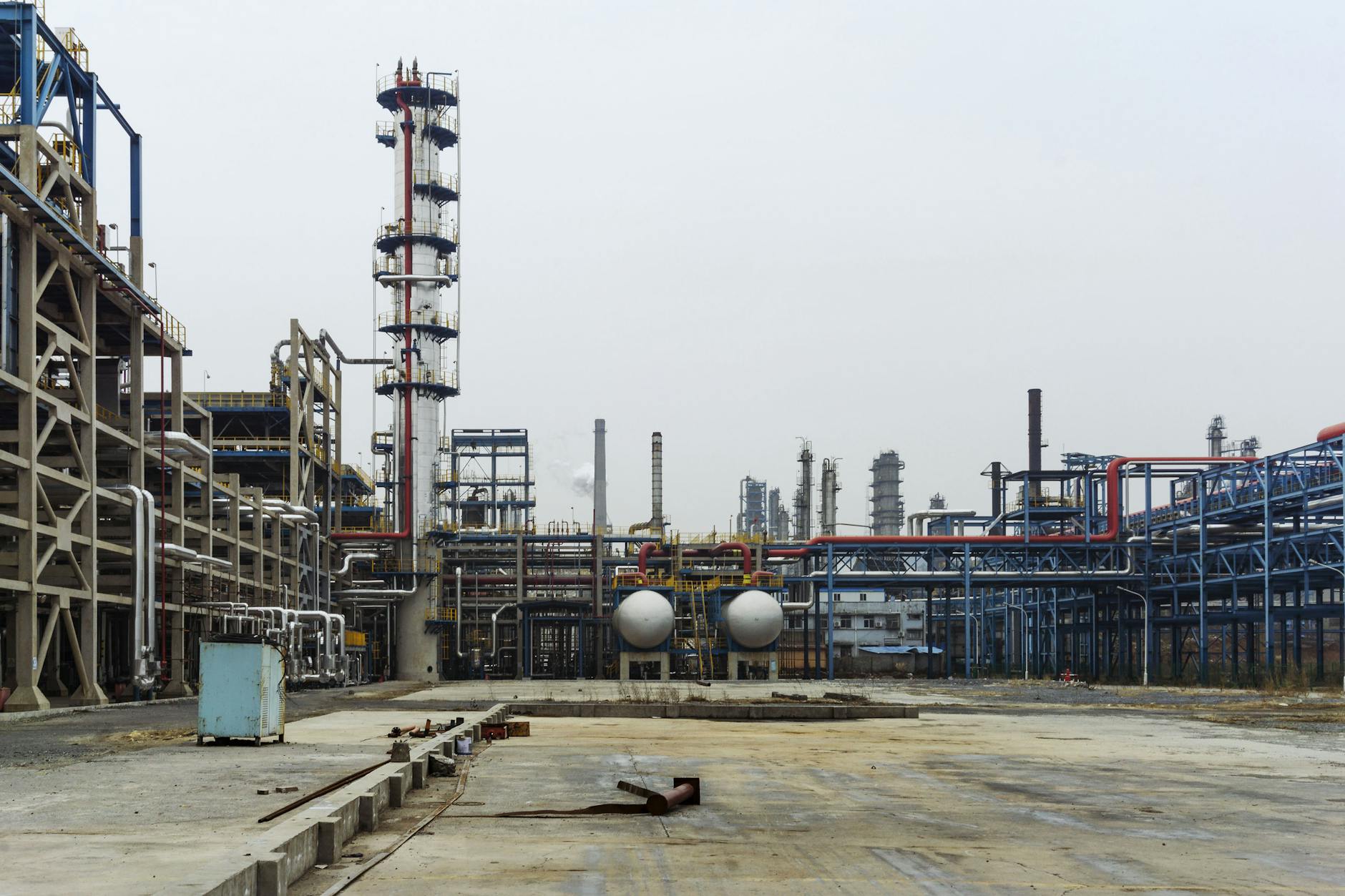
Global Shift: China Becomes a Hub for the World’s Assembly Lines
A new wave in global manufacturing is taking shape as China increasingly acts as a supplier of core components for final assembly elsewhere. The trend accelerates as U.S.-China trade cools and Southeast Asia expands its role as a regional factory floor. In practical terms, more cameras, chips, batteries and other parts are crossing borders into Southeast Asia, where assembly lines turn them into consumer devices for global markets.
Experts say the change is less about Chinese products disappearing and more about China becoming the central source of subsystems that power the world’s electronics and devices. A McKinsey Global Institute analysis released this week highlights how the flow of intermediate goods—think processors, memory chips and lithium-ion batteries—has surged even as demand for finished consumer goods softens.
Key Data From the Latest Economic Watch
- U.S.–China trade last year fell by roughly 30%, reflecting tariffs and a broader shift away from bilateral dependency.
- China’s exports of consumer goods declined about 2% year over year, while exports of intermediate goods rose near 9%.
- Southeast Asia’s exports climbed about 14% in the period, outpacing the global average and underscoring the region’s pivot to manufacturing hubs.
- Analysts describe a continuing “China plus one” strategy in which regional hubs attract final assembly while crucial components are still sourced from China.
What This Means for Personal Finance and Investors
For households, the shift could influence the prices and availability of electronics, as regional assembly lines mix with cheaper inputs from China. Investors may want to consider exposure to manufacturers of semiconductors, battery cells, and logistics firms that connect suppliers to assemblers across Asia and beyond.

Market watchers say this trend is unlikely to reverse soon. Instead, it could become a durable feature of the global economy: a network in which final goods are assembled closer to growing consumer markets, while the essential components originate from a centralized, high-volume producer—China.
Regional Dynamics: ASEAN as the New Trade Interface
ASEAN economies have emerged as a critical bridge between Chinese component suppliers and final assembly sites. Governments and private firms alike have prioritized port upgrades, energy reliability and skilled labor to keep supply chains moving. The result is a more resilient regional system, even when tariffs rise elsewhere.

“China becoming ‘factory factories,’ is reshaping how goods are designed, priced and delivered,” said Jeongmin Seong, a partner at McKinsey Global Institute. “The region acts as a matchmaker—organizing capacity, reducing costs and keeping the global chain from breaking.”
Why This Matters Now: The Timing and the Tactics
The current cycle—driven by tariff pressures, geopolitical tensions and pandemic-era resilience planning—has accelerated a re-timing of supply chains. Companies are increasingly signing long-term arrangements that lock in access to affordable inputs from China while diversifying final-assembly bases in Southeast Asia, India and beyond.
For individual investors, the key takeaway is the evolving risk-and-reward profile of manufacturing equities and related services. Firms that dominate in component production, logistics networks and regional manufacturing ecosystems could outperform as the global supply web tightens around a China-centric core.
Seong notes that the Southeast Asian market has demonstrated surprising endurance. “ASEAN exports grew faster than the global average for two consecutive years,” he adds, highlighting the region’s ability to attract investment, upgrade infrastructure and maintain steady demand for tools, machines and parts used in electronics and consumer devices.
Outlook: A World of Connected Factories
Industry observers expect the pattern to persist into 2026 and beyond, with several implications for households and markets:
- Component-led growth could soften some prices on finished devices as supply chains stabilize, even as final assembly costs remain sensitive to labor and energy prices.
- Supply-chain diversification may reduce the frequency of disruptive shortages, but it could also extend lead times for certain high-end components during peak cycles.
- Investors should monitor companies exposed to electronics components, semiconductor materials, and regional logistics hubs that enable rapid assembly and distribution.
As the world economy navigates these shifts, the phrase china becoming ‘factory factories,’ has become a shorthand for a new era of global manufacturing—one where China powers the backbone of global supply chains, and Southeast Asia takes the stage as the interface linking parts to finished products.
Discussion