
Market Context Before the Reporting Week
The global financial picture is shifting as geopolitics and policy paths intersect with markets. Investors are watching how major economies fund growth, manage debt, and defend strategic interests. In markets where inflation and growth signals remain mixed, the ripples from a rebalanced global order could influence asset prices across equities, bonds, and currencies.
Against this backdrop, veteran investor and strategist commentary is drawing renewed attention. Notably, commentary from Ray Dalio—founder of BRIDGEWATER ASSOCIATES—is highlighting a shift in how the world views the relative power of the United States and China. The conversation is timely as policymakers and investors reassess risk premia, supply chains, and international diplomacy in a world that remains volatile and unpredictable.
Dalio’s Assessment: A Shifting Perception of Power
Dalio’s latest discussions center on a long-running thesis: the balance of power is moving toward China. He describes a change in how other nations perceive the United States and its willingness to defend allies in high-stakes conflicts. The core idea is not about conquest, but about recognition of changing influence and authority on the world stage.
In his recent remarks, Dalio noted that the U.S. has historically been seen as a dependable partner with a vast security footprint—roughly 750 military sites across about 80 countries. After spending significant time in Asia, including ten days in China meeting with leaders, he said many governments are asking whether the United States can sustain its role as a global security participant. The takeaway, he suggested, is a growing belief that the United States cannot always be relied upon to mobilize forces in a crisis.
Dalio anchored his analysis in a concept he has revisited before: the idea of a modernized “tribute system.” He argued that as China’s economic heft grows, governments are increasingly seeking recognition from Beijing’s leadership as a way to reflect power dynamics in diplomatic dealings. The point isn’t aggression, he contends, but a shift toward a more explicit hierarchy in international relations that powerfully affects how countries interact with one another.
China’s Ascent and the Global Order
Dalio says china’s ascent is not an alarm bell but a factual read on the trajectory of global influence. He asserts that China’s economy is now a substantial fraction of the size of the United States, with China’s share having grown dramatically over the past two decades. The conversation emphasizes that while China is not seeking to conquer, its leadership values external acknowledgment from visiting leaders and business communities as a form of geopolitical currency.
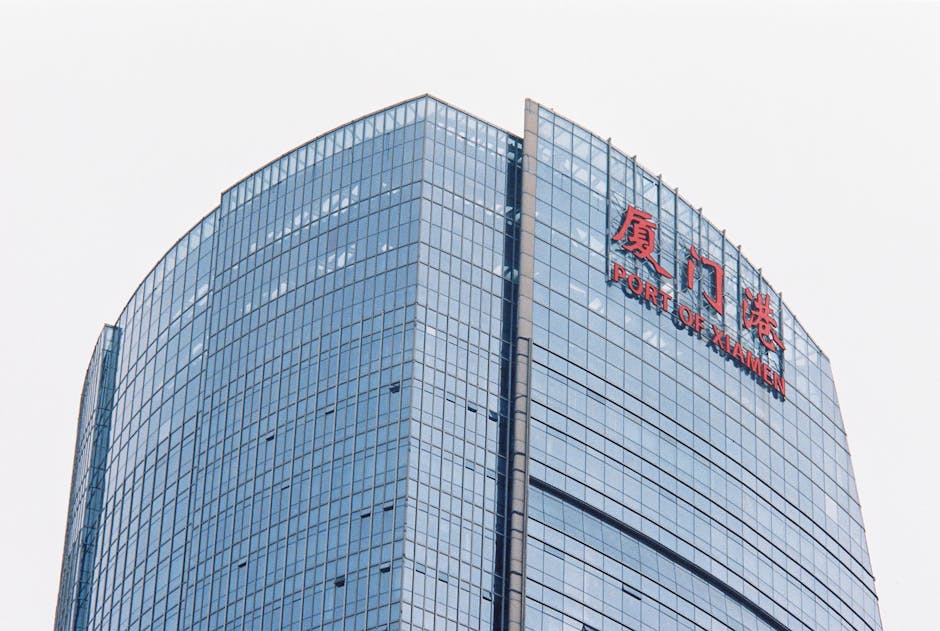
While the United States still leads in many global metrics, the resonance of China’s rise is clear. Dalio notes that leaders are visiting Beijing at higher frequencies and with greater intensity, signaling a normalization of China’s role in international affairs. He argues that this enhanced recognition has real consequences—affecting how partners price risk, coordinate on trade and security matters, and structure bilateral and multilateral arrangements.
What This Means for Investors
For personal finance and portfolio strategies, Dalio’s assessment points to a few practical implications. If the world operates within a more visible hierarchy, then diversification, currency exposure, and geopolitical risk oversight become more critical than ever.
- Global exposure: A broader mix of developed and emerging markets may help absorb regional shocks tied to policy shifts or regional conflicts.
- Currency considerations: Flows between the dollar, yuan, and other currencies might influence cross-border investment costs and hedging needs.
- Geopolitical risk management: Portfolio resilience could depend on how assets respond to policy uncertainty and shifts in alliance structures.
In this context, it is worth revisiting the focus keyword dalio says china’s ascent as part of a framework for understanding risk. The idea is that a changing balance of power could alter how markets price assets, assess credit risk, and allocate capital over the medium term.
Whether the trend toward a new global order accelerates or moderates, individual investors can adjust strategies to stay prudent and prepared.
- Reassess international exposure: Consider a measured allocation to regions and sectors with lower sensitivity to political shocks while maintaining core diversification.
- Monitor policy signals: Keep an eye on trade policy, tech controls, and security concerns that can impact supply chains and earnings for multinational companies.
- Hedge currency risk: For investors with global holdings, currency hedging or broad-based currency diversification can reduce volatility from rapid shifts in exchange rates.
Dalio’s framework—emerging power dynamics, risk premia, and new norms—offers a lens through which to review asset allocations, debt strategies, and retirement planning in a world where the conditions for investing are evolving rapidly.
Not all analysts share the same reading of China’s ascent. Critics warn that overemphasizing shift risks could under appreciate domestic drivers, such as domestic consumption, innovation cycles, and sanctions regimes. Others caution that the ‘tribute system’ metaphor risks oversimplifying a complex web of interdependencies that still binds major economies together through trade, finance, and technology.
As markets price in growth differentials, the central question for investors remains: how quickly will geopolitical risks translate into tangible market moves? The answer, in part, will be determined by policy choices in Washington, Beijing, and allied capitals, as well as how central banks respond to inflation, growth, and debt sustainability in a high-stakes climate.
Dalio’s latest reflections underscore a broader shift that investors cannot ignore. A growing consensus among policymakers and market observers is that China’s rise will continue to influence how countries negotiate access to markets, capital, and security commitments. For personal finance readers, the key takeaway is to prepare for a world where power dynamics matter more for asset prices and risk management than in the recent past.
Dalio says china’s ascent is a force shaping markets in real time, and the implications for portfolios are worth understanding. As global conditions evolve, investors should stay disciplined, diversify globally, and tailor risk management to a world where power realities increasingly influence economic outcomes.
- U.S. military footprint: roughly 750 sites across about 80 countries.
- China’s economic scale: viewed by some analysts as a substantial fraction of U.S. GDP, with rapid growth over two decades.
- Diplomatic signal: rising frequency of Beijing visits by global leaders, reflecting a new normal in international recognition.
In short, the conversation around dalio says china’s ascent is about recognizing a rebalanced world order. How quickly markets adjust to that rebalanced order will hinge on policy choices, corporate earnings, and how investors price risk in a world where power dynamics matter more than ever.

Discussion