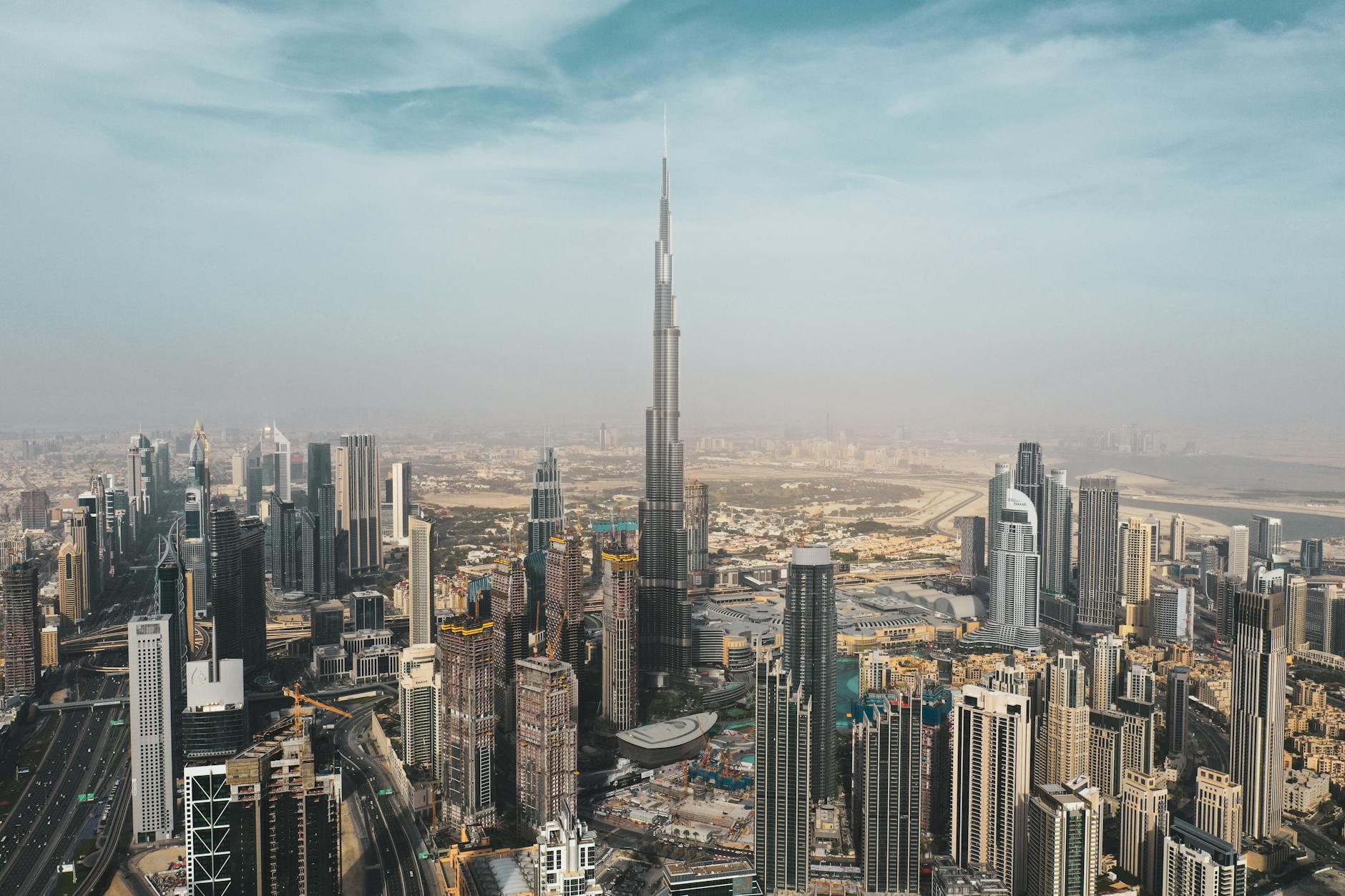
Breaking: Dubai’s worst nightmare unfolds as regional strikes escalate
Dubai woke up to a day of sirens and uncertainty as Iran launched a broad wave of missiles and drones across the Gulf. The city’s iconic skyline remained visible, but the mood shifted in an instant as defense systems intercepted payloads over the emirate. Officials confirmed injuries in a fire on Palm Jumeirah, where a luxury hotel reportedly took a hit from debris. In a matter of hours, confidence in the region’s long-standing safety narrative started to crack.
At the center of the crisis is a reality Dubai has trained to ignore: a sudden, external shock hitting a financial and commercial hub that investors have long treated as a sanctuary from broader regional risk. The incident is reverberating through the real economy and financial markets at a speed rarely seen in a city built on certainty. While the immediate human toll remains a focus, traders and policy makers are scrambling to price risk and stabilize sentiment.
Ground impact and public safety updates
Early reports describe injuries on the Palm Jumeirah, a man-made island known for luxury resorts and high-end residences. A high-profile hotel was struck by fragments from a missile that either failed to reach its target or was intercepted, according to officials. Debris fell across parts of Dubai and Abu Dhabi, triggering emergency responses and temporary flight diversions.
Dubai’s aviation authorities partially closed airspace and suspended some inbound and outbound flights as intercepts continued. Social media footage showed interceptors lighting the night sky, a jarring sight for residents who have grown accustomed to uninterrupted travel and energy flow in a region often framed as a global corridor for business and tourism.
In parallel, regional governments reported other strikes across the Gulf, including a service center at a U.S. base and residential buildings in nearby states. Kuwait reported injuries at a passenger terminal following a drone strike, while Qatar intercepted several waves of airstrikes and suspended some flights. The magnitude of disruption has stunned many in a market that has for years priced Gulf risk at a premium but never assumed this scale of direct theater threat near a major financial capital.
Immediate market and economic reactions
The disruption rocked Dubai’s financial markers and altered the risk calculus for investors who had grown accustomed to a tolerant stance on volatility. The Dubai Financial Market Index fell sharply in early trading, with traders citing risk-off behavior as fund managers reassessed exposure to real estate, banks, and capital-intensive sectors tied to urban growth. In parallel, Abu Dhabi’s benchmark index extended losses as regional liquidity pools tightened and banks paused some new lending commitments to reprice risk.

Gold prices surged as investors sought a traditional safe haven, while crude oil climbed on supply concerns and the potential for further regional disruption. Analysts noted that energy stocks across the Gulf could see heightened volatility as producers re-evaluate capacity constraints and transport routes. The broader implication for energy-linked economies is a shift toward hedging and more cautious guidance for capital projects tied to large-scale developments in Dubai and the wider UAE.
In Dubai, central banks and regulators signaled that liquidity and essential services would be preserved even as markets priced in a higher risk premium. A government statement urged residents not to panic and to maintain basic supply readiness, while officials highlighted robust strategic reserves of food and key commodities. The message was clear: while fear may be contagious, the system remains equipped to weather a sudden geopolitical blow.
Corporate responses and the risk landscape for personal finances
Financial institutions operating in the Dubai-Ras Al Khaimah corridor moved quickly to shore up liquidity and reassess risk exposures. Banks announced temporary measures to review credit lines and tighten risk controls on cross-border lending. Insurance companies began revisiting catastrophe models and re-pricing property coverage in the Gulf coast, citing higher claim expectations in the near term.
Real estate developers and property managers faced a new wave of market risk. With travel and tourism disrupted and investor sentiment waning, questions about project timelines and financing costs resurfaced. Some developers paused new launches while awaiting clarity on government policy and the trajectory of regional tensions.
From a personal-finance perspective, households likely to feel the most pressure are those with variable-rate loans, adjustable-rate mortgages, or exposures tied to high-end residential properties. Financial advisers emphasize maintaining emergency funds, avoiding over-leveraged positions, and diversifying portfolios to include assets with lower correlation to Gulf risk, such as foreign-currency hedges, broad-based equity funds, and high-grade government bonds in diversified geographies.
Analysts are watching for qualitative signals on consumer behavior. Early observations suggest a pullback in discretionary spending and a rise in precautionary savings as families assess the potential for longer disruptions in travel, school schedules, and daily commuting. The phrase dubai’s worst nightmare unfolds has circulated in risk-management circles as a shorthand for the sudden need to recalibrate models that once assumed a stable risk environment in a global financial hub.
Government actions and the policy path forward
Regional authorities moved to stabilize air travel, communicate with international partners, and prevent a full-blown liquidity squeeze. The UAE and neighboring governments pledged to keep critical infrastructure operating and to provide clear, timely updates as the situation evolves. Officials stressed that while military activity is ongoing, civilian life and essential services would be prioritized.
Market watchers will be focused on policy signals in the coming days. A key question is whether the episode accelerates a broader shift in Gulf risk premia, prompting more conservative investment strategies from global pension funds and sovereign wealth funds that have long viewed the Gulf as a relatively stable growth corridor. In this environment, the phrase dubai’s worst nightmare unfolds serves as a reminder that even the safest-seeming financial centers must contend with real-world risk that can leap from headlines to portfolios overnight.
What this means for Dubai residents and investors
- Expect continued volatility in equities tied to real estate, hospitality, and construction assets.
- Insurance costs may rise for property and casualty coverage, especially for high-value homes and commercial properties near coastal zones.
- Gold and select safe-haven currencies could remain well bid as investors seek balance in a shifting risk landscape.
- Diversification remains essential; consider a mix that spans regional exposure, international equities, and fixed-income assets with strong credit quality.
For households actively saving for education, a home purchase, or retirement, the current environment underscores the value of orderly budgeting and prudent risk management. Financial counselors stress rechecking debt service coverage ratios, reviewing loan term structures, and avoiding aggressive leverage as markets evolve in real time. As the crisis unfolds, the city’s status as a regional hub will hinge on the speed and clarity of policy responses, the resilience of its financial system, and the ability of residents to stay informed and prepared. In the next 24 to 72 hours, the market’s mood will hinge on whether authorities can demonstrate control and continuity—factors that will determine if dubai’s worst nightmare unfolds further into a long-running risk event or is contained to a shorter, albeit painful, disruption.

Looking ahead: risk, resilience, and recovery paths
The immediate priority for Dubai’s financial ecosystem is stabilization. Traders want concrete timelines for flight resumptions, infrastructure restoration, and the return of risk appetite to pre-crisis levels. Beyond the daily price swings, observers say the event could reshape patience with leverage, the appetite for offshore hedges, and the pace of infrastructure financing for new developments near the coastline and financial districts.
Policy makers and market participants acknowledge that the road to recovery will be conditional on credible, transparent communications and the ability to reassure both local residents and foreign investors. The UAE’s long-term growth story rests on a delicate balance between security, economic openness, and prudent risk management. If authorities can maintain that balance, the region may not only stabilize but accelerate a measured pivot toward more diversified growth channels that protect Dubai’s reputation as a global financial center even as geopolitical headwinds persist. For now, the focus remains on immediate safety, swift information, and disciplined financial decision-making as dubai’s worst nightmare unfolds in real time and tests the city’s capacity to adapt under pressure.
Discussion