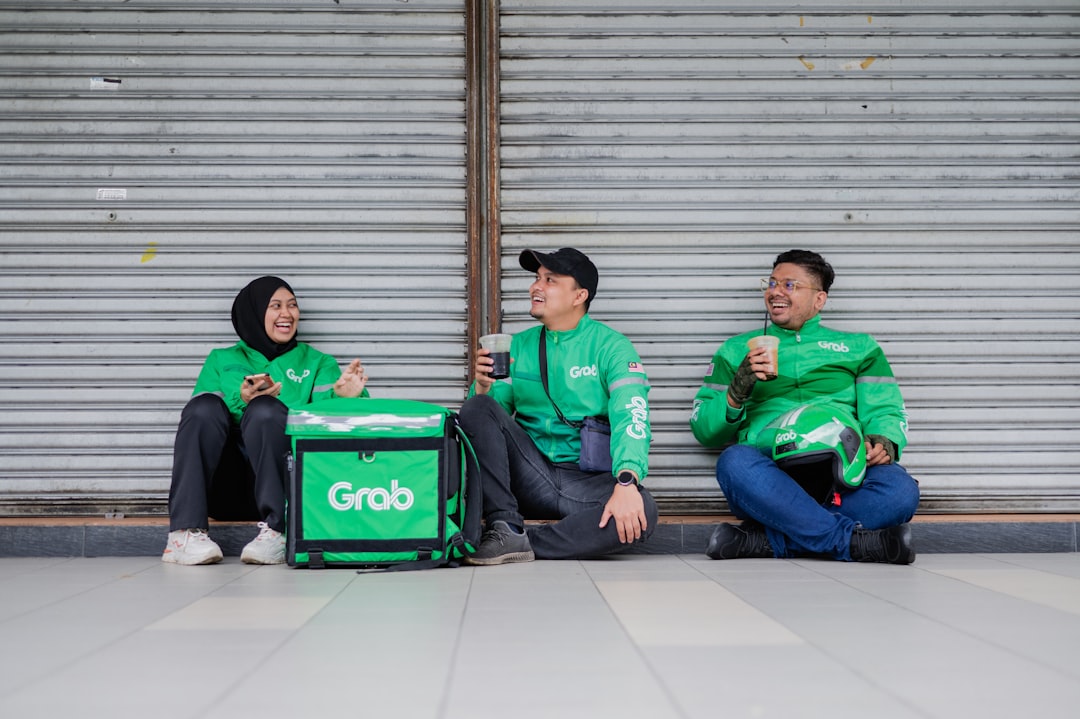
Grab’s Push Into Physical AI Gets a Real-World Test in Singapore
Grab is accelerating its plan to merge software with hardware, betting that physical AI and autonomous driving will broaden the reach of its superapp. On May 20, the company confirmed that its delivery robot Carri will begin operations in Singapore’s Punggol district—a controlled test bed for new robotic services and urban logistics. This marks a tangible step from app features to tangible assets deployed in city life, with implications for customers, drivers, and investors alike.
Grab has long courted the idea that a single app can orchestrate mobility, payments, food, and financial services. The latest move folds robotics into that strategy, inviting customers to experience faster deliveries and enhanced safety through automation. In interviews with executives, the company has framed the push as part of a broader effort to blend physical automation with a digital ecosystem, rather than a separate sideline project.
In the words of Grab’s chief technology officer, the company intends to keep a flexible approach. “If you go to the Grab office now, you’ll see robots from other companies as well,” he said, underscoring a practical, 1+n strategy that values exposure to multiple hardware suppliers. “We don’t oblige our business units to just use our robots.”
The objective is not simply novelty. If Carri proves scalable, it could lower delivery times, improve reliability in dense urban areas, and help the platform maintain a competitive edge as e-commerce and on-demand services surge across Southeast Asia. The Singapore deployment aligns with regional pilots aimed at reducing human labor costs while maintaining safety standards in crowded neighborhoods.
A 1+n Robotics Play: Office Labs Meet Street Deployments
Grab’s robotics program sits at the intersection of product engineering, safety testing, and market testing. In its Singapore headquarters, Carri is not the only robot in the hallway. The company has integrated a mix of devices from several robotics vendors, with engineers comparing performance, maintenance, and safety metrics in real time. The approach is explicit in Grab’s leadership discussions: diversify the robot ecosystem to avoid dependency on a single supplier and accelerate learning across use cases.
A spokesman for the team emphasized that the office environment acts as a living lab for the hardware-software stack. By evaluating hardware from different vendors, Grab can fine-tune its software layer—navigation, obstacle avoidance, route optimization, battery management, and integration with the broader Grab tech stack—without waiting for a single vendor roadmap. The immediate benefits are operational: smoother pilot programs, faster iteration cycles, and a clearer path to scale if the technology proves cost-effective.
- Carri’s first live deliveries in Punggol will test last-mile routes and curbside handoffs in a Singaporean context renowned for its smart city initiatives.
- Robots from other vendors in Grab offices provide a direct contrast to internal hardware and help the company benchmark performance and reliability across ecosystems.
- The 1+n approach lowers the risk of vendor lock-in while broadening the data set Grab can use to improve its autonomous services and safety protocols.
For investors and customers, the practical question is whether this hardware push translates into faster, cheaper, and safer deliveries. If Carri and peers can consistently outperform human drivers on certain routes, Grab can reallocate resources toward growth areas such as micro-fulfillment, delivery windows, and loyalty programs tied to faster service.
Behind the Mantra: The CTO’s Long Arc and Startup Roots
Paradatheth joined Grab in its earliest incarnation as MyTeksi and has held a string of engineering leadership roles as the company evolved into a Southeast Asian tech powerhouse. He recalls the company’s initial mission of making taxis safer, a goal he describes as a personal motivator given family experiences with ride-hailing safety concerns. Over time, his portfolio expanded to include research and development leadership and, eventually, the role of chief technology officer in 2022.
“A lot of folks have grown with the company, just like me,” he said, noting that many senior leaders were once interns or early engineers who rose through the ranks. The robotics push is framed as a continuation of Grab’s broader mission to make everyday life easier through technology, while anchoring the business in a Southeast Asian context where urban logistics challenges are most acute.
From Kuala Lumpur to Singapore, the CTO’s career mirrors Grab’s geographic and strategic expansion. He frames the robotics effort not as a replacement for drivers, but as a way to expand service coverage, increase safety, and create new data-driven service layers that can be monetized beyond ride-hailing alone. The hardware-software loop, he argues, will eventually feed into new financial services and loyalty constructs tied to speed, reliability, and predictability of delivery windows.
What This Means for Grab’s Sees Superapp’s Push and Personal Finances
For everyday users and investors, the central question is how grab’s sees superapp’s push translates into tangible value. On one hand, autonomous delivery and robotics may reduce operating costs, enabling more aggressive pricing or promotional offers that can attract and retain users in a highly competitive market. On the other hand, the initial cost of robots, maintenance, and regulatory compliance could weigh on near-term margins as the company scales pilots and handles safety incidents or downtime.
From a consumer perspective, faster deliveries and safer rides could improve user satisfaction and increase the value proposition of the superapp across food, groceries, and transport services. If robotic systems deliver more predictable service levels, customers may be more willing to rely on Grab for daily needs, reinforcing the network effects that underpin the app’s financial ecosystem.
For drivers, the shift could alter the balance of risk and opportunity. Automation may smooth out peak-time demand signals or layer new revenue streams on top of existing driver earnings as robots handle repetitive tasks and free up human labor for complex or high-touch scenarios. However, investors will want to monitor capital expenditure and the pace at which savings translate into higher net income and free cash flow.
grab’s sees superapp’s push is still evolving, and the road ahead includes regulatory scrutiny, especially around safety, data privacy, and urban mobility policies. Southeast Asia’s regulatory environment continues to adapt to autonomous systems, and Grab will need to demonstrate consistent safety outcomes and transparent governance to sustain growth in multiple markets.
Market Context and the Road Ahead
Analysts say the robotics track is a natural extension of Grab’s existing superapp, but it also introduces new risks and opportunities as regional tech valuations hinge on growth above all else. The company’s ability to scale robot-enabled services without eroding margins will depend on negotiating hardware costs, optimizing software, and maintaining robust safety and user trust. In the current market climate, where cloud, AI, and automation investments are common but not uniformly profitable, Grab’s strategic bets on physical AI could differentiate it if execution remains disciplined and customer-centric.
Some observers caution that a heavy emphasis on robotics could slow progress in other core areas if capital is diverted too aggressively. Yet others see the initiative as a natural hedge against labor shortages and inflationary pressures that make human-intensive logistics more expensive over time. In this light, grab’s sees superapp’s push becomes not just a technology project but a test of how a super app can evolve into a multi-asset platform spanning software, hardware, and services across the region.
What to Watch Next
- Delivery performance: Will Carri achieve faster delivery times in high-demand corridors like Punggol?
- Vendor diversity: How will the 1+n strategy shape cost structures and maintenance schedules across office labs and live deployments?
- Safety and regulation: What benchmarks will regulators require as hardware expands into public spaces?
- Financial impact: When will robotics-driven efficiency translate into measurable improvements in margins and cash flow?
- User value: Will customers perceive a meaningful difference in reliability and speed, and how will this affect app usage and spending?
The initiative is still in its early innings, but the pattern is clear: grab’s sees superapp’s push into physical AI and automated driving is a long-term bet on a more capable, configurable, and resilient platform. If the pilots succeed, the company could accelerate growth across its broad array of services while redefining what a Southeast Asian superapp can look like in the age of autonomous logistics.
Bottom Line
Grab is betting that the future of its superapp lies in a tightly integrated hardware layer that complements its software and payments network. The public test of Carri in Singapore and the office-wide embrace of multi-vendor robotics illustrate a bold strategy to blend human labor with intelligent machines. For investors and consumers, the next chapters will hinge on cost discipline, safety outcomes, and the degree to which automation translates into faster, cheaper, and more reliable service across Grab’s ecosystem. As grab’s sees superapp’s push unfolds, the market will be watching for signs that technology-driven efficiency can translate into real, steady value for users and shareholders alike.
Discussion