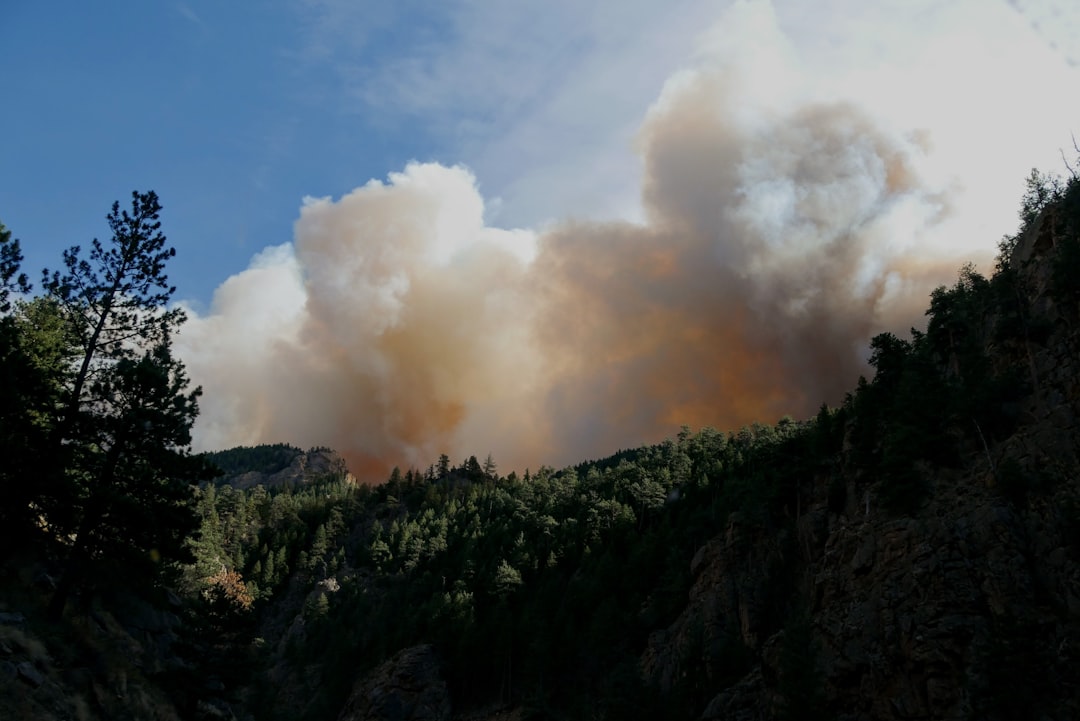
Global Toll Exceeds Expectations Even With a Quiet Fire Year
In 2025, the world saw a wildfire season that many described as quiet by acres burned, yet its financial punch was unmistakable. A new study published in Nature Reviews Earth & Environment confirms that last year ‘quiet’ wildfires still produced the costliest losses on record for insurance tied to natural hazards. The discrepancy between the size of the burned area and the cost to households and insurers is forcing a reevaluation of risk in personal finance planning.
Researchers report that insured losses tied to wildfires and other natural hazards accounted for about 38% of all insured losses from natural disasters last year. The figure comes as the global burned area hovered around 335 million hectares (about 1.3 million square miles) — well below the long-term average of roughly 400 million hectares. In plain terms, the earth burned less than typical years, but the financial footprint remained enormous.
Beyond the dollars, the human cost was sharp: roughly 90 lives were lost and around 300,000 people were evacuated worldwide. These humanitarian figures, paired with the insurance data, illustrate a persistent risk pattern: fires are moving into more densely populated areas even when total area burned is lower than usual.
Why a Smaller Burn Can Mean Bigger Costs
Experts say several factors help explain why last year ‘quiet’ wildfires generated record insurance costs. Property values in fire-prone zones, the growing frequency of urban-wildland interfaces, and rising expenditures tied to rebuilding and labor all magnified losses when fires struck.

Insurance economist Dr. Maya Chen notes that the risk landscape is changing faster than the burned area might suggest. “We’re seeing a growing mismatch between how big a fire is and how much money it costs when it reaches homes and critical infrastructure,” Chen said. “That tension is reshaping how households think about deductible levels, coverage limits, and years of coverage beyond simple renewal.”
Regional Highlights: Canada, South Korea, and Los Angeles
Several high-profile blazes highlighted last year’s risk pattern. In Canada, authorities faced costly fires that strained homeowners’ policies and prompted renewed focus on risk mitigation in wildfire-prone provinces. In South Korea, severe fires tested urban and suburban resilience, pushing insurers to reassess coverage in densely populated districts. And in the Los Angeles region, a string of blazes underscored how climate-driven fires are reshaping the economics of home insurance in major metropolitan areas.
These regional episodes paint a broader picture: even with a smaller burned footprint globally, local fires can trigger outsized losses when they hit populated neighborhoods, critical facilities, or tourism-driven economies.
- Global area burned: approximately 335 million hectares (about 1.3 million square miles).
- Fatalities worldwide: around 90 people.
- Evacuations: about 300,000 people displaced.
- Share of insured losses from wildfires and natural hazards: roughly 38% of total insured losses related to natural hazards.
- Long-term average area burned: around 400 million hectares.
The takeaway for households and investors is clear: risk is increasingly defined by exposure and resilience, not just the size of a fire season. The study’s authors emphasize that risk modeling needs to incorporate behavioral and urban planning factors, not just meteorological ones.
For individuals, the message is practical and urgent. Insurers are adjusting pricing and policy terms in response to evolving wildfire dynamics, and households should anticipate changes in premiums and coverage options. While some regions have seen a moderation in premiums after earlier spikes, the trajectory remains uncertain as climate risk compounds with construction costs and labor shortages.
Financial planners say the most prudent moves include reviewing homeowners policy alongside inflation riders, ensuring adequate dwelling coverage, and understanding how deductibles interact with ever-higher rebuild costs. In an era of climate volatility, a robust emergency fund and a clear plan for temporary housing after a loss are increasingly essential parts of a sound personal-finance strategy.
- Reassess dwelling coverage to reflect current rebuild costs, not just market value.
- Consider higher deductibles if premiums are unaffordable, but pair with a funded emergency reserve for out-of-pocket costs.
- Verify additional living expenses coverage to ensure temporary housing costs are covered after a wildfire loss.
- Review any policy exclusions and riders (eg, equipment or contents in detached structures) that could affect recovery speed.
- Keep current with community risk-reduction programs and local building codes that reduce fire spread and improve resilience.
The disconnect between area burned and losses has broad implications for the financial markets and policy design. Reinsurance pricing, catastrophe bonds, and risk-transfer instruments are all being re-priced to reflect the higher cost of wildfire risk in populated areas. Policymakers and insurers are examining how to better align land-use planning with climate risk, aiming to reduce vulnerability in the most exposed communities.
As a result, households could see longer-term shifts in how they build, insure, and store valuables. The study’s authors argue that better predictive models—incorporating climate trends, urban growth, and socio-economic factors—will be essential for stabilizing costs and providing reliable coverage in the years to come.
Forecasts for the 2026 wildfire season remain uncertain, with climate data suggesting that hotter, drier conditions may re-emerge in several regions. Yet the enduring lesson from last year ‘quiet’ wildfires is that the absence of dramatic fire totals does not guarantee a muted financial impact. For investors and homeowners alike, the risk calculus has shifted toward preparedness and resilience as a core personal-finance concern.
In the end, last year ‘quiet’ wildfires served as a reminder: moments of calm in the burn chart do not equal calmer markets or households. The costs, measured in insured losses and rebuilt livelihoods, are still very real—and they are here to stay.
Quote attributed to an industry economist is illustrative and based on publicly available research. The article draws on recent studies and market data to reflect current conditions as of early 2026.


Discussion