
Singapore Airlines Defends Its Air India Bet Amid Record Revenue
Singapore Airlines released its fiscal 2025 results this week, posting record group revenue but a sharp drop in net income, pressured by losses tied to its stake in Air India. The carrier reported revenue of roughly SGD 20.5 billion for the year ending March 31, 2025, while net income fell to SGD 1.2 billion, down 57.4% from the prior year.
Air India contributed a sizable drag, with a reported SGD 945 million loss linked to the investment that stretches back to the Tata-era restructuring of India’s flag carrier. Despite the setback, SIA and its Scoot unit carried a combined 42.4 million passengers, underscoring a continued rebound in global air travel as travelers return to the skies.
Speaking at a May 15 briefing, Chief Executive Officer Goh Choon Pong emphasized that the Indian market remains a central pillar of the company’s longer-term growth plan. He noted the flexibility of SIA’s strategy and the breadth of opportunities in India’s expanding aviation network, even as near-term profitability cools from the post-pandemic surge.
In the wake of Air India’s troubles, SIA has faced questions about the wisdom of its cross-border investment strategy. The group has argued that the growth potential in India—driven by a rising middle class and an expanding airport network—could yield strategic benefits that outweigh current losses. The company has also pointed to synergies with its existing network, including Vistara’s integration into Air India’s broader platform under Tata Sons’ ownership.
Analysts say the issue now centers on execution risk and the speed of Air India’s turnaround, rather than the strategic premise alone. The market has watched Air India respond to a series of upheavals, including leadership changes and a shift in flight frequencies as the airline recalibrates its network in a challenging operating environment.
Why the India Bet Persists: Strategic Rationale
Singapore Airlines has long argued that its stake in Air India is about more than standalone profitability. The carrier insists the move secures a seat at the epicenter of a rapidly expanding aviation corridor that connects Europe, Africa, the Middle East, and Asia through Indian gateways. In practical terms, executives say a stronger India network could unlock ticketing and passenger flow across multiple hubs, boosting cross-sell opportunities for long-haul customers and increasing aircraft utilization.
During the briefing, Goh highlighted several factors that underpin the decision to stay the course:
- Growing Indian middle class and rising international travel demand that could lift future yields across the network.
- Expansion of airport capacity and regional connectivity that may shorten layovers and improve transfer times for travelers transiting through India.
- Strategic alignment with Tata Sons, which now controls Air India and has deep ties to SIA through historical partnerships and shared operating expertise.
To critics who worry about near-term losses, SIA’s leaders emphasize a patient, data-driven approach that prioritizes long-run network benefits over quarterly profitability. The company reiterated that the broader market backdrop—strong demand for international travel, resilient business travel, and a revival of premium cabin traffic—supports its long-term thesis.
The phrase that has circulated among investors and analysts is that the Air India venture is a hurdle race with a longer finish line. In official remarks, the leadership has made a point of describing the deal as a bet on scale, connectivity, and the ability to tap into one of the world’s fastest-growing air markets.
Air India: Turbulence, Turnaround, and Leadership Shifts
Air India’s performance has been a focal point for investors since Tata Sons took control of the airline. The restructuring has aimed to consolidate a sprawling fleet and optimize the carrier’s domestic and international route network. Yet the path to profitability remains unsettled, with ongoing scrutiny over safety reviews, governance, and operational efficiency following a series of incidents and regulatory challenges.
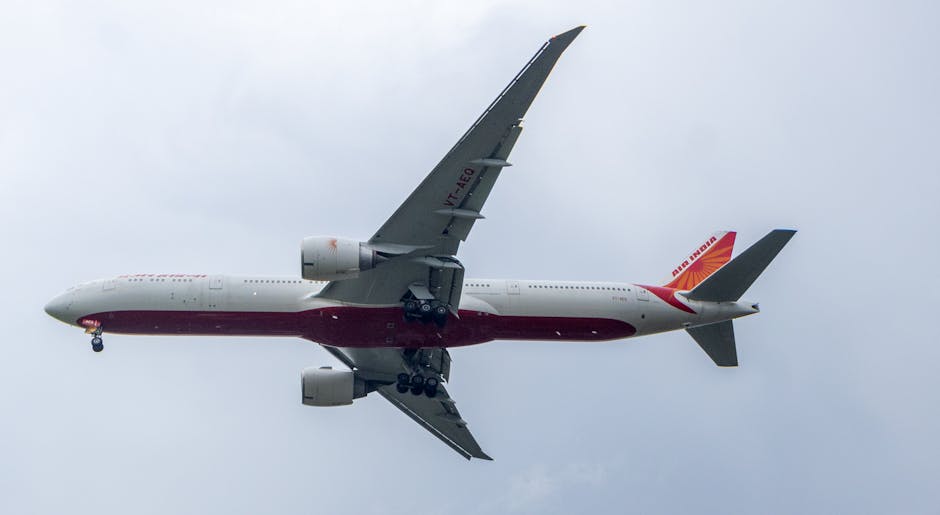
In a notable executive move, Campbell Wilson—once a top SIA executive and the CEO of Scoot—assumed leadership of Air India during the transition. Reports indicate he will step aside as the board seeks a long-term successor, a development that underscores the company’s evolving leadership and the complexity of turning around a national carrier while coordinating with a major investor like SIA.
Industry observers say that such leadership changes, while unsettling in the near term, can help stabilize a carrier under intense regulatory and market pressures. The Air India turnaround remains central to the broader strategy behind SIA’s investment, even as the broader market questions the pace of improvements in profitability.
Market Implications: Investors, Travelers, and the Road Ahead
For travelers, the SIA-Air India dynamic could translate into more streamlined international itineraries and a broader choice of premium options with smoother connections through India’s growing gateway network. For investors and bankers, the focus remains on how quickly Air India can deliver on cost discipline, fleet optimization, and network replication that could bolster overall margins for the Singapore Airlines group.
In the near term, the company’s results show a familiar pattern: record top-line demand and robust passenger volumes, offset by the cost of strategic investments and the ongoing integration burden. The balance sheet reflects a company navigating a revenue cycle that benefits from global travel demand while absorbing the headwinds of a high-stakes investment in a single market with structural challenges.
As the year unfolds, analysts will be monitoring several levers that could swing the narrative. These include the pace of Air India’s network rationalization, the effectiveness of capacity decisions in both India and key long-haul markets, currency exposure, fuel prices, and the evolving competition from other major carriers expanding in Asia and the Middle East.
What This Means for Singapore Airlines Defends Decision
At the core, the question is whether the strategic upside from a stronger India hub will compensate for the ongoing losses linked to Air India. Advocates argue that the collaboration with Tata and the possible upside from network synergies could improve overall profitability over a multi-year horizon. Critics, however, caution that continued losses could pressure cash flow and shareholder value if execution delays persist.
In this context, the phrase 'singapore airlines defends decision' has become part of the conversation about the company’s long-term strategy. The management has signaled that the investment is not merely a bet on Air India’s immediate profitability but a broader initiative to anchor Singapore Airlines’ position in a rapidly growing regional corridor. Analysts who subscribe to this view point to the combination of traffic growth, network reach, and potential cross-sell benefits as the key drivers of future gains.
Despite the uncertainties, SIA has maintained confidence in its approach. The leadership has stressed that the company will adjust capacity and routes in response to market signals, while continuing to pursue opportunities that could unlock value in the Indian market for years to come.
Bottom Line: A Strategic Bet With a Long Horizon
Singapore Airlines faces a delicate balancing act: protect near-term profitability while nurturing a high-potential, long-term growth engine tied to Air India and the broader Indian aviation market. The company’s latest results reflect both the benefits of a booming travel sector and the costs that come with a major strategic investment in a single market undergoing dramatic change.
The next few quarters will be telling as Air India stabilizes its operations and SIA presses forward with its network-expansion plans. If the longer-term payoff materializes, the investment could be viewed as a fundamental pillar of Singapore Airlines’ growth story in an era when cross-border air travel remains a critical lifeline for global commerce and consumer sentiment.
Discussion