Executive Summary: Napkin-Fold Pilot Signals a New Era for Hospitality
In May 2026, this south korean hotel began a pilot to train a robot to fold banquet napkins, turning a routine service into a data-rich test for physical AI. The project sits at the crossroads of labor costs, guest experience and the evolving role of machines inside service jobs. Industry observers say the effort reflects a broader push in Korea to blend human skill with machine learning in real-world settings.
What Is Physical AI and Why Hotels Are Investing
Physical AI combines software that can interpret the world with hardware capable of moving and acting in it. In South Korea, a growing number of companies are building AI that can perceive, decide and act in busy environments like hotels, warehouses and stores. RLWRLD, a Seoul-based AI developer, is compiling a library of human techniques—from how a chef handles a napkin to how a stockroom worker lifts a box—to teach robots to reproduce those moves. The aim is to deploy adaptable “humanoids” or dexterous robots across facilities, with the promise of steadier service and predictable costs.
While the science is still maturing, the Korean approach emphasizes practical dexterity: the way a hand twists, the angle of a wrist, the timing of a motion. The theory is that machines that can imitate these subtleties will outperform rigid, pre-programmed robots in complex service tasks.
Inside the Napkin-Folding Initiative at Lotte Hotel Seoul
Park, a veteran member of the hotel’s food and beverage team, is among roughly 10 staffers who have sensors attached to their hands to capture how they fold, wipe and present banquet items. Park has logged nine years with the Lotte Group, culminating in a role that blends craft and process improvement. The data that streams from the wearable devices is meant to train a robotic system to perform the same folds with consistency.
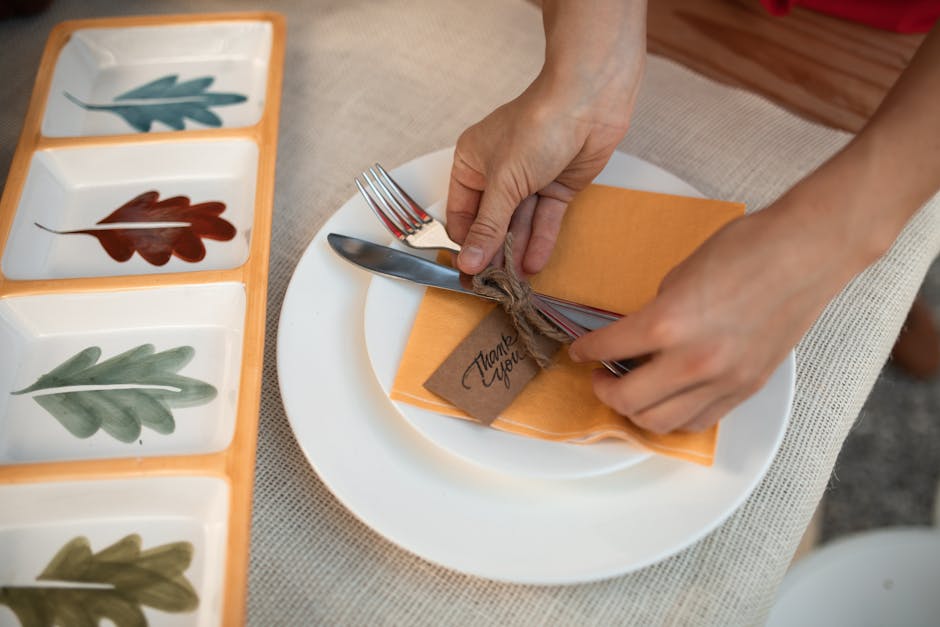
When the napkin is folded into a tight square, Park steps back to continue with other duties as engineers monitor a real-time data stream. He says, 'I’ve been documenting this routine about once a month.' The cameras and sensors are part of a controlled trial designed to minimize disruption to actual services while collecting scalable data.
RLWRLD notes that this hotel’s napkin project is just one node in a broader data-collection network across industries. The company has built similar datasets from logistics workers at CJ Logistics and from staff at Lawson, a Japanese convenience-store chain. The purpose is to assemble a robust AI layer that could someday support robots across factories, distribution centers and consumer-facing sites.
What This Means for Workers and Wages
For staff, the program sits at a pivotal juncture between upskilling and potential displacement. In sectors such as hospitality, where wage pressures have been persistent, automation is pitched as a way to stabilize guest service during peak hours while allowing workers to focus on higher-value tasks—like personalized guest interactions, event planning and problem solving when things go wrong.

Analysts emphasize that the financial appeal for hotels is tied to predictable operations and reduced turnover in high-traffic periods. The immediate effect for this and similar pilots is often a shift in job duties rather than a wholesale cut to frontline roles. Still, the presence of data-driven robotics raises questions about training pipelines, career paths and wage growth for staff who can demonstrate advanced skills in collaboration with machines.
- Labor costs remain a major expense for hotels, especially in a fast-rising wage environment across major Asian economies.
- Automation proponents argue that AI-assisted routines can free staff for guest-facing activities that require emotional intelligence and problem-solving.
- Critics caution that rapid automation could compress opportunities for lower-skilled workers unless there are deliberate training tracks and wage progression tied to new competencies.
For workers who participate in the program, there’s a tangible upside: exposure to modern technologies, new roles in robot-augmented teams and potentially higher earnings through specialized positions. For employers, the hope is a more uniform guest experience and the ability to scale service quality even as demand fluctuates with seasons and travel trends.
A RLWRLD engineer, Mina Cho, frames the challenge this way: 'Replicating the subtle movements of human hands is critical' if a robot is ever to become a dependable partner in service tasks, not a novelty gadget. The emphasis is on reliability, not just novelty, as the industry tests new forms of collaboration between people and machines.
Market Trends and the Path Forward
South Korea has positioned itself as a hub for physical AI research and commercialization. The government has offered incentives and pilots that blend robotics with real-world service tasks, aiming to accelerate deployment without sacrificing quality. The Lotte napkin exercise is emblematic of a broader strategy: collect diverse human techniques, convert them into machine-readable instructions, and gradually expand the robot’s repertoire across settings.
Industry watchers say the next wave will hinge on three factors: data quality, the ability to generalize learned tasks to new contexts, and the integration of robotics with frontline decision-making processes. If these elements align, hotels could standardize elements of service that are currently manual and time-consuming, freeing up staff to handle exceptions and guest needs with greater speed and consistency.
Timing, Risks and Opportunities for Investors
For investors, the napkin-folding project signals a test bed for a new kind of hospitality tech stock story. The return metric isn’t simply a single price-per-task calculation; it’s a composite of guest satisfaction, labor leverage during peak periods and the ability to maintain a premium service standard in the face of rising wage costs. The market is watching to see whether pilots like this south korean hotel can translate into scalable, cost-effective deployments across multiple brands and markets.

Observers also note regulatory and safety considerations as robots enter front-of-house workflows. Ensuring that dexterous robots can operate around guests without causing disruption or safety concerns is a nontrivial hurdle, and it may shape how quickly hotels adopt more aggressive automation programs.
Conclusion: The New Normal for This South Korean Hotel and Its Industry
As guests increasingly expect seamless service with minimal delays, the hospitality sector is testing a model that blends human skill with machine learning. This south korean hotel is experimenting with the basic unit of a service ritual—the napkin fold—because it represents a real-world, repeatable task that can be learned and refined by AI. If the data-backed approach proves reliable, the next steps could touch many routines across hotels, warehouses and retail stores, altering how workers are trained, how wages evolve and how guests experience efficiency and consistency in their stays.
In short, the pilot is about more than napkins. It’s about shaping a future where the interplay of people and robots defines the quality, cost structure and resilience of service industries in Korea and beyond.
Discussion