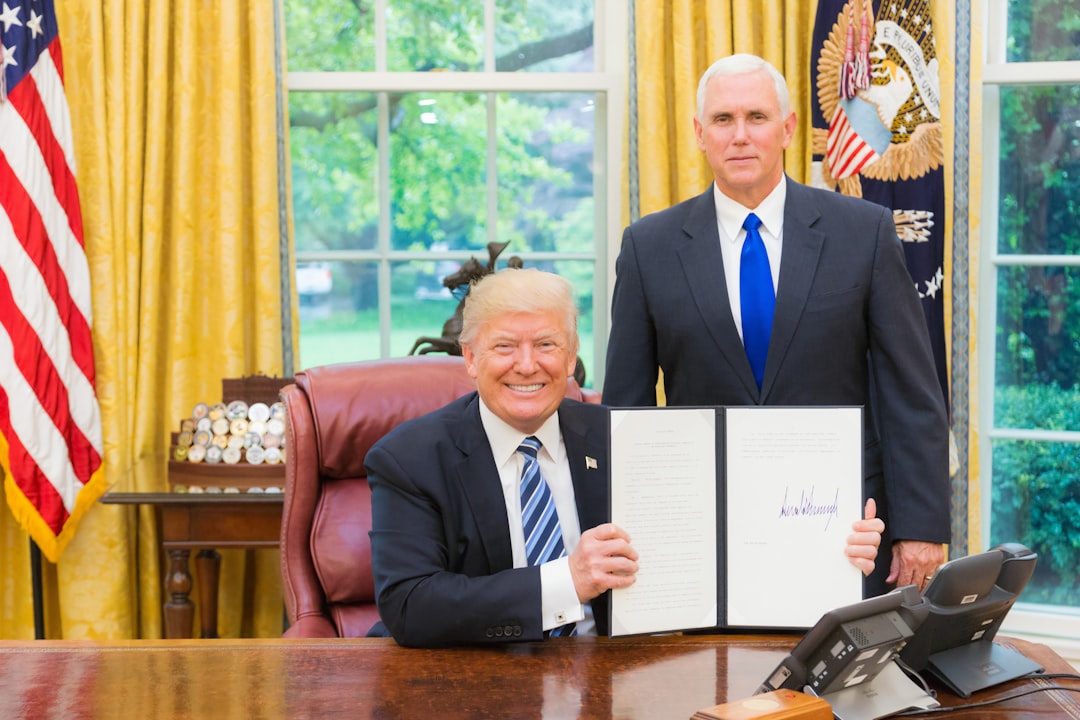
Breaking: Trump Pushes Iran Ceasefire Amid GOP Friction, Markets Watch
In a move that instantly polarized lawmakers and jolted financial markets, President Donald Trump publicly pushed ahead with a plan to end the Iran war by proposing a temporary ceasefire tied to a phased verification process. The approach, he said, could defuse a long-running geopolitical flashpoint while delivering a test of diplomacy on the world stage. Yet within hours, several Republican senators warned the terms risk leaving Tehran with leverage and potential long-term consequences. The administration responded that the plan was not yet final and would require careful review with allies in the Middle East.
From the opening bell to the late trading session, investors oscillated between optimism about de-escalation and caution about the unknowns embedded in the proposed framework. The focus quickly shifted to how such a deal would influence energy prices, defense spending, and the broader trajectory of U.S. foreign policy, all of which have clear implications for household budgets and retirement accounts.
What the Plan Entails — And What It Might Change
The outline under discussion aligns a temporary ceasefire with a structured, time-bound process intended to curb Tehran’s nuclear ambitions and reduce the risk of spikes in regional violence. Officials describe it as a staged agreement that could take weeks to negotiate, with milestones tied to verification mechanisms and sanctions calibration. The administration insists the framework is still evolving and that any final victory conditions have not been set in stone.
Analysts say the plan would attempt to avoid a sudden shift in the balance of power in the Gulf while giving U.S. allies a clearer path to stability. Critics, however, argue that the 60-day window for de-escalation could defang enforcement and allow Iran to preserve capabilities that would be difficult to dismantle later. The resulting debate is not just about doctrine; it has immediate implications for energy markets, defense procurement, and, by extension, personal finances across households nationwide.
GOP Critics Rush to Frame the Debate
Several high-profile Republicans weighed in within hours of Trump’s remarks. One veteran senator argued that any deal risking Iran’s ability to project power and to threaten regional energy infrastructure would be a strategic misstep. Another member cautioned that a temporary truce could be read as weakness and embolden Iran at a moment when the global oil market is already jittery. A third, who chairs a key committee on defense, warned that a 60-day ceasefire would be a miscalculation if it delays accountability and verification.
In social media statements and interviews, critics pressed for a tougher stance, arguing that any negotiated settlement should come with ironclad conditions and irreversible checks. They warned that signaling openness to relief from sanctions without verifiable guarantees could invite a renewed surge in Iranian influence across the region. The minority view within the party is growing louder as lawmakers consider both short-term leverage and long-term strategic interests.
Responding to the chorus of questions, Trump emphasized that the deal was still being shaped and that negotiations require time. He told allies in a call that the plan would “take time to get it right” and that the best deals are those where the United States maintains the advantage. In a separate public reply, he invoked a protective stance, suggesting that critics haven't grasped the full scope of what the agreement might achieve once fully negotiated. In a notable turn, trump says ‘don’t listen to the critics who warn of disaster,’ defending the process as a potential turning point for regional stability.
Market Pulse: What Investors Are Watching
The financial reaction has been mixed, with volatility entrenched in energy and security sectors as traders parse the terms and timelines. Oil prices moved higher on renewed tensions around Gulf energy routes, while energy stocks tracked the price swings closely. Bond traders assessed whether the ceasefire would affect the trajectory of sanctions relief and the risk premium attached to Middle East exposure.
- Brent crude rose to around $82.50 per barrel, up roughly 3.4% on the day.
- WTI crude hovered near $79.00 per barrel, up about 3.0% intraday.
- U.S. stock index futures wavered, with the S&P 500 e-mini down about 0.6% and the Nasdaq 100 futures lower by around 0.7%.
- The U.S. dollar firmed modestly, with the dollar index up about 0.2% against a basket of currencies.
- Gold eased by about 1.1%, signaling traders’ preference for risk assets as the policy narrative evolved.
- Benchmark 10-year Treasury yields hovered near 4.65%, reflecting ongoing risk sentiment and policy expectations.
- RBOB gasoline futures climbed roughly 2.5%, reflecting the energy market’s sensitivity to the Gulf region’s stability and refinery forwards.
Implications for Personal Finance and Households
Beyond headlines, the evolving Iran ceasefire plan has real consequences for household budgets. Energy volatility tends to feed into pump prices, affecting commuting costs and discretionary spending. The prospect of sustained tension in the region also influences inflation expectations, which can ripple through interest rates on mortgages and car loans. While a peace dividend could someday lower energy bills, the initial days of negotiation are pushing investors to reassess risk premia in diversified portfolios.
Here are quick takeaways for personal finances as the standoff unfolds:
- Energy exposure: If crude stays volatile, energy stocks and mutual funds may swing with headlines; consider diversification and exposure limits aligned with risk tolerance.
- Borrowing costs: If the ceasefire reduces geopolitical risk, rate volatility might ease in mid-term bonds, potentially offering a smoother path for refinancing decisions.
- Budget planning: Gasoline costs are a volatile line item for many households; monitoring weekly gasoline futures can help in budgeting for the next quarter.
- Portfolio strategy: The situation reinforces the value of a balanced mix of equities, cash, and a modest hedge in markets prone to geopolitical shocks.
What’s Next: Timeline, Negotiations, and Watchpoints
Officials say the framework is far from final and that real progress will hinge on verification protocols, sanctions decisions, and the durability of de-escalation measures. The White House plans to conduct further consultations with allied governments in Europe and the Middle East, with a public briefing likely in the coming days. The clock is ticking, and markets are closely watching how fast and how credibly the components can be implemented without eroding broader U.S. credibility on foreign policy.
Public sentiment on Capitol Hill remains a wild card. Some lawmakers may demand a stronger, more transparent path to accountability before any sanctions relief is considered permanent. Others may push for speed, arguing that any reduction in hostilities lowers the immediate risk to U.S. soldiers and regional allies. In this tense moment, trump says ‘don’t listen to the critics who question the strategic logic’ rings through the chorus, underscoring how personal messaging can shape the tempo of policy debates and market expectations alike.
Bottom Line: Markets, Policy, and Personal Finance in Flux
As the Iran ceasefire discussions move forward, the interplay between diplomacy and markets will remain front-page news. For households, the practical impact will hinge on energy pricing, borrowing costs, and the broader pace of inflation. Investors should stay centered on diversified strategies and clear risk tolerances while watching for concrete milestones and verifiable gains in de-escalation. And in the middle of it all, trump says ‘don’t listen to the sceptics’ could keep echoing through discussions on policy, markets, and the future of American energy security.


Discussion