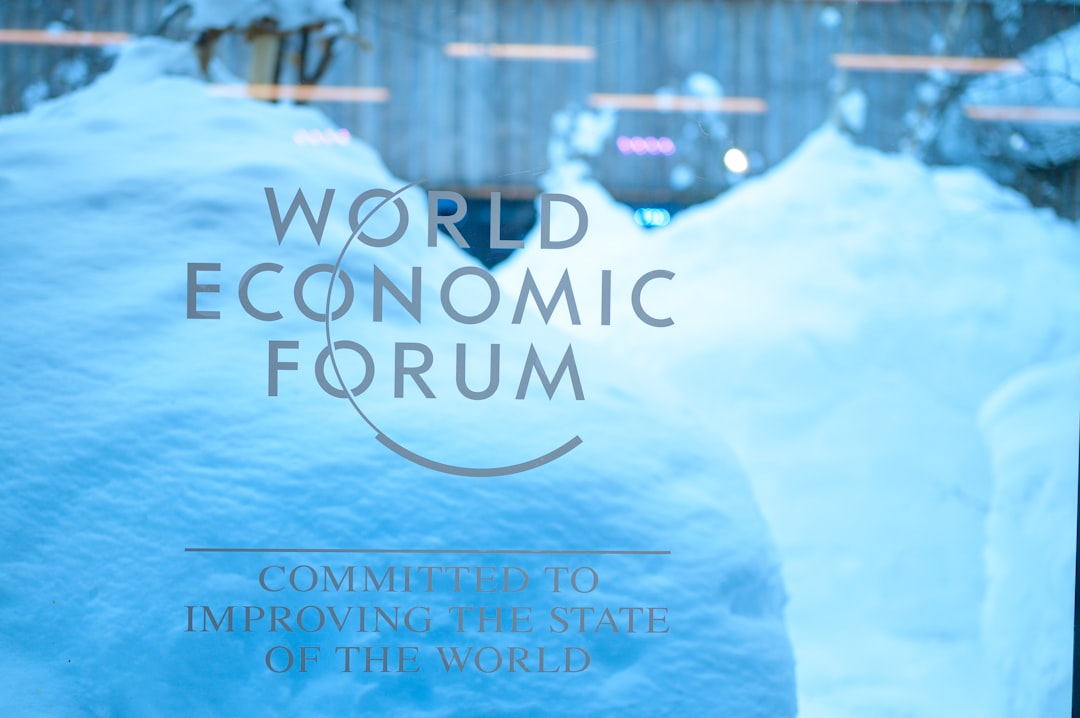
Breaking News: WEF Leader Steps Down Over Epstein Ties
The world economic forum head, Børge Brende, announced on Thursday that he is stepping down as president and chief executive of the WEF amid intensified scrutiny over his past associations with Jeffrey Epstein. The move comes as investors and policymakers weigh the implications for governance and trust surrounding the Davos-anchored gathering.
The decision, Brende said in a formal release, was reached after careful consideration and aims to ensure the Forum can pursue its mission without distractions. He emphasized gratitude for collaborators and partners and underscored a commitment to maintain momentum on global issues in a period of market volatility and geopolitical shifts.
Context: Why the Departure Is News
The resignation elevates questions about how private networks and public-facing organizations intersect at the highest levels. The Forum, which hosts the annual January Davos summit and coordinates a broad agenda on climate, trade, and investment, has faced renewed scrutiny as previously sealed records related to Epstein became public in recent weeks.
In a statement that was released alongside Brende’s resignation, the World Economic Forum reiterated that an internal review had begun earlier this month to evaluate the relationship between Brende and Epstein, including in-person meetings and communications.
While Brende did not directly address Epstein in that Thursday statement, the Forum noted that the investigation involved outside counsel and that the findings were being shared with stakeholders as they become available. Those findings reportedly concluded that no additional concerns arose beyond what had already been disclosed to the public.
What Brende Said: A Leader’s Framing
In Brende’s words, the decision to step down was about preserving the Forum’s ability to push for progress on key issues. He stated, in part, that his departure would help ensure the organization can “continue its important work without distractions.” He added that he remains committed to the Forum’s mission and to the broader goals of improving global cooperation in an era of accelerating economic change.

Analysts note that Brende’s background as Norway’s foreign minister from 2013 to 2017 gave him a high public profile as a negotiator and consensus-builder. Still, critics pressed for more transparency around personal associations that could color perceptions of the Forum’s independence and its role in shaping policy debates.
The World Economic Forum’s Response: Interim Leadership Named
The Forum’s leadership has moved quickly to set a transitional course. Co-chairs André Hoffmann and Larry Fink affirmed that an independent review conducted by outside counsel has concluded there were no new concerns beyond what was already disclosed. In a separate release, the Forum announced that Alois Zwinggi will serve as interim president and CEO while a longer-term search proceeds.
“We are grateful for the rigorous work of the independent review and are focused on keeping the Forum's agenda on track,” Hoffmann and Fink said in a joint statement. They added that Zwinggi’s appointment will ensure continuity as the Davos planning cycle accelerates ahead of next year’s program.
Market and Global Policy Implications
Markets and policy watchers are watching the leadership transition closely as it coincides with another wave of corporate governance debates and a climate of tighter scrutiny on philanthropic and nonprofit networks. Early morning trading in Europe and the United States showed a cautious mood, with investors balancing concerns about reputational risk against the Forum’s role in convening business, government, and civil society leaders.

- Global stocks: Officials suggested modest moves in major indices, with a generally cautious tone ahead of the next policy round. Some benchmarks reported gains amid recuperation from recent volatility.
- Policy signals: Several central banks have signaled ongoing vigilance over inflation and growth, a backdrop that could influence the Forum’s discussions on finance, trade, and climate policy.
- Investor sentiment: Analysts note that governance questions around the Forum’s leadership could affect confidence in Davos-favored initiatives, even as the event remains a focal point for high-level dealmaking and public-private partnerships.
What This Means for Davos and Global Finance
The departure of the world economic forum head arrives at a moment when Davos is seen as a hinge point for how business and policymakers address both immediate macro risks and long-term structural challenges. The interim leadership is expected to guide a continued emphasis on global cooperation, sustainable growth, and resilience in supply chains, while ensuring that the Forum’s principles remain intact in a digital age where transparency is under a microscope.
Industry executives and government officials are watching how the Forum balances scrutiny with leadership in convening global dialogues. Some participants imagine a more stringent governance framework for future leadership selections, while others emphasize the need for continuity to avoid disruption in multi-stakeholder initiatives that span climate finance, regional development, and technology governance.
Next Steps: What to Expect Moving Forward
The Forum has outlined a phased approach to leadership transition. Key milestones include the completion of the external review, a formal update for stakeholders, and a transparent search process for a permanent replacement. Interim leadership will guide the organization through the spring planning cycle and the upcoming Davos-related activities while the board assesses candidates for the longer term.
- Public communications: The Forum will provide regular updates to members and partners as the review progresses and the leadership search unfolds.
- Governance reforms: Expect renewed emphasis on disclosure, conflict-of-interest rules, and stronger oversight for high-profile relationships connected to Forum activities.
- Event planning: Davos-related programming will proceed with a focus on continuity and timely topics in technology, finance, and climate policy.
Broader Implications for the World Economic Forum Head Role
The resignation raises questions about the expectations placed on leaders who operate at the intersection of public policy and global markets. As the world economy navigates inflation dynamics, fiscal shifts, and geopolitical risks, the leadership of the world economic forum head will be under renewed scrutiny to demonstrate transparency, integrity, and a clear link between forum discussions and tangible outcomes for workers and communities alike.
Experts say the episode could spur a broader conversation about how international organizations manage reputational risk. In a period when investor confidence can hinge on perceived governance quality, the Forum’s leadership transition will likely become a case study in balancing credibility with the imperative to drive practical solutions for global challenges.
Conclusion: A Moment of Transition for a Pivotal Institution
As the world economic forum head transition unfolds, observers will watch closely for how the Forum preserves its momentum while rebuilding trust with participants and the broader public. The immediate priority is clear: maintain focus on policy-relevant agendas, safeguard the integrity of the organization, and deliver on commitments that influence markets, climate strategy, and economic development across regions. The coming weeks will determine how effectively the Forum can navigate questions of leadership, governance, and accountability without derailing its long-running mission to foster international cooperation in a rapidly changing world.



Discussion