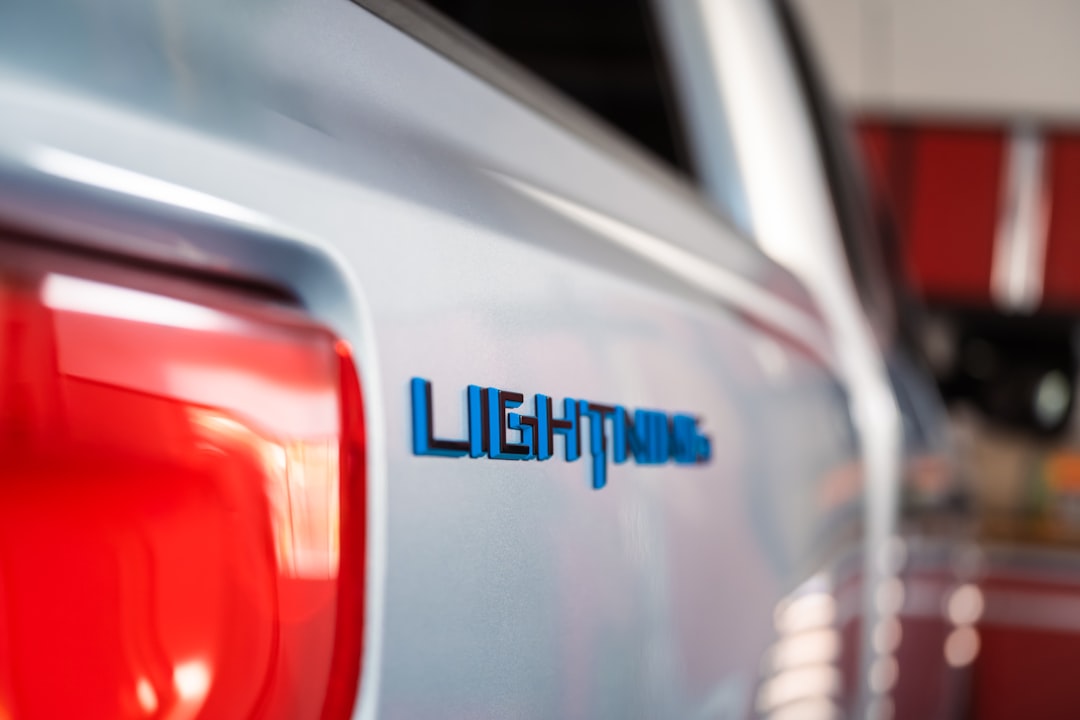
Introduction: A Landmark Brand, a High-Stakes Bet on the Road Ahead
When a century-old automaker like Ford Motor Company shifts its entire EV strategy, it isn’t just a product decision. It’s a signal about capital allocation, supply chains, and the future of trucking in a world chasing lower emissions and new incentives. Among Ford’s lineup, the F-150 holds a special place in U.S. culture and in dealer lots. Now the question for investors and enthusiasts alike is whether the plan to move from the existing all-electric F-150 Lightning toward an extended-range electric vehicle (EREV) is a prudent refinement or a costly misstep in disguise. In this article, we’ll unpack what ford's f-150 lightning erev means for the balance sheet, for consumer appeal, and for the stock’s long-term trajectory. We’ll also offer concrete steps investors can take to assess the risk and potential reward in a sector that moves as quickly as technology and policy allow.
What Is ford's f-150 lightning erev, Exactly?
The phrase ford's f-150 lightning erev captures a strategy: keep the popular F-150 platform, but replace the pure battery-electric setup with an extended-range system that can recharge in motion or extend range via a generator or secondary energy source. Unlike a pure BEV (battery-electric vehicle), an EREV relies on a primary powertrain plus a range-extending mechanism to stretch its miles when the battery pack runs low. In practice, this means more flexibility for consumers who want electric propulsion but worry about charging infrastructure or long road trips in rural areas. For investors, that flexibility translates into different cost structures, maintenance profiles, and residual value scenarios than a standard BEV would entail.
It’s important to distinguish between the current all-electric F-150 Lightning and the proposed ford's f-150 lightning erev concept. The Lightning was one of Ford’s core EV products, alongside the Mustang Mach-E and the E-Transit van. By introducing an EREV twist, the company signals a willingness to mix energy strategies within the same model family, potentially lowering upfront sticker price or mitigating charging anxiety for some buyers. Still, a shift like this can introduce complexity in manufacturing, supplier contracts, battery usage, and warranty exposure—factors investors need to weigh carefully.
Why Automakers Consider EREV Options Today
EREVs aren’t a new invention; they emerged as a transitional technology for firms trying to balance emissions goals with practical concerns about charging networks and consumer behavior. Here are the core reasons manufacturers consider an elevated range strategy:
- Charging infrastructure gaps: Not all customers have easy access to fast charging along every commute.
- Vehicle weight and cost: A pure BEV can be heavy and expensive; an EREV can reduce the cost per mile by using a smaller battery paired with a range extender.
- Resilience in markets with mixed incentives: Some regions offer strong EV subsidies, while others lag; an EREV can appeal to buyers who want some gas-powered assurance.
- Warranty and service economics: Extending the powertrain can change maintenance schedules and parts demand. This matters for dealer networks and after-sales revenue.
Financial Mechanics: The Costs and the Cash Flow Reality
Large carmakers don’t pivot on a dime. They run multi-year programs that involve design, tooling, supplier agreements, and factory reconfiguration. Ford’s EV strategy over the last few years has been accompanied by significant capital expenditure, and investors watched a sizable charge appear in some quarters as the company realigned its plans. The precise numbers vary by period and accounting method, but the underlying message is clear: adjusting course in the EV arena invites a mix of one-time charges and ongoing operating costs. For ford's f-150 lightning erev, the financial calculus isn’t just about the price tag of the vehicle. It’s about how the company allocates capital across battery cells, power electronics, software, and charging partnerships, while also protecting profitability in a highly competitive space.
Consider the broader EV ecosystem: battery costs per kilowatt-hour have fallen dramatically over the past decade, from well over $1,000 per kWh to roughly the current range of $100–$150 per kWh for many mainstream packs. That trend helps EV makers unlock lower per-vehicle costs over time, but early-stage programs still require heavy upfront investment. In Ford’s case, if ford's f-150 lightning erev becomes a near-term reality, the company would need to manage:
- Capital expenditures (CapEx) for new tooling and plant upgrades.
- Supply agreements for key parts like powertrains, battery modules, and range-extending components.
- R&D for software, vehicle control units, and over-the-air (OTA) update capabilities.
- Warranty reserves and potential service-murchase commitments tied to new propulsion technology.
In practice, this can lead to a temporary hit to near-term earnings as the company absorbs costs while trying to scale production. For investors, the key question isn’t simply “Is this expensive?” but “Will the long-run cost of ownership for ford's f-150 lightning erev deliver compelling value to customers and keep depreciation within acceptable bounds?”
Bev vs Erev: How ford's f-150 lightning erev Stacks Up Against BEV-Only Plans
A BEV-only strategy relies entirely on battery range, charging networks, and software ecosystems to satisfy customers. A ford's f-150 lightning erev approach mixes in a range-extender concept that can help reduce range anxiety and potentially lower the upfront battery capacity requirement. Each path has distinct implications:
- Battery sizing: BEV-heavy strategies often require larger, more expensive packs to meet realistic daily miles—this raises upfront cost and affects resale value.
- Charging network reliance: BEVs benefit from expansive charging networks and fast-charging reliability, which can be spotty in rural regions or during peak demand.
- Cold-weather performance: Battery efficiency drops in cold climates; a range extender can mitigate this risk to some extent in an EREV design.
- Warranty and service: The more complex the propulsion system (electric drive plus range extender), the more nuanced the service landscape becomes for technicians and dealers.
For ford's f-150 lightning erev, the net effect on the valuation depends on how well Ford can manage the manufacturing transition and whether customers perceive tangible benefits in reliability and total cost of ownership. It also hinges on the regulatory and incentive environment. Government subsidies, state rebates, and local charging infrastructure investment can tilt demand in favor of one approach over another. Investors should quantify how sensitive the business is to policy shifts and what that means for the car’s price, margins, and resale value over time.
Market Realities: Supply Chains, Competition, and Consumer Sentiment
The auto sector operates inside a web of suppliers, semiconductor shortages, and shifting consumer tastes. Ford’s EV push intersects with intense competition from legacy automakers and new entrants alike. As the lineup evolves, ford's f-150 lightning erev becomes a test case for how well Ford can synchronize product cadence, dealer incentives, and consumer expectations. In markets where trucks are central to the economy—think Texas, the Midwest, and parts of the Southeast—the practical appeal of an extended-range F-150 can be significant if customers value range flexibility and familiarity with the F-Series ecosystem.
From an investor standpoint, the key questions include:
- Will ford's f-150 lightning erev attract a large enough loyal buyer base to sustain high volumes?
- What is the long-term margin profile if the company adopts a mixed propulsion strategy across its best-selling model?
- How does the EREV option affect residual values, trade-in demand, and fleet sales?
Short answer: the success of any such strategy hinges on execution, cost discipline, and the ability to maintain a compelling value proposition in the face of lower-cost or more capable BEVs from competitors. For investors, these are not abstract questions—they affect cash flow, credit metrics, and the stock’s risk-reward profile.
Real-World Scenarios: What to Watch for as an Investor
Investors should keep a few practical indicators in mind as Ford tests the water with an EREV variant within the F-Series family:

- Production timing: Delays or accelerations in ramping the new powertrain can materially affect quarterly results and investor sentiment.
- Battery supply: The availability and pricing of battery cells will shape unit economics. Any material disruption can raise per-vehicle costs and squeeze margins.
- Charging partnerships: OEMs increasingly rely on charging networks and software partnerships. The terms of these agreements can impact customer experience and loyalty.
- Incentives and policy: Subsidies, tax credits, and regional policies dramatically influence demand, particularly for trucks and fleet operators.
- Depreciation and residuals: How the market values an EREV-powered vehicle versus a BEV or conventional gas-powered truck will matter for leasing and resale demand.
Let’s translate this into a practical worksheet for a hypothetical investor analyzing ford's f-150 lightning erev within Ford’s broader risk-return picture:
- Estimated capital expenditure for the EREV program over the next 3–5 years: $5B–$15B, depending on scale and production lines.
- Expected contribution margin once ramped: a target of mid-teen percentages to low-twenties, assuming volume growth and favorable battery pricing.
- Break-even mileage and break-even cash flow: model scenarios where the vehicle reaches profitability at 50,000–100,000 annual units, with sensitivity to battery costs and warranty reserves.
The bottom line for investors is that any move toward ford's f-150 lightning erev needs to deliver more than engineering novelty. It must translate into durable value, stronger cash flow, and a path to sustainable profitability even if market conditions tighten or incentives shift.
What the Numbers Say About the Path Ahead
Numbers drive the debate around ford's f-150 lightning erev. The EV transition requires heavy upfront investment, yet the payoff can emerge as the cost per mile declines and demand solidifies. A few data-driven touchpoints help frame the conversation:
- Battery pack costs are a moving target. While recent ranges show improvement, the total vehicle cost remains sensitive to pack size and energy density.
- Depreciation curves for EV components differ from traditional vehicles, partly due to rapid technology updates and policy changes affecting residual values.
- Regulatory environments vary by market. In some states, incentives for plug-in hybrids and range-extended electrics may be more favorable than for pure BEVs, shaping demand for ford's f-150 lightning erev differently across regions.
For investors, the essential question isn’t just “Does ford's f-150 lightning erev have merit?” but “What is the long-run impact on the Ford balance sheet if the EREV concept becomes a cornerstone of the F-Series offering?” Answering that requires careful attention to capital allocation, supplier governance, and the competitive landscape in a rapidly evolving sector.
Making Sense of the Strategic Tradeoffs
In corporate strategy, even well-intentioned shifts can backfire if the organization fails to manage the transition costs or misreads consumer demand. A ford's f-150 lightning erev program comes with both opportunities and tradeoffs:
- Opportunity: A broader propulsion mix can reduce sensitivity to charging networks and provide a hedge against volatility in battery costs.
- Tradeoff: The need to maintain a consistent production cadence across multiple propulsion systems may raise complexity and downtime if not executed with precision.
- Opportunity: The Ford ecosystem—truck capabilities, Ford Pro fleet solutions, and software services—could unlock additional revenue streams if the EREV design integrates smoothly with telematics and fleet management tools.
- Tradeoff: Warranty exposure and service costs may rise if the range-extender adds moving parts or new software dependencies that require specialized expertise.
From a long-term perspective, investors should scrutinize Ford’s ability to balance product cadence with cash preservation. The industry’s capital-intensive nature means even if ford's f-150 lightning erev takes hold in the market, the path to sustained profitability hinges on disciplined cost control, scalable manufacturing, and a clear value proposition for customers.
Conclusion: The Road to Clarity for Investors
ford's f-150 lightning erev represents a strategic attempt to blend the familiar with the forward-looking. It’s a thoughtful response to real-world constraints—charging infrastructure gaps, battery cost trends, and the desire to attract a broader buyer base without demanding perfect charging access. Yet with any such transition comes the risk of mispricing, execution delays, or unexpected maintenance costs. For investors, the decision isn’t binary: it’s a nuanced evaluation of how Ford’s long-term EV strategy affects profitability, cash flow, and capital allocation over the next several years. In other words, ford's f-150 lightning erev could be a prudent evolution if the company demonstrates scalable margins, efficient production, and clear win-win dynamics with customers. It could become a costly misstep if the costs spiral and the expected demand profile never materializes. The prudent approach is to monitor the program’s milestones, financial disclosures, and how Ford compares its performance against a baseline BEV strategy and against industry peers that pursue similar paths.
FAQ
Q1: What exactly is ford's f-150 lightning erev?
A1: The term ford's f-150 lightning erev describes an extended-range electric variant of Ford’s popular F-150, designed to mix an electric propulsion system with a range-extending component to increase travel distance when needed. It’s a departure from a pure BEV by incorporating a supplementary energy source to boost range, potentially reducing charging dependence on the road.
Q2: How does an EREV differ from a BEV?
A2: A BEV runs entirely on battery power, with no gasoline engine to extend range. An EREV uses a traditional internal combustion or other energy source to extend the vehicle’s range beyond what the battery alone can provide. This difference can affect cost, maintenance, and how customers value the vehicle in daily use.
Q3: What should investors watch regarding ford's f-150 lightning erev?
A3: Investors should monitor capital expenditure for the program, battery supply agreements, expected gross margins and cash flow, dealer incentives, warranty reserves, and how the market responds to the EREV proposition. It’s also important to compare against BEV-only strategies and industry peers to gauge relative risk and potential return.
Q4: Is there a risk of a “costly mistake” with this strategy?
A4: Like any large-scale shift, there is risk if the cost of development and production exceeds revenue or if demand underwhelms. However, if Ford can deliver a compelling total-cost-of-ownership story and achieve efficient production, the EREV path could offer resilience against charging gaps and a smoother transition into broader electrification.
In the end, ford's f-150 lightning erev is a nuanced move in a dynamic market. It is not inherently doomed nor guaranteed to be a breakthrough; its success hinges on execution, cost discipline, and how well it resonates with buyers who want a familiar truck with a calmer path to electrified driving. For investors, the strategy warrants careful modeling, attentive earnings analysis, and a clear eye on how the company funds this transition and what it means for the stock’s long-term risk-adjusted return.

Discussion