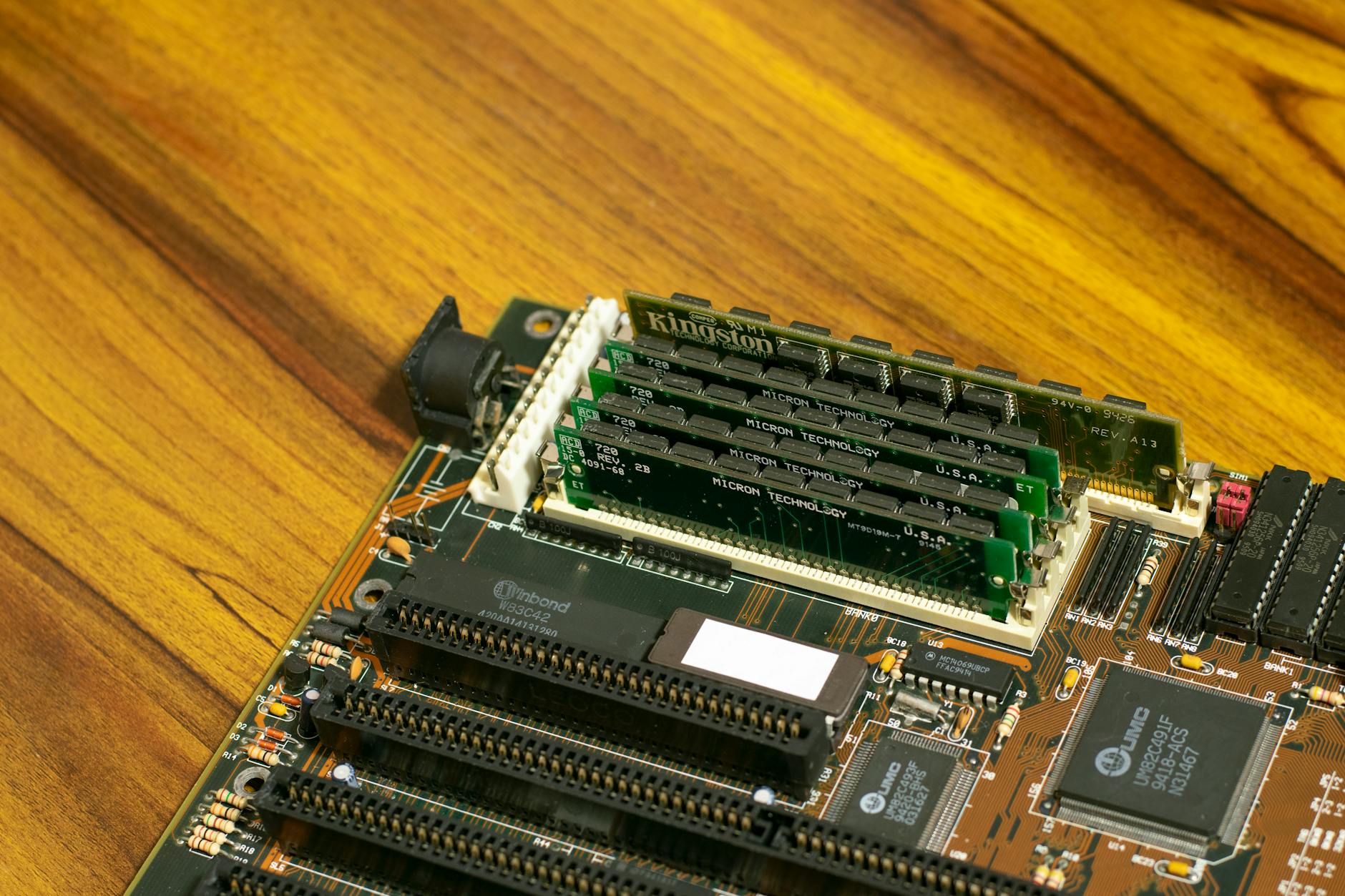
Introduction: The Memory Menu in 2026
Investing in semiconductor stocks has shifted from a pure AI-chip focus to a broader memory story. Data centers, AI workloads, and storage needs are converging, lifting demand for DRAM and NAND. Micron Technology (MU) is a prime name to watch as memory pricing cycles tighten and capital allocation becomes more disciplined. For investors trying to answer the big question, How much higher will Micron stock go in 2026? is not a single-number inquiry. It’s a framework: what growth drivers, margins, and capital returns can Micron generate, and how do those translate into a plausible stock path over the next 12–24 months?
Section 1 — The Memory Market Landscape in 2026
The memory market is cyclical, but the 2020s added new momentum from data center resilience, AI workloads, and cloud storage growth. In 2025, hyperscale customers continued to push server budgets higher, and the cadence of capex cycles began to normalize after the pandemic-era volatility. That backdrop creates both opportunity and risk for Micron and its peers.
The Demand Side: AI, Data Centers, and Beyond
- AI-driven inference and training require high-bandwidth memory. While GPUs grab headlines, memory is the essential backing for performance and efficiency.
- Cloud providers expanded capacity: more servers mean more DRAM and NAND demand, particularly for DDR memory and PCIe/NAND flash used in storage tiers.
- Enterprise storage continues to migrate to flash-based systems with larger capacities, boosting NAND demand even as some price compression persists from oversupply cycles in earlier years.
The Supply Side: Competitive Positioning
Micron faces competition from Samsung and SK Hynix, with the pricing cycle often driven by global inventory levels and component costs. A disciplined capital plan, strong process technology, and a flexible product mix help Micron navigate price volatility better than some peers. While pricing cycles can compress margins temporarily, long-run free cash flow generation hinges on operational efficiency and strategic product differentiation.
Section 2 — What Drives Micron’s Stock in 2026?
To gauge how much higher MU might move, you need two things: a view on the top-line trajectory and a clear sense of how much cash Micron can return to shareholders while maintaining healthy investment in its business.
Revenue and Margin Trajectory
Micron’s revenue growth in 2026 will hinge on three anchors: pricing trends, volume growth from data-center demand, and product mix shifts toward higher-value memory components. In a baseline scenario, you might see mid-single-digit revenue growth with gross margins stabilizing in the 35–38% range as process improvements offset commodity headwinds. In a bull case, margin upside could emerge if factory utilization rises and NAND ASPs recover more quickly than expected. In a bear scenario, oversupply or weaker enterprise demand could push margins back toward the low-30s.
Cash Flow, Dividends, and Buybacks
Free cash flow per share (FCF/share) will be a primary driver of investor sentiment. If Micron sustains FCF above $4 billion annually and keeps a cautious capital plan, it could fund meaningful buybacks and a steady dividend, supporting a higher stock multiple. For context, a steady FCF stream paired with a modest dividend growth rate often attracts a premium vs. peers with inconsistent cash generation.
Section 3 — The Pathways: Scenarios for 2026
Rather than chasing a single forecast, consider three plausible paths: baseline, bullish, and bearish. Each path translates into a different stock-price trajectory, guided by revenue growth, margins, and capital returns. Importantly, the real world often sits between these extremes, with twists in pricing and demand timing.
Baseline Scenario: Moderation and Stabilization
- Revenue growth: 3%–6% year over year on a mix of DRAM and NAND.
- Gross margin: Stabilizes around 35%–37% as pricing cycles ease and efficiency improvements take effect.
- Free cash flow: Strong enough to support a modest buyback and a stagnant or mildly growing dividend.
- Stock multiple: Investors reward stability with a mid-to-high single-digit to low double-digit P/E, depending on broader market sentiment.
In this scenario, MU drifts higher as investors gain comfort with steady profits and a predictable path to cash returns. The path is not fireworks, but it’s durable and less prone to abrupt declines.
Bull Case: Demand Surges and Margin Leaps
- Revenue growth: 8%–12% as memory demand strengthens from AI workloads and data-center upgrades.
- Gross margin: 38%–40% as pricing evidence improves and cost controls bite into unit costs.
- FCF: Surges, enabling larger buybacks and a higher dividend cadence.
- Stock multiple: Elevated, as investors price in resilient demand and disciplined capital management.
In a bull outcome, MU could see outsized gains if memory pricing rebounds more quickly and data-center capex remains robust through 2026. This scenario is attractive but requires a favorable alignment of supply discipline and demand velocity.
Bear Case: Pricing Pressure and Inventory Gluts
- Revenue growth: 0%–2%, with weakness in some enterprise segments.
- Gross margin: 32%–34% if pricing remains volatile and cost pressures persist.
- FCF: Declines could limit buybacks and dividend growth, affecting total-return profiles.
- Stock multiple: Constrained by macro uncertainty and cyclicality of memory demand.
Bear scenarios are the toughest for MU holders, but they’re plausible if the memory market experiences a longer cooldown or if customers postpone purchases amid broader economic headwinds. In this environment, disciplined risk controls matter more than ever.
Section 4 — How to Think About the Price Path: A Practical Approach
Investors often ask, much higher will micron be in the next cycle. A practical answer starts with the relationship between fundamentals and multiples. MU’s value rests on two pillars: (1) the quality and durability of cash generation, and (2) the market’s willingness to pay for that cash flow given broader interest-rate and growth expectations.

Fundamental Anchors to Watch
- Free cash flow per share: The metric that most clearly links operations to returns. A rising FCF/share signals capacity to fund buybacks without sacrificing growth investments.
- Debt levels and liquidity: Micron’s leverage matters for both risk and flexibility in down cycles. A manageable debt load with ample liquidity cushions earnings during downturns.
- Capital expenditures and capacity utilization: If MU keeps high utilization and capex within a prudent range, it preserves margin resilience.
- Peer and market dynamics: Samsung and SK Hynix pricing behavior, plus supply-demand balance in the DRAM/NAND cycle, shapes MU’s absolute and relative performance.
Valuation Lenses: What Price Could Be Justified?
One way to ground expectations is to connect a plausible earnings trajectory to a respectable multiple. If MU delivers a steady earnings growth profile and a 10–14% annual free cash flow yield over the next few years, a fair price might sit in the mid-to-high teens to low-20s P/E range under reasonable discount-rate assumptions. Of course, macro sentiment, interest rates, and risk appetite will push multiples higher or lower. The key is to keep the model anchored in cash flow, not just headline revenue or headline demand trends.
Section 5 — Real-World Examples and Investor Scenarios
History offers a helpful lens. Memory cycles—driven by supply, demand, and technology upgrades—tend to produce extended phases of higher volatility. In prior cycles, when data-center demand surged alongside RAM and NAND pricing, MU and peers enjoyed multi-quarter stretches of earnings outperformance and multiple expansion. Conversely, when inventories piled up and enterprise demand softened, stock prices retraced even when technology fundamentals remained sound. The takeaway is not to chase timing, but to build resilience into your plan with a clear framework for what you’ll own and why.
Section 6 — Actionable Ways to Invest in MU in 2026
Whether you’re a novice or a seasoned investor, here are practical steps to position for a thoughtful exposure to Micron:
- Set a core position with a clear thesis: demand growth from AI/data-center investments, margin resilience, and disciplined capital returns. A 2–5% portfolio allocation can be a reasonable starting point for many investors.
- Use dollar-cost averaging (DCA): Invest a fixed amount monthly to reduce timing risk. If MU has a drawdown, you’ll buy more shares at lower prices over time.
- Establish downside guardrails: Place a pre-defined stop-loss at 15–20% below your purchase price or beneath an important technical support level. This helps limit outsized losses during sharp downturns.
- Combine with a diversified tech sleeve: Memory is cyclical. Pair MU with a variety of chip makers, software firms, or AI infrastructure plays to balance risk and reward.
- Consider a modest use of covered calls for income: If you own MU shares and believe the stock will drift within a range, selling out-of-the-money calls can generate premium income. Only engage in options strategies if you understand the risks.
Section 7 — What to Watch Next: Signals That MU Is on the Right Track
Investors should monitor a few high-signal indicators that often precede price moves in memory stocks:
- Inventory levels in memory suppliers and major distributors — a falling inventory trend often signals pricing stabilization.
- Capex cycles of hyperscalers — sustained or accelerating commitments to data-center expansion bode well for DRAM/NAND demand.
- Micron’s product mix shift toward higher-margin enterprise solutions — stronger mix can buttress margins even when overall pricing is weak.
- Share buyback cadence and dividend policy — consistent capital returns can support investor confidence during cycles of volatility.
Conclusion: A Pragmatic View on the 2026 Outlook
For investors, the question "How much higher will Micron stock go in 2026?" is best answered with a framework rather than a single forecast. If memory pricing stabilizes, data-center demand remains robust, and Micron executes on cost controls while returning capital to shareholders, MU could deliver meaningful upside alongside a disciplined risk profile. That said, memory cycles are a perennial challenge; a guardrail mindset—combining realistic scenarios, a capped portfolio allocation, and clear exit rules—helps ensure you stay in the game without overexposure to price swings. In the end, much depends on how the 2026 memory cycle unfolds, how Micron translates that into cash flow, and how investors price that cash flow in a volatile market. The path is plausible, and with a thoughtful approach, the upside can be substantial for those who stay disciplined.
FAQ
Q1: What drives Micron’s earnings the most?
A1: The two biggest drivers are memory pricing (DRAM and NAND) and demand volume from data centers and enterprise storage. Gross margins depend on cost control, process efficiency, and product mix. Free cash flow hinges on how well the company converts earnings into cash after reinvestment and capital returns.
Q2: How should I think about risk when investing in MU?
A2: Key risks include cyclicality in memory pricing, inventory levels, competition from Samsung and SK Hynix, and broader tech-market volatility. A prudent plan uses diversification, a measured allocation (e.g., 1–5% of a typical portfolio), and risk controls like stop-loss orders and a clear exit strategy.
Q3: Is MU a good dividend or buyback candidate?
A3: Micron has historically returned capital through buybacks and dividends. The attractiveness depends on cash flow stability and the company’s capital-allocation strategy. Look for sustained FCF growth and a transparent plan for how much of that cash is returned to shareholders vs. reinvested.
Q4: How does the memory cycle affect MU’s stock price?
A4: Memory cycles create extended periods of volatility. Prices can spike during demand upswings and retract when supply outpaces demand. Long-term investors often benefit by focusing on the durability of cash flow and a disciplined capital plan rather than chasing short-term price movements.
Q5: What does a practical MU investment plan look like?
A5: A practical plan includes a core MU holding within a diversified tech allocation, dollar-cost averaging with a fixed monthly contribution, a clearly defined stop-loss, and a schedule to review hedges or optional strategies if volatility spikes. Review the plan at least quarterly to adjust for changing demand signals and margin trends.
Discussion