Introduction: A Move That Caught the Market’s Attention
Markets don’t need rumors to move, but they often react to concrete signals. Today, investors watched Lockheed Martin stock take a notable step higher as a fresh round of European defense chatter hit the wires. The headline was simple: a major European buyer weighing new fighter jet orders, potentially lifting Lockheed’s already sizable backlog. For a company with more than a century of aerospace and defense know‑how, a single export order can translate into meaningful revenue and cash flow, even as it navigates long development cycles and delicate geopolitical risk. In this article, we’ll unpack the forces behind the move, explain what investors should watch next, and offer practical steps to evaluate Lockheed Martin stock in the context of a diversified portfolio.
The Core Reason Behind the Jump: Export Orders and Backlog Leverage
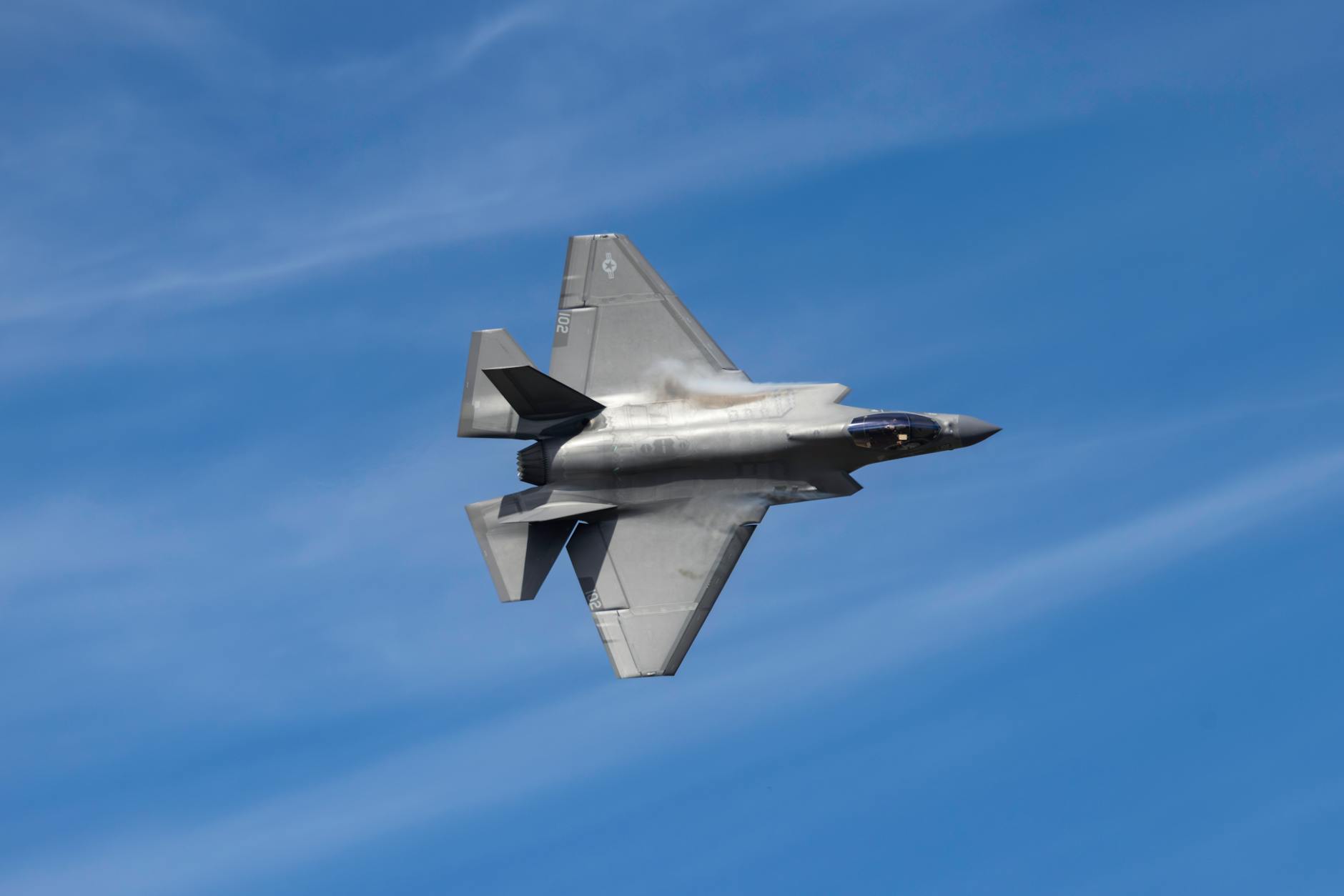
Defense contractors aren’t just selling products; they’re selling long‑cycle programs with multiyear production ramps. Lockheed Martin, as the prime contractor on the F‑35 and a suite of other systems, benefits when foreign partners pick up current or future production lines. When a major buyer signals intent to place a sizable order, the stock often reacts to two intertwined dynamics: a near‑term revenue bump and a longer‑term improvement in backlog visibility.
Today’s shift in sentiment is tied to rumors and messaging around European air forces recalibrating their fleets. While specifics can vary, a narrative has formed around a large F‑35 export order that could meaningfully lift Lockheed’s quarterly results over the next 12–24 months. Even if the exact number isn’t final, the bid signals a stronger demand backdrop for the company’s core fighter jet platform and related services. In plain terms: if Europe commits to more F‑35s, Lockheed’s revenue and cash flow outlook becomes a bit more predictable, which is always a plus for stock investors.
What Does It Mean for Lockheed Martin’s Business Model?
Lockheed Martin’s business relies on a steady stream of long‑term programs, most notably the F‑35 family. The jet is one of the most expensive and widely used fighters in the world, with production ramp plans that extend well into the 2030s and beyond. A meaningful export commitment from a European partner can have several knock‑on effects:

- Backlog Growth: An additional order candidates increases the backlog, which provides revenue visibility and can improve production planning efficiency.
- Cash Flow Stability: Even at a conservative margin, a multi‑year production line helps stabilize free cash flow, supporting dividends and buybacks.
- Operational Leverage: Once a program is in production at scale, incremental orders tend to flow through the factory with relatively high incremental margin, boosting overall profitability.
- Strategic Positioning: A larger US‑led jet program footprint alongside international operators can strengthen Lockheed’s negotiating position with customers and suppliers alike.
However, investors should also be mindful of the risks. The defense sector is highly exposed to political change, budgetary cycles, and foreign policy shifts. A single export victory doesn’t instantly translate into year‑over‑year growth if it comes with companion challenges like cost overruns, schedule slips, or constraints from the customer’s procurement wallet. That said, the market often treats a credible export order as a signal of sustained demand rather than a one‑off win, which can support a stock’s momentum in the near term.
FCAS and the Broader European Defense Context
One of the longer‑term storylines in today’s defense market is Europe’s move toward new fighter concepts and integrated air defense. The Future Combat Air System (FCAS) program, a multi‑nation effort in the works for a sixth‑generation air platform, has faced development hurdles and cost pressures. While FCAS aims to deliver a long‑term strategic capability, it sits in a different bucket than today’s F‑35 export news. For investors, FCAS represents both opportunity and risk: a potential new revenue channel if it progresses, but a delay or technical hurdle could temper expectations for near‑term orders tied to that program alone.
From a stock‑price perspective, optimism about FCAS can lift broader defense indices and related names, even if it doesn’t immediately translate into Lockheed’s next quarterly results. In practice, several scenarios exist:
- Scenario A – Short‑term boost from F‑35 exports: A confirmed export deal with a European partner provides a clean near‑term revenue bump and helps secure factory utilization. This is precisely the kind of headline that can drive a stock higher in the weeks following the announcement.
- Scenario B – FCAS remains a longer‑term ambition: If FCAS progresses slowly, investors may still reward Lockheed for its near‑term backbone (F‑35 program, F‑16 modernization work, and related services), while keeping a skeptical eye on the longer horizon.
- Scenario C – Budgetary tradeoffs: If European defense budgets tighten or if competing platforms win favorable terms, the stock reaction might fade as the market recalibrates expectations.
For the current narrative, the focus is on material export potential for the F‑35 and other Lockheed platforms, and how that translates into backlog health and earnings visibility. The takeaway for investors: today’s move can be a bellwether for confidence in near‑term demand, but it remains essential to watch the longer‑term path of FCAS and other European commitments.
How to Interpret a One‑Day Move Like This in Context
A single trading session rarely tells the whole story. Here are practical steps to interpret today’s action in a responsible, disciplined way:

- Check the Backlog Trend: Is the backlog trending up or stabilizing? A rising backlog over several quarters is a more durable sign than a spike in one quarter.
- Assess Margin Momentum: Look beyond revenue to margin trajectory. Higher production volumes can improve unit costs and leverage, but only if the cost base doesn’t expand disproportionately.
- Review Diversification: How dependent is Lockheed on a few programs? A broad mix of aircraft, weapons, and services cushions revenue volatility.
- Evaluate Policy Sensitivity: Defense budgets shift with elections, geopolitical risk, and alliance commitments. Short‑term moves can unwind if policy priorities shift.
- Consider Dividend and Buybacks: For investors who rely on income, confirm that payout sustainability remains intact and that buybacks aren’t crowding out growth investments.
When you assemble these elements, you’ll be better positioned to judge whether today’s lift in Lockheed Martin stock is a reflection of enduring demand or a temporary reaction to a headline. The best bets in this space tend to be those that combine a healthy backlog with a diversified portfolio and a disciplined capital allocation strategy.
Real‑World Examples and What They Tell Us
To make the discussion tangible, here are two scenarios, grounded in typical aerospace defense dynamics. These illustrate how a single export order might translate into portfolio implications for an investor:

- Moderate order, steady ramp: Suppose Germany commits to 20–30 F‑35s over the next 5–7 years. Each aircraft may carry a price around the $80–$100 million range, depending on variant and configuration. A 24‑jet case at $90 million equals about $2.16 billion in potential revenue, with most of it recognized in later years as production ramps. Multiply by a couple of similar European commitments, and you’re looking at a more predictable revenue stream that supports earnings stability and a fair valuation multiple for the stock.
- Larger, front‑loaded order: If a buyer signs for 36 jets within a tight window, near‑term revenue recognition could be modestly accelerated, improving near‑term gross margins if production lines run at or near peak efficiency. Investors would likely see a more pronounced daily move in the stock, with a higher probability of follow‑through as independent suppliers and the DoD ecosystem adjust to the increased cadence.
These examples aren’t predictions, but they illustrate how the math behind defense programs translates into cash flow and, ultimately, stock performance. The key is to connect the dots between government procurements, production schedules, and the company’s operating cadence.
Is This a Buyable Dip or a Momentum Move?
The stock market doesn’t distinguish perfectly between a legitimate growth signal and a momentum trade. For Lockheed Martin stock took a step higher today, and that can be a valuable sign if the company’s fundamentals sustain the momentum. Here’s how to think about it:
- Fundamental Tilt: If backlog expansion continues, DoD budget commitments rise, and free cash flow remains robust, the move could be sustainable beyond one quarter.
- Valuation Check: Lockheed trades at a multiple that reflects its risk and growth profile. If the forward earnings trajectory improves on higher volumes without squeezing margins, the stock may justify a higher multiple rather than a temporary premium.
- Risk Mitigation: Diversified programs, long‑term pricing power in the F‑35 ecosystem, and a resilient defense budget help, but geopolitical shocks can still weigh on the stock in the short run.
For investors who already hold Lockheed Martin stock, today’s move might warrant a review of their target price and stop‑loss discipline. For newcomers, a measured approach—such as a capped allocation and a clear exit plan—can help balance potential gains with the volatility that often accompanies defense names.
What Investors Should Watch Next
News cycles move quickly, but the most important signals come from a blend of fundamentals and policy signals. Here are the concrete watchpoints for the weeks and months ahead:

- DoD Budget Signals: Any uptick in U.S. defense budgeting and European defense spending provides a tailwind for Lockheed’s core programs beyond exports.
- Backlog and Bookings Update: Quarterly updates on backlog composition, cancelations, and new awards help determine whether today’s optimism is broad or narrowly focused on a single potential deal.
- F‑35 Production Health: The F‑35 line’s stability, supplier performance, and any cost pressures will influence margins and cash flow down the road.
- FCAS Progress: Improvements or delays in the FCAS roadmap can shift investor sentiment toward or away from European defense opportunities in the medium term.
- Competitive Landscape: Developments with rival programs or alternative platforms can affect Lockheed’s market share and program pricing opportunities.
Conclusion: A Pragmatic View of a One‑Day Move
Today’s market action around Lockheed Martin stock took is a reminder that defense stocks respond to tangible signals—export orders, production ramps, and the prospect of sustained demand from allied nations. While a single order can spark momentum, the more relevant question for investors is whether the company’s longer‑term fundamentals justify a higher valuation. The story of Lockheed Martin remains anchored in a large, diversified portfolio of programs, a robust backlog, and a disciplined approach to capital allocation. If international demand continues to strengthen, with F‑35 and related services driving a larger portion of revenue, lockheed martin stock took a meaningful step forward in the minds of investors. But like all equities tied to government budgets and geopolitical risk, the path forward will require patience, due diligence, and a balanced perspective on risk and reward.
FAQ
Q1: Why did lockheed martin stock took off today?
A1: A major European defense inquiry and the prospect of new F‑35 exports can boost revenue visibility and reassure investors about long‑term orders. This kind of news often translates into a short‑term rally as markets price in higher backlog and recurring cash flow.
Q2: Is a single export deal enough to justify investing in Lockheed Martin?
A2: No. While a sizable order can lift sentiment, long‑term investing hinges on multiple factors: a growing backlog, stable margins, diversified programs, and disciplined capital allocation. Look for consistency across quarters rather than a one‑time spike.
Q3: What should I watch next if I own LMT stock or plan to buy?
A3: Monitor backlog growth, free cash flow generation, dividend sustainability, and updates on FCAS progress. Also track DoD and European defense budgets, since they directly influence future bookings and pricing power.
Q4: How does FCAS affect Lockheed’s stock over the next few years?
A4: FCAS could become a meaningful future revenue source, but its timeline is uncertain. Investors should balance the potential upside from FCAS with the near‑term strength of the F‑35 program and other existing platforms.
Discussion