
Trump Lands With Leverage Claim Once Again as Beijing Eyes Its Stockpile Shield
President Donald Trump is scheduled to touch down in Beijing on May 14, insisting that he carries a financial lever that could tilt negotiations on tariffs, sanctions relief, and energy supplies. In fast-moving markets, the idea of leverage often makes headlines, but traders and everyday investors are looking for tangible signals that could ripple through portfolios. The reality check: even if Washington believes it has a bargaining chip, Beijing has built a sophisticated cushion that can blunt pressure and shape outcomes in surprising ways.
Markets have learned to watch the gap between what leadership says and what markets price in. The focus on leverage is entwined with oil, debt, and the resilience of China’s commodity buffers. And while presidential travel can send short-term headlines, the longer-term influence on personal finance will hinge on how China and the United States navigate a broader set of rules, from supply chains to currency swaps to energy diplomacy.
Beijing’s Buffer Network: A Silent, Deep-Deck Strategy
China invested relentlessly in stockpiles after years of sanctions and tech restrictions tightened the captive supply of key goods. Today, Beijing’s crude reserve stands at roughly 1.4 billion barrels, a buffer aimed at weathering shocks and moderating global price swings. That stockpile translates into roughly 115 days of seaborne crude imports, according to government analysts who track the country’s energy strategy. In practice, the reserve acts as a quiet macro tool—giving policymakers room to maneuver and messaging power in diplomacy.
State-owned behemoths have repeatedly traded on that cushion. Sinopec and Sinochem have been active sellers and buyers of West African crude, routing supplies to refiners across Asia as regional demand fluctuates. At the same time, China’s LNG market has shown unusual resilience: sales of liquefied natural gas topped a record 1.31 million tons this year to buyers across South Korea, Japan, Thailand, Indonesia, and India. These moves aren’t about a single shipment; they’re part of a broader strategy to flex liquidity across energy markets and reassure trading partners in a volatile environment.
Beijing’s diplomatic narrative has also evolved. While Washington debates sanctions and strategic red lines, Beijing has used its reserves and its regional influence to court allies, turning oil and gas into a form of soft power. The result is a patchwork of partnerships that can reduce the impact of unilateral moves by any one nation, including the United States. The effect for investors is subtle but real: a diversified energy toolkit that can stabilize prices even when geopolitical tensions flare up.
Oil Markets in a Tight Patch: Hormuz, Reserves, and Real-World Spillover
Oil markets live in a state of heightened sensitivity as global supply chains contort under sanctions and political risk. The Strait of Hormuz remains a focal point of concern for energy traders. When global risk increases, prices often react not only to supply changes but to expectations about what authorities will do next. In this environment, China’s reserve strategy provides a counterweight—a means to temper abrupt price spikes by increasing supply elasticity in momentary stress scenarios.
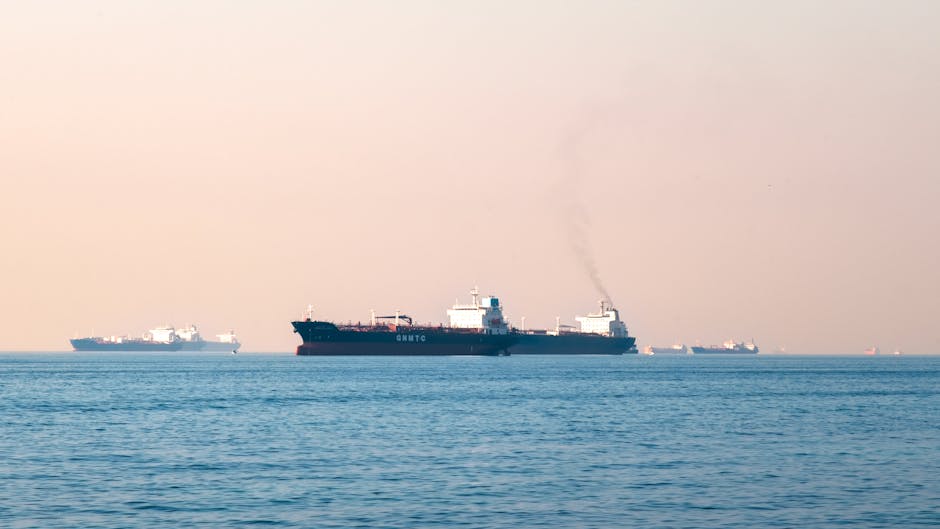
On the ground, refiners across Asia have adjusted sourcing and timing in response to shifting flows. West African crude, once considered a regional option, is moving in and out of the mix to balance refining runs and storage constraints. And in the LNG market, the 1.31 million-ton year-to-date figure signals ongoing demand resilience in a region that has learned to live with price swings and frequent policy shifts. These moves create a complex backdrop for investors who must manage currency risk, contract exposure, and hedges in a market where a single policy headline can ripple through energy equities and commodity-linked assets.
Trump Thinks He’s Flying: The Leverage Question, Plain and Simple
As Trump prepares for talks with Beijing, the centerpiece of coverage tends to orbit around leverage—the notion that a foreign policy or economic stance can be extracted for favorable terms. The phrase trump thinks he’s flying has become shorthand for a high-stakes gamble: a leader who believes political capital can translate into economic concessions at the bargaining table. Analysts warn that leverage in theory does not always translate into leverage in practice, and the mapping from rhetoric to results is highly contingent on the other side’s buffers and priorities.

Several variables complicate the picture. First, Beijing’s reserve buffers are not a single bullet but a layered toolkit—energy stockpiles, diversified supply routes, and deepening regional ties. Second, China’s current stance favors gradual, calibrated diplomacy, not dramatic capitulation to external pressure. Third, the U.S. market framework—monetary policy, inflation trends, and the health of the consumer—creates its own feedback loop, constraining how aggressively either side can concede without triggering unintended consequences in capital markets.
For investors, the takeaway is not to expect a quick, clean win for either side. Rather, it’s a reminder that leverage in theory often meets friction in reality. The phrase trump thinks he’s flying captures the tension between political bravado and the granular realities of energy supply, currency flows, and sovereign risk. The risk for markets is that misread expectations can lead to short-term volatility—especially in oil and energy equities—followed by a longer recalibration as actual policy steps unfold.
What This Means for Investors and Personal Finance
- Oil price sensitivity remains elevated. Any headlines about leverage or concessions can nudge Brent and WTI in the near term, impacting fuel costs, airline stock performance, and inflation expectations.
- China’s stockpiles give policymakers room to respond to external shocks without panicking markets. For investors, that means potential resilience in energy-linked assets and hedges designed to weather supply disruptions.
- Currency and interest-rate dynamics will matter more than ever. As speculation swirls around negotiations, the dollar’s direction and U.S. rate expectations could swing correlated markets, including commodity reserves and emerging-market debt.
- Dividends and income-focused investors should monitor energy majors and infrastructure plays for changing risk premiums. If geopolitical risk cools, some of the premium on energy equities may ease; if it rises, risk management becomes critical.
- Diversification remains the prudent default. The China-U.S. dynamic underscores the importance of broad exposure across geographies, sectors, and inflation hedges, especially for retirement accounts and long-term portfolios.
Investor Takeaways in a Turbulent Moment
1) Treat any headline about leverage as a signal rather than a mandate. Traders should watch for concrete policy steps rather than rhetoric alone. 2) Track the state of China’s stockpile policy and regional diplomacy as key inputs to oil and currency markets. 3) Maintain a disciplined approach to risk, using hedges in energy equities, gold, or Treasury inflation-protected securities to cushion potential volatility. 4) Rebalance portfolios with an eye toward liquidity and duration, ensuring you aren’t overexposed to single-country risk or a narrow set of energy assets.
Conclusion: A Moment of Clarity Amid a Complex Web
As Trump prepares to land in Beijing, the conversation about leverage is less about a single handshake and more about a broader, longer-term contest over influence, supply, and the price of energy. The reality—even with a landing on May 14—will hinge on what Washington and Beijing actually decide to do, not just what they say. For households, businesses, and investors, the smarter play is to read the signals carefully, keep a plan for volatility, and remember that the most powerful tool in financial life is diversification paired with disciplined risk management.


Discussion