
Introduction: Why rewards aren’t just about the biggest rate
If you think the secret to rewards is simply signing up for the card with the highest advertised rate, you’re missing the broader picture. The true impact on what you earn and how much you get back depends on several intertwined factors. From base earn rates and category multipliers to how you redeem points and how you stack multiple cards, the factors affecting credit card rewards accumulation can dramatically change outcomes—even with the same annual fee and spending level.
Today’s readers want practical, numbers-backed guidance. You’ll find real-world examples, step-by-step plans, and actionable tips you can implement this month. We’ll cover the core drivers, show you how to calculate your potential rewards, and give you strategies to optimize everyday spending, sign-up bonuses, and card portfolios without breaking the budget.
What are credit card rewards, and what’s at stake?
Credit card rewards come in several forms: cash back, points, and airline or hotel miles. Each category can be redeemed in different ways, with varying value. For most people, the goal is to maximize the dollar value of rewards relative to spend while staying within the card’s terms (fees, caps, and redemption rules).
Key concept: the same $1,000 in spending can yield very different rewards depending on which card you use, what you buy, and how you redeem later. The rest of this guide focuses on the factors affecting credit card rewards accumulation and how to turn ordinary purchases into meaningful savings.
1) Base earn rate: the foundation of rewards
1.1 The flat-rate earn
Most cards offer a base rate, typically 1%–2% cash back or 1x–2x points per dollar on every purchase. The more you charge, the more you earn, but the value per dollar depends on what you’re buying and how that card’s terms apply to those purchases.
Example: If you have a card with 1.5% cash back on all purchases, a $2,000 monthly spend yields $30 in rewards before any category bonuses or sign-up bonuses. A second card that offers 3% cash back on groceries would beat that for grocery purchases, but only if you actually spend enough in groceries to offset the lower rate elsewhere.
1.2 Category multipliers and caps
Many cards boost earnings in specific categories (groceries, gas, dining, travel, streaming, etc.). Typical multipliers range from 2x to 5x per dollar, with monthly or quarterly caps that can limit the upside if you hit those categories frequently.
Example scenario: A card offers 5x on groceries up to $3,000 per year, then 1x afterward. If you spend $3,000 on groceries yearly, you earn up to $300 in groceries rewards on that card alone (before the value of the base rate if any). If you also spend $2,000 in dining at 3x, that adds another $60 in rewards, assuming your dining category remains separate from groceries.
2) Redemption value and options: points aren’t equal to dollars
2.1 Cash back vs points vs miles
Cash back is often the simplest: every dollar translates directly to a percentage of rewards. Points programs vary widely: some offer a fixed value (e.g., 1 point ≈ 1 cent), while others hinge on transfer partners or portal pricing and can deliver higher value per point when redeemed for travel.
Crucially, the way you redeem can dwarf the base rate. A 1.5% cash back card may deliver a better value when redeemed at 1.5 cents per point, but if you can redeem travel via a card’s portal at 2 cents per point or more, you’ve improved the effective earning rate without altering spend.
2.2 Portal redemptions, transfers, and partner values
Credit card programs often offer higher value when redeeming through their own travel portals or by transferring points to airline/hotel partners. Transfer bonuses (e.g., 25% more value when you transfer to a partner) can swing the math in your favor.
Example: A card earns 50,000 points after a signup, and transfers to a preferred airline are 1:1 with a 25% transfer bonus during a limited window. Those 50,000 points could become 62,500 airline miles—potentially covering a domestic roundtrip that would otherwise cost 25,000–40,000 miles in typical programs, depending on the route and season.
3) Sign-up bonuses and promotional offers: a short-term boost vs long-term value
Sign-up bonuses can dramatically impact early rewards, but they’re a short-term boost. The real question is: what is your long-term return after the welcome offer winds down?
Typical sign-up offers: 40,000–60,000 points or 3%–6% equivalent cash back on a set spend within 3 months. For many, this is a meaningful bump, but you should evaluate the ongoing earn rate and annual fee before optimizing around the signup.
- Calculate the breakeven: If the card has a $95 annual fee and a signup bonus worth $600 in value (after optimal redemption), you’d need to earn at least $95 per year from ongoing rewards to justify keeping the card long-term.
- Stacking sign-ups across cards can accelerate early gains but requires careful tracking to avoid overspending or carrying balances for the sake of bonuses.
4) Annual fees: when they pay off and when they don’t
Annual fees aren’t inherently bad if they unlock enough value. Cards with $95, $195, or higher annual fees can still yield net gains if their category bonuses, premium travel benefits, lounge access, or superior transfer partners boost value beyond the fee.

Rule of thumb: run a simple breakeven test each year. Estimate annual rewards at your expected spend, add any statement credits or lounge access value, subtract the annual fee, and compare to zero. If you’re net positive, the fee pays for itself; otherwise, it’s a candidate for comparison with no-annual-fee options.
5) Stacking across cards: how two or more cards can outperform one
Most experienced earners use more than one card to maximize rewards. The key is aligning each card’s strengths with your actual spending. A common two-card strategy pairs a base-earn card with a high-category card.
| Card A | Card B | Best Use |
|---|---|---|
| 2% cash back on everything | 5x groceries up to $3k/year + 1x elsewhere | Groceries with Card B, everything else with Card A |
| 3x dining | 3x gas | Split dining vs gas to keep within category caps |
Example using real-world numbers: suppose you spend $8,000/year on groceries, $3,000/year on dining, and $7,000/year on everything else. Card B offers 5x groceries up to $3,000, so you’d earn up to 15,000 points from groceries. Card A offers 2% on all purchases, so on $15,000 (groceries + everything else) you’d earn $300. Dining at 3x adds another $90. Total rewards add up quickly when you match cards to categories and cap the bonuses.
6) Aligning spending with category bonuses: a practical plan
The most effective rewards plan starts with an honest look at your own spending. Here’s a 4-step method to align your spend with category bonuses without burning out on the math:
- Map your annual spend: Break down $100 per week into categories (groceries, gas, dining, travel, online shopping, miscellaneous).
- Choose two to three cards with strong category coverage: A grocery-dining card, a travel portal/card, and a general 1–2% card often works well.
- Cap awareness: Note caps (e.g., 5x on groceries up to $3k/year) and plan purchases to stay within caps for maximum value.
- Review quarterly: Every 3 months, reallocate a portion of spend if a new promo is running or if your budget shifts seasonally.
7) Do rewards expire? How to avoid losing them
Expiration policies vary by program. Many programs do not expire as long as your account remains active and you continue earning or redeeming. Others expire after a period of inactivity (commonly 12–24 months) if you don’t make a qualifying transaction or earn points within that window.

What this means for you: keep the account active with small spends, or set up automatic monthly purchases (e.g., streaming services) to refresh your activity. If you’re closing or canceling a card, make sure to redeem any points before the account goes dormant and check whether the program has a reactivation policy later.
8) How to redeem for maximum value: flights, hotels, transfers, and cash
Redemption value varies widely by program. Here are practical guidelines to squeeze the most value out of your rewards:
- Travel portals: Portal redemptions can be convenient and offer good value for short trips, often around 1.25–1.5 cents per point for economy fares, but sometimes less or more depending on promotions.
- Partner transfers: Transferring to airline/hotel partners can unlock outsized value, particularly with transfer bonuses. If a 1:1 transfer is boosted by 25% during a limited promo, a point becomes 1.25 cents in value a lot of the time, sometimes more.
- Cash back: Simple and straightforward. If the base rate is 2%, the value per dollar is clear. For many people, simplicity wins when travel value isn’t clearly better via partners.
- Redemption thresholds: Some programs require minimum redemptions (e.g., 5,000 points) to redeem. Plan ahead so you don’t waste points on tiny redemptions that add little value.
9) Beginner vs advanced: choosing a card strategy that fits your life
Newcomers often start with a single no-annual-fee card to learn the rhythm of rewards. Advanced earners optimize over time with a carefully built portfolio that covers grocery, dining, travel, and everyday categories, while also leveraging signup bonuses and transfer partners.
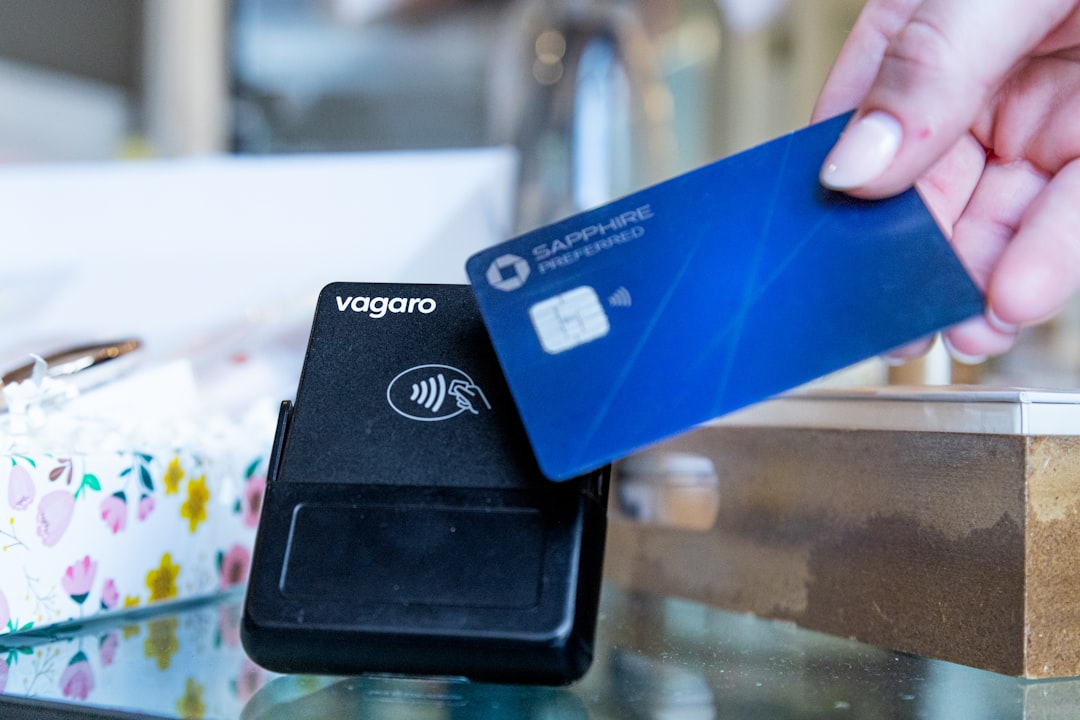
The bottom line: your strategy should reflect your spending profile, your willingness to chase promos, and your appetite for complexity. A simple, well-chosen two-card mix can yield most of the value without the headaches of managing half-a-dozen cards.
10) Real-world scenarios: applying these factors to your life
Let’s look at two realistic scenarios that illustrate how the factors interact in everyday life.
Scenario A: The Grocery & Dining Enthusiast
Assumptions: Annual groceries = $6,000; dining = $3,000; other spend = $7,000. Card A offers 5x groceries up to $3k/year and 2x elsewhere. Card B offers 3x dining and 3x groceries with different caps. Card A has a $95 annual fee; Card B has no annual fee.
Rewards outcome: Card A yields 5x on $3,000 = 15,000 points plus 2x on $4,000 = 8,000 points; assume 1 point = 1 cent in value on the preferred redemption. Card B adds 3x on $3,000 dining = 9,000 points and 3x on $0 groceries if not used. Combined, you might see a year-over-year value of roughly $430–$500 in travel or cash-equivalent value, minus the annual fee, depending on redemption choices.
Scenario B: The Travel Planner
Assumptions: $20,000 annual spend, 2x on most categories, 3x on travel booked through a portal, 5x on travel booked via partners after a transfer bonus. One main card with a $95 annual fee; a second card with no annual fee for everyday spend.
Rewards outcome: Travel portal redemptions may yield 2x–2.5x value, while partner transfers could unlock 1.5–2x value per point when redeemed strategically. In total, you could realize $800–$1,200 in travel value after considering portal pricing, transfer bonuses, and redemptions, even after paying the annual fee.
Conclusion: A practical blueprint for maximizing rewards
To succeed with credit card rewards, you must look beyond the headline earn rates. The factors affecting credit card rewards accumulation—base earn, category bonuses, redemption value, signup bonuses, annual fees, and how you stack cards—work together to determine your real rewards. A thoughtful plan that aligns your spending with the right cards, keeps track of caps, and emphasizes high-value redemptions will outpace a single-card strategy every time.
Start small: pick two cards that complement each other, map your top categories, and set up a monthly review. As you grow more comfortable, you can add a third card to cover gaps (such as travel partners or a no-annual-fee option for non-bonus spending) without complicating your finances.
FAQ
What factors affect credit card rewards accumulation?
The primary factors include base earn rate, category multipliers and caps, redemption value, signup bonuses, annual fees, and how you stack multiple cards. Your actual rewards depend on how you spend and how you redeem.
Do rewards expire and when?
Most programs don’t expire as long as you stay active with some earning or redeeming activity. Some programs expire points after a period of inactivity. Always check the specific terms for each card and plan redemptions before inactivity periods end.
How do you redeem rewards for flights, hotels, and transfers?
Redeeming through a card’s travel portal can be convenient, often yielding solid value. Transferring points to airline or hotel partners—especially with transfer bonuses—can unlock even higher value. Compare portal pricing with partner redemption values before booking.
How can I maximize signup bonuses?
Plan applications around upcoming large purchases and promotional periods. Track spend requirements and deadlines, and ensure the ongoing value of the card justifies keeping it after the bonus is earned. Don’t open cards you won’t use just for the bonus.
How should I pair two cards for maximum rewards?
Pair a base-earn card (good everywhere) with a specialty card that excels in a key category (groceries, travel, dining). Align each card with your actual spending to avoid redundant rewards and to keep caps from limiting your overall earnings.



Discussion